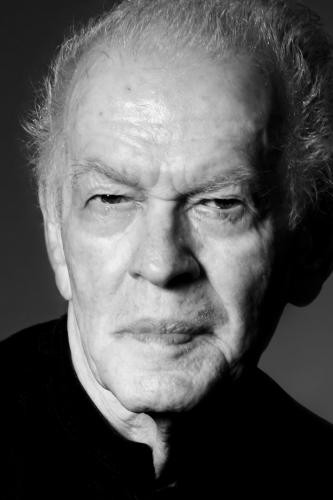
Gene Sharp
Personal Information
Description
There is no description yet, we will add it soon.
Books
There are realistic alternatives
There Are Realistic Alternatives is a short, serious introduction to nonviolent struggle, its applications, and strategic thinking. Based on pragmatic arguments, this piece presents nonviolent struggle as a realistic alternative to war and other violence in acute conflicts. It also contains a glossary of important terms and recommendations for further reading.
The Anti-Coup
A coups d'état is a rapid seizure of physical and political control of the state apparatus by illegal action of a conspiratorial group backed by the threat or use of violence. The members of the previous government are deposed against their will. Initially the coup group rapidly occupies the centers of command, decision-making, and administration, replacing the previous chief executive and top officials with persons (military or civilian) of their choice. Eventually they gain control of the whole state apparatus. Successful coups are usually completed quickly, at most within forty-eight hours. As coups are one of the primary ways through which dictatorships are installed, this pamphlet details measures that civilians, civil society, and governments can take to prevent and block coups d'état and executive usurpations. It also contains specific legislative steps and other measures that governments and non-governmental institutions can follow to prepare for anti-coup resistance.
From Dictatorship to Democracy
From Dictatorship to Democracy, A Conceptual Framework for Liberation is a book-length essay on the generic problem of how to destroy a dictatorship and to prevent the rise of a new one, using a nonviolent strategy. Now in its fourth edition, it was originally handed out by the Albert Einstein Institution, and although never actively promoted, to date it has been translated into over thirty languages. This book traveled as a photocopied pamphlet from Burma to Indonesia, Serbia and most recently Egypt, Tunisia and Syria, with dissent in China also reported. This how-to guide has inspired social uprisings the world over and includes 198 nonviolent "weapons" to shift the balance of power to the people, and topple repressive regimes.
Tshe ba spaṅs paʼi thab rtsod kyi nus śugs daṅ ñams len
On the role of power in nonviolent struggle.
Civilian Based Defense in a New Era (Monograph)
In the wake of the peaceful revolutions of Eastern Europe in 1989, Johan Holst outlines the key criteria and parameters of a future security order in Europe and explores the potential of nonviolent civilian-based defense as a complement to traditional military forms of defense. Mr. Holst, who died in 1994, was the foreign minister of Norway, and former director of the Norwegian Institute of International Affairs in Oslo.
National security through civilian-baseddefense
This publication offers an introduction to civilian-based defense. It also identifies significant research areas and policy studies that are relevant to advancing the field.
The Dynamics of Nonviolent Action
The Dynamics of Nonviolent Action is an illustrated analysis of how the technique of nonviolent civil resistance “works” against a violent, repressive opponent. Includes discussion of the groundwork for such struggle, as well as requirements for effectiveness and reactions to repression.
Gandhi as a political strategist
A book about the political strategies used by Mahatma Gandhi, and their ongoing implications and applicability outside of their original Indian context. Written by Gene Sharp, the book was originally published in the United States in 1979. An Indian edition was published in 1999. The book has been reviewed in several professional journals.
Methods of Nonviolent Action
The Methods of Nonviolent Action gives a detailed examination of 198 specific methods of the technique of nonviolent civil resistance — illustrated with actual cases — within the broad classes of nonviolent protest and persuasion, non-cooperation (social, economic and political) and nonviolent intervention. This book examines revolutionary events including the American Revolution, through common sense and analysis.
The Politics of Nonviolent Action
Power and Struggle begins with an examination of political power. It is often assumed that power derives from violence and can be controlled only by greater violence. Actually, power derives from sources in the society which may be restricted or severed by withdrawal of cooperation by the populace.
Power and Struggle
Power and Struggle begins with an examination of political power. It is often assumed that power derives from violence and can be controlled only by greater violence. Actually, power derives from sources in the society which may be restricted or severed by withdrawal of cooperation by the populace.
Tyranny could not quell them
This title comes from the Political Extremism and Radicalism digital archive series which provides access to primary sources for academic research and teaching purposes. Please be aware that users may find some of the content within this resource to be offensive.
Waging Nonviolent Struggle
"Instructs how to strategically plan nonviolent action, a technique of waging conflict that uses protest, noncooperation and intervention. Draws parallels between nonviolent and military strategy. Documents twenty-three cases showing how nonviolent action has been applied to conflicts throughout the world in the twentieth century"--Provided by publisher.