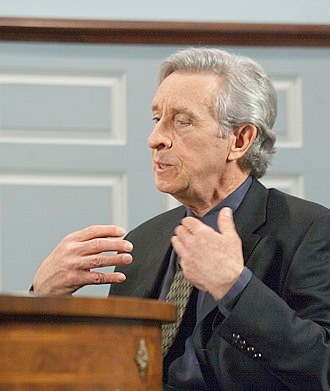
Discover

Gary W. Gallagher

Personal Information

Born October 8, 1950 (75 years old)
Los Angeles, Germany
Also known as: Gary William Gallagher, Gary Gallagher
56 books
2.3 (3)
43 readers

Description

Gary William Gallagher (born October 8, 1950) is an American historian specializing in the history of the American Civil War.

Books

Newest First

Causes Won, Lost, and Forgotten

0.0 (0)
2

More than 60,000 books have been published on the Civil War. Most Americans, though, get their ideas about the war —why it was fought, what was won, what was lost— not from books but from movies, television, and other popular media. In an engaging and accessible survey, Gary W. Gallagher guides readers through the stories told in recent film and art, showing how these stories have both reflected and influenced the political, social, and racial currents of their times.

Lee & his army in Confederate history

0.0 (0)
1

"Was Robert E. Lee a gifted soldier whose only weaknesses lay in the depth of his loyalty to his troops, affection for his lieutenants, and dedication to the cause of the Confederacy? Or was he an ineffective leader and poor tactician whose reputation was drastically inflated by early biographers and Lost Cause apologists? These divergent characterizations represent the poles between which scholarly opinion on Lee has swung over time. Here, renowned Civil War historian Gary Gallagher proffers his own refined thinking on the figure who has loomed so large in our understanding of America's great national crisis. In eight essays, Gallagher explores the relationship between Lee's operations and Confederate morale, the quality and nature of Lee's generalship, and the question of how best to handle Lee's legacy in light of the many distortions that grew out of Lost Cause historiography.". "Relying on contemporary evidence, rather than on hindsight, Gallagher draws on letters, diaries, newspapers, and other wartime sources to capture a fuller sense of how Lee was viewed during and immediately after the war and underscore the remarkable faith that soldiers and citizens maintained in Lee's leadership even after his army's fortunes had begun to erode. He also engages various dimensions of the Lee myth - not just from the perspective of revisionist historians who have attacked what they consider a hagiographic literature, but also with an eye toward admirers who have insisted that their hero's faults as a general represented exaggerations of his personal virtues."--BOOK JACKET.

Lee the Soldier

0.0 (0)
1

Lee the Soldier is a unique one-volume source of writing by and about Lee in which readers can explore all facets of the general's military leadership. Combining unpublished manuscript testimony from Lee about his campaigns, six new essays by leading historians in the field, more than a dozen important essays published previously, and an annotated bibliography of two hundred key titles, this book lays out the major debates and enables readers to explore fully Lee's contribution to the Confederate war effort.

Lee and his generals in war and memory

0.0 (0)
4

Gary W. Gallagher examines Robert E. Lee, his principal subordinates, the treatment they have received in the literature on Confederate military history, and the continuing influence of Lost Cause arguments in the late-twentieth-century United States. Historical images of Lee and his lieutenants were shaped to a remarkable degree by the reminiscences and other writings of ex-Confederates who formulated what became known as the Lost Cause interpretation of the conflict. Gallagher adeptly highlights the chasm that often separates academic and popular perceptions of the Civil War and discusses some of the ways in which the Lost Cause continues to resonate.

The Confederate War

0.0 (0)
6

If one is to believe contemporary historians, the South never had a chance. Many allege that the Confederacy lost the Civil War because of internal division or civilian disaffection; others point to flawed military strategy or ambivalence over slavery. But, argues distinguished historian Gary Gallagher, we should not ask why the Confederacy collapsed so soon but rather how it lasted so long. In The Confederate War he reexamines the Confederate experience through the actions and words of the people who lived it to show how the military and the home front responded to the war, endured great hardships, and assembled armies that fought with tremendous spirit and determination.

Two Witnesses at Gettysburg

0.0 (0)
0

"Two Civil War era reporters, one traveling with the Union army and the other with the Confederates, are the authors of these two magnificent firsthand accounts of the battle of Gettysburg in 1863, the pivotal action of the Civil War. A.J.L. Freemantle (1835-1901) will be familiar to readers as a character in Michael Shaara's Pulitzer Prize-winning novel of Gettysburg, The Killer Angels (1974). Fremantle was a lieutenant colonel in the British Army; he became interested in the American South, travelling there and keeping a journal. Whitelaw Reid (1837-1912) enjoyed a subsequent career as a journalist and became active in politics, eventually running unsuccessfully as vice-president on the Republican ticket with Benjamin Harrison in 1892. He was minister to France (1889) and ambassador to Great Britain under Theodore Roosevelt and William Howard Taft. This new edition contains a fresh introduction, fully revised references, and new illustrations and maps, all of which help students engage critically with these primary sources, providing them with a unique look at the most pivotal action of the Civil War."--Jacket.

The Fredericksburg campaign

0.0 (0)
1

"It is well this is so terrible! We should grow too fond of it," said General Robert E. Lee as he watched his troops repulse the Union attack at Fredericksburg on 13 December 1863. This collection of seven original essays by leading Civil War historians reinterprets the bloody Fredericksburg campaign and places it within a broader social and political context. By analyzing the battle's antecedents as well as its aftermath, the contributors challenge some long-held assumptions about the engagement and clarify our picture of the war as a whole. The book begins with revisionist assessments of the leadership of Ambrose Burnside and Robert E. Lee and features a portrait of the conduct and attitudes of one group of northern troops who participated in the failed assaults at Marye's Heights. Other essays examine how both armies reacted to the battle and how the northern and southern homefronts responded to news of the carnage at Fredericksburg. A final chapter explores the impact of the battle on the residents of the Fredericksburg area and assesses changing Union attitudes about the treatment of Confederate civilians.

Chancellorsville

3.0 (1)
2

One of the most dramatic battles of the Civil War, Chancellorsville was Robert E. Lee's masterpiece. Outnumbered two to one, Lee violated a cardinal rule of military strategy by dividing his small army, sending Stonewall Jackson on his famous twelve-mile march around the Union flank. Charging out of the Wilderness with Rebel yells, Jackson's troops destroyed one entire corps of the Union army, and Lee drove the rest across the Rappahannock River. Lee's great victory came at great cost, however: Jackson, making a night reconnaissance, was accidentally shot by his own troops and died eight days later. And ironically, the momentum of Lee's greatest triumph pushed him to launch an aggressive campaign that led to his greatest defeat, at Gettysburg. Drawing on a wealth of new sources, including personal accounts by soldiers on both sides, Stephen Sears has written the definitive book on Chancellorsville.

The union war

0.0 (0)
1

Even one hundred and fifty years later, we are haunted by the Civil War--by its division, its bloodshed, and its origins. Today, many believe that the war was fought over slavery. This answer satisfies our contemporary sense of justice, but as Gary Gallagher shows in this revisionist history, it is an anachronistic judgment. In a searing analysis of the Civil War North as revealed in contemporary letters, diaries, and documents, Gallagher demonstrates that what motivated the North to go to war and persist in an increasingly bloody effort was primarily preservation of the Union. Devotion to the Union bonded nineteenth-century Americans in the North and West against a slaveholding aristocracy in the South and a Europe that seemed destined for oligarchy. Northerners believed they were fighting to save the republic, and with it the world's best hope for democracy. Once we understand the centrality of union, we can in turn appreciate the force that made northern victory possible: the citizen-soldier. Gallagher reveals how the massive volunteer army of the North fought to confirm American exceptionalism by salvaging the Union. Contemporary concerns have distorted the reality of nineteenth-century Americans, who embraced emancipation primarily to punish secessionists and remove slavery as a future threat to union-goals that emerged in the process of war. As Gallagher recovers why and how the Civil War was fought, we gain a more honest understanding of why and how it was won--From book jacket.

The Second day at Gettysburg

0.0 (0)
1

Notable Civil War historians herein continue the evaluation of select commanders begun in The First Day at Gettysburg: Essays on Confederate and Union Leadership. Based on fresh manuscript sources and careful consideration of existing literature, the essays in The Second Day at Gettysburg explore such controversial issues as Robert E. Lee's decision to renew the tactical offensive on July 2; James Longstreet's effectiveness in executing Lee's plan; the origin and impact of Daniel E. Sickles's decision to advance his Third Corps, which formed the infamous "Sickles's Salient"; the little-understood role of Henry W. Slocum and his Union Twelfth Corps; and the contribution of John C. Caldwell's division in the maelstrom of the Wheatfield. . These provocative essays present new evidence and sometimes controversial interpretations that will prompt reevaluation of several officers who played crucial roles during the second day of the Gettysburg campaign.