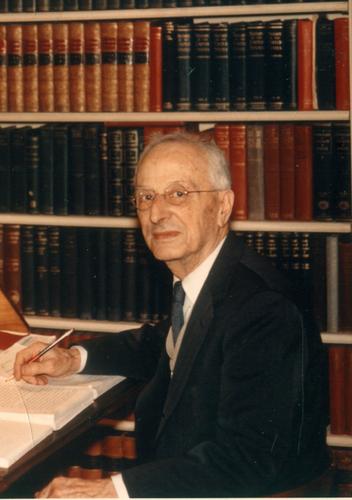

UNITED STATES AUTHOR · HISTORY · POLITICS AND GOVERNMENT
Frederick Merk
Also known as: Ed. Frederick Merk, frederick merk
Frederick Merk, Teacher and Scholar: A Tribute Rodman W. Paul Western Historical Quarterly IX (2): 141-148, April 1978. At the request of WHQ, Rodman W. Paul wrote this tribute to Frederick Merk (August 15, 1887 - September 24, 1977). Paul is Harkness Professor of History at the California Institute of Technology and is President of the Western History Association. At the close of last September, when members of the Western History Association were making final revisions in the papers they would soon be reading at the annual convention in Portland, the profession lost one of the most effective and best loved of all those who have taught western history in American universities. Frederick Merk died at the age of ninety in Cambridge. His whole career had been at Harvard, to which he came as a graduate student in 1916 to study under Frederick Jackson Turner. Turner, of course, had made his fame with work done at the University of Wisconsin, from which Merk himself graduated in 1911, but the timing of Turner's departure for Harvard was such that "you had escaped me in Madison," as Merk later remarked in a letter to his great mentor.{1} Between receiving his bachelor's degree in 1911 and winning in 1916 the Edward Austin fellowship for study at Harvard, Merk was on the editorial staff of the State Historical Society of Wisconsin, for which he edited a volume of Civil War documents in 1912 and, much more significantly, wrote a definitive monograph on the Economic History of Wisconsin during the Civil War Decade, published by the society in 1916, a volume that has preserved its value so well that it was republished in revised form in 1971. Harvard accepted this book as Merk's dissertation, and Merk was able to move directly into intensive study under Turner and other members of the Harvard faculty. {1} Frederick Merk to Frederick Jackson Turner, Cambridge, July 4 , Turner Papers, Huntington Library. The Merk-Turner letters cited here are all from this collection. He must have made a decisive impression, for Turner began to involve Merk both in teaching in Turner's famous History 17, "The Westward Movement," and in coediting the notable List of References on the History of the West, which from the time of its publication in 1922 was for many years the most important bibliography on that subject. Merk viewed his mentor with reverence and with deep personal feeling. In a letter to Turner's wife in 1926 he declared, "I have never had greater affection for any man, {2} while a year later, when he was writing to Turner himself to comment on Carl Becker's essay on Turner in Master of Social Science, Merk said:{3} [In History 17] you would say something, a sentence or two, with particular impressiveness, with "that lifted flash of the eye" which Becker describes … [and] I used to glory at the thought that I was in a kind of secret communication with you, that you were giving out something that only a few were privileged to see, and this spurred me on. The affection and respect must have been mutual, for in 1921 Turner caused Harvard to offer Merk an instructorship, under terms which meant that Merk would be sharing History 17 with Turner and would soon be offering the first half of the general introductory course in American history (with the second semester taught by Edward Channing). The remainder of Merk's duties would be to teach "the second half of a course in American institutional and constitutional history, of which Professor [Charles Howard] McIlwaine [sic] gives the first half. {4} In short, Merk, who had received his Ph.D. in 1920 (and had won Harvard's Toppan Prize in that year) was launching into his teaching career in association with some of the best-known American historians of the day. Although he had been offered a post with higher rank at the University of Illinois, there was no question in Merk's mind as to what he would do. To Turner he wrote: "My heart was set on Harvard, for I saw there unrivalled opportunities for research under your guidance, the privilege of associating with a great history faculty, and the chance to teach a superior body of students. {5} With his heart's desire thus fulfilled, Merk settled down to intensely hard work in preparing and teaching his courses. That he succeeded is demonstrated abundantly. Although he published very little, Harvard promoted him to assistant professor in 1924, to associate professor in 1930, to full professor in 1936, and to the distinguished Gurney professorship in 1946. The fact that he moved so steadily up the professional ladder despite publishing only a few articles and editing one book, Fur Trade and Empire: George Simpson's Journal (1931), should give pause to any departmental chairman who insists on applying promotional rules in a purely mechanical, undiscriminating fashion, for Merk became one of Harvard's most respected teachers. Undergraduate and graduate students alike crowded into History 17, which Merk took over entirely after Turner retired in 1924; graduate students never failed to fill Merk's seminar; and the number of beginners who listened to Merk's introduction to American history (History 5) must have been high up in the thousands. {2} Merk to Mrs. Frederick Jackson Turner, Cambridge, June 29, 1926. {3} Merk to Turner, Cambridge, July 4 . {4} Turner to President Elmer George Peterson of Utah State University, np.; November 6, 1923 (typed copy). {5} Merk to Turner, Rome, May 7, 1921. Turner, for all his originality of mind and attractive personality, had not been so notable a teacher at Harvard as one might have expected. {6} Merk far surpassed his mentor in his appeal to the highly critical Harvard audience, and he did this in a way that Harvard admires most: not by showmanship but by thoroughness of preparation, acuity of analysis, and clarity of presentation. Merk never lectured or wrote about any subject until he had mastered all of the printed and manuscript sources – and I mean literally all – nor until he had asked himself the meaning and significance of what he was about to say and had studied the relationship of the episode in question of what came before and what was to follow. When at least he was momentarily satisfied, he would put his knowledge together in lectures that were notable for their clarity and were rich in detail without ever seeming overcrowded. His delivery should not have been impressive, and yet it was. The New York Times' obituary referred to him as "the wispy professor with the high-pitched voice, {7} to which one might rejoin that Lincoln's voice also lacked resonance, and yet Lincoln is generally regarded as having done pretty well. For each lecture Merk came to the podium clutching a sheaf of notes written out in full with a fine-pointed pen and in that crabbed, crowded handwriting so familiar to his students. During the lecture he would move away from the reading stand to point out features on the maps that he used so constantly, or to step forward closer to the audience for a moment, as if by proximity to give deeper thrust to some major point. The listener was not distracted at all by "the high-pitched voice" of which the New York Times spoke. I have virtually verbatim lecture notes of both History 5 and History 17, taken in the early 1930s, and upon rereading them now, more than forty years later, I still find myself becoming totally absorbed, despite recognizing places where points of view have become dated or where newer understandings have been published by later writers. Merk's students nicknamed History 17 "Wagon Wheels," and they viewed the course and its proprietor with an affection that Merk's mentor, Turner, had not won. The New York Times was right in saying that "Wagon Wheels" left an indelible impression on generations of Harvard students." It was said that when finding themselves scheduled to be in Boston, busy executives long out of college would rearrange their appointments so as to leave time for a quick trip across the river to Cambridge to hear Merk lecture again in History 17. What was the key to the success of this quiet, undemonstrative professor? In a single word, integrity. He had the kind of honesty that is usually described as "transparent." It simply was not conceivable that Frederick Merk would have distorted the evidence that he was presenting, or that he would have made an assertion without having proof of its validity, or that he would have been guilty of superficiality. Nor was it conceivable that he would have been willing to lecture on a subject for which he did not feel – and impart – genuine enthusiasm. {6} Ray Allen Billington, Frederick Jackson Turner: Historical, Scholar, Teacher (New York, 1973), 385. {7} New York Times, September 28, 1977. So it is as a teacher – one of those rare persons whom we call "a great teacher" – that he will be most remembered. But Merk himself was not satisfied to be so known. He wanted to be recognized also for the research scholar that he in fact was. He shared with Turner a perfectionism that made him a slow, careful, and reflective writer, never quite satisfied that he had all the evidence, never ready to call the job done. At the same time his unusual devotion to his teaching made research and writing almost impossible during term time at Harvard. After many months of despair, Merk wrote to Turner in 1930 to describe his mood during the previous year:{8} "I was in a state almost of despondency over the progress of my work, particularly over the fact that Harvard was converting me against my will into a teacher and an administrator, and choking off my research instincts … Accordingly last December I wrote to [Professor Arthur M.] Schlesinger resigning my post. I rested my resignation on the ground that my tastes and abilities, such as they were, were in the direction of research, that at Harvard I was forced into the mold of teacher and administrator which did not fit me and which was increasingly distasteful to me." Faced by the loss of a valued teacher, the Harvard history department hastily recommended Merk for promotion to full professor a year ahead of the normal time. Reluctantly, Merk agreed to return for one more year, though he gloomily predicted that "if I continue as a teacher, my years will continue to be barren as a scholar.{9} At the time when he contemplated resigning, Merk was temporarily free of family responsibilities and thus felt able to risk living on the cramped budget of a research scholar. He had not married and being over forty marriage did not seem likely. A person with great loyalty to his family, he had brought his parents to Cambridge to live with him during the last half dozen years of their lives, when their needs were great and their means small (the father was an artist). His parents now dead, Merk felt independent. But soon after resuming work at Harvard, Merk learned that his brother had come down with an "advanced case of tuberculosis, complicated by other difficulties," and would need financial help. This, Merk wrote to Turner, is what "anchors my ship, and which permits me to postpone for another year at least the hard decision as to what to do with the future.{10} Harvard helped by persuading others within the department to assume Merk's collateral, nonteaching duties. Much more important was an unexpected development that lifted Merk from his depression and saved the scholarly world from losing a fine teacher. In 1931 Merk was writing to Turner that:{11} "This year I have had a very happy 20 course [individual studies] with a graduate student of Radcliffe, Lois Bannister … She and I have met on common ground in our admiration for your writings, and this past term we have found many other interests in common. Our conferences recently have not always been confined strictly to history, and I have just persuaded her to let me give her a diamond ring." {8} Merk to Turner, London, March 1, 1930. {9} Ibid. {10} Merk to Turner, Cambridge, January 5, 1931. {11} Merk to Turner, Cambridge, May 10, 1931 Has there ever been a more charming description of a scholarly courtship? The resulting marriage proved to be a singularly happy one. When the present writer also decided to marry at a much later age than most, Merk firmly encouraged me: "You will find that there are great rewards in late marriage!" The Merks had two children, a son and a daughter, and that, too, helped to keep Merk teaching. When Merk agreed to continue teaching after he had reached retirement age, he wrote to me: "You will find that having children to educate is a great stimulus to continue teaching!" After retiring in 1957 Merk turned to the batch of topics for which he had accumulated masses of material that had been only partly exploited hitherto in occasional scholarly papers. Mrs. Merk, who had been a college history teacher as well as a doctoral student, unselfishly devoted herself to collaborating with her husband so that these incomplete projects could at last be prepared for the printer. Alfred Knopf, most distinguished of American Publishers, made it his personal interest to publish these books in handsome editions, and at the moment of Merk's death, the Knopf firm was revising Merk's lecture notes for the Wagon Wheels course into still another book. Thus in the end the fruits of Merk's years of meticulous research began to reach the scholarly world. This outpouring of books in Merk's post-retirement years will give readers everywhere a chance to savor something of the quality of the man's mind and personality, but to his students his remarkable accomplishment of the latter days has been unnecessary: they already knew and loved him. MAJOR HISTORICAL WORKS BY FREDERICK MERK The Labor Movement in Wisconsin during the Civil War (Madison: Wisconsin Historical Society, 1915). Economic History of Wisconsin during the Civil War Decade (Madison: Wisconsin Historical Society, 1916; 2nd ed., 1971). List of References on the History of the West. With Frederick Jackson Turner. (Cambridge: Harvard University Press, 1922). "The Oregon Pioneers and the Boundary," American Historical Review, XXIX (July 1924); also in Oregon Historical Review, XXVIII (December 1927). Fur Trade and Empire: George Simpson's Journal … 1824-25; together with Accompanying Documents, ed., (Cambridge: Harvard University Press, 1931; rev. ed., 1968). "British Party Politics and the Oregon Treaty," American Historical Review, XXXVII (July 1932). "Snake Country Expedition, 1824-25: An Episode of Fur Trade and Empire," Oregon Historical Quarterly, XXXV (June 1934); also in Mississippi Valley Historical Review, XXI (June 1934). "The Snake Country Expedition Correspondence, 1824-25," ed., Mississippi Valley Historical Review, XXI (June 1934). "The British Corn Crisis of 1845-46 and the Oregon Treaty," Agricultural History, VIII (July 1934). "British Government Propaganda and the Oregon Treaty," American Historical Review, XL (October 1934). "Eastern Antecedents of the Grangers," Agricultural History, 23 (January 1949). "The Genesis of the Oregon Question," Mississippi Valley Historical Review, XXXVI (March 1950). "The Ghost River Caledonia in the Oregon Negotiation of 1818." American Historical Review, LV (April 1950). Albert Gallatin and the Oregon Problem: A study in Anglo-American Diplomacy (Cambridge: Harvard University Press, 1950). Harvard Guide to American History, co-author (Cambridge: Harvard University Press, 1954). "The Oregon Question in the Webster-Ashburton Negotiations," Mississippi Valley Historical Review, XLIII (December 1956). "Presidential Fevers," Mississippi Valley Historical Review XLVII (1) (June 1960). "A Safety Valve Thesis and Texas Annexation," Mississippi Valley Historical Review, XLIX (December 1962). Manifest Destiny and Mission in American History; a Reinterpretation (New York: Alfred A. Knopf, 1963). The Monroe Doctrine and American Expansionism, 1843-1849 (New York: Alfred A. Knopf, 1966). The Oregon Question: Essays in Anglo-American Diplomacy and Politics (Cambridge: Harvard University Press, 1967). Dissent in Three American Wars, co-author (Cambridge: Harvard University Press, 1970). Fruits of Propaganda in the Tyler Administration, with the collaboration of Lois Bannister Merk (Cambridge: Harvard University Press, 1971). Slavery and the Annexation of Texas, with the collaboration of Lois Bannister Merk (New York: Alfred A. Knopf, 1972). History of the Westward Movement (New York: Alfred A. Knopf, 1978).
