Discover

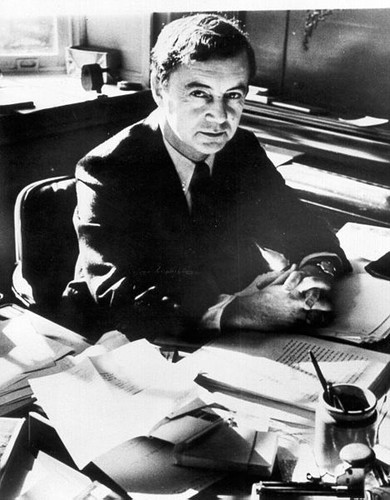
Erving Goffman

Personal Information

Born January 1, 1922
Died January 1, 1982 (60 years old)
Mannville, United States
Also known as: ERVING GOFFMAN, 1st Edition Goffman
22 books
4.2 (21)
704 readers

Description

There is no description yet, we will add it soon.

Books

Newest First

Asylums

5.0 (3)
98

A total institution is defined by Goffman as a place of residence and work where a large number of like-situated, individuals, cut off from the wider society for an appreciable period of time, together lead an enclosed, formally administered round of life. Prisons serve as a clear example, providing we appreciate that what is prison-like about prisons is found in institutions whose members have broken no laws. This volume deals with total institutions in general and, mental hospitals, in particular. The main focus is, on the world of the inmate, not the world of the staff. A chief concern is to develop a sociological version of the structure of the self. Each of the essays in this book were intended to focus on the same issue--the inmate's situation in an institutional context. Each chapter approaches the central issue from a different vantage point, each introduction drawing upon a different source in sociology and having little direct relation to the other chapters. This method of presenting material may be irksome, but it allows the reader to pursue the main theme of each paper analytically and comparatively past the point that would be allowable in chapters of an integrated book. If sociological concepts are to be treated with affection, each must be traced back to where it best applies, followed from there wherever it seems to lead, and pressed to disclose the rest of its family. (Author) Erving Goffman was Benjamin Franklin Professor of Anthropology and Sociology at the University of Pennsylvania until his death in 1982. Publisher's note.

Forms of talk

0.0 (0)
12

Forms of Talk extends Erving Goffman's interactional analyses of face-to-face communication to ordinary conversations and vebal exchanges. In this, his most sociolinguistic work, Goffman relates to certain forms of talk some of the issues that concerned him in his work on frame analysis. This book brings together five of Goffman's essays: "Replies and Responses," "Response Cries," "Footing," "The Lecture," and "Radio Talk." Of lasting value in Goffman's work is his insistence that behavior - verbal or nonverbal - be examined along with the context of that behavior. In all of these classic essays, there is a "topic" at hand for discussion and analysis. In addition, as those familiar with Goffman's work have come to expect, there is the wider context in which the topic can be viewed and related to other topics - a characteristic move of Goffman's that has made his work so necessary for students of interaction in many disciplines. -- Back cover.

Interaction ritual

0.0 (0)
20

This opens to the wrong book: Robert S. Eliot's From Stress to Strength.

The presentation of self in everyday life

3.9 (11)
332

A notable contribution to our understanding of ourselves. This book explores the realm of human behavior in social situations and the way that we appear to others. Dr. Goffman uses the metaphor of theatrical performance as a framework. Each person in everyday social intercourse presents himself and his activity to others, attempts to guide and control the impressions they form of him, and employs certain techniques in order to sustain his performance, just as an actor presents a character to an audience. The discussions of these social techniques offered here are based upon detailed research and observation of social customs in many regions.

Communication Conduct in an Island Community

0.0 (0)
1

Canadian-born Erving Goffman (1922–1982) was the twentieth century’s most important sociologist writing in English. His 1953 dissertation is published here for the first time, on the hundredth anniversary of his birth. The remarkable study, based on fieldwork on a remote Scottish island, presents in embryonic form the full spread of Goffman’s thought. Framed as a “report on a study of conversational interaction,” the dissertation lingers on the modest talk of island “crofters.” It is trademark Goffman: ambitious, unconventional in form, and brimmed with big-picture insight. The thesis is that social order is made and re-made in communication—the “interaction order” he re-visited in a famous and final talk before his 1982 death. The dissertation is, as Yves Winkin writes in a new introduction, the “Rosetta stone for his entire work.” It was here, in 360 dense pages, that Goffman revealed, quietly, his peerless sensitivity to the invisible wireframes of everyday life.
