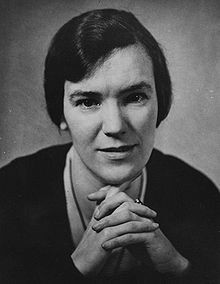
Eileen Edna Power
Description
There is no description yet, we will add it soon.
Books
Medieval women
"Throughout her career as a medieval historian, Eileen Power was engaged on a book on women in the Middle Ages. She did not live to write the book but some of the material she collected found its way into popular lectures on medieval women. These lectures are now brought together and reveal the world in which women lived, were educated, worked, and worshipped. For this edition, an essay on Eileen Power, by Maxine Berg, is also included, offering an intimate portrait of the writer and social historian."
Boys & girls of history
Twenty-four accounts of the daily life of English boys and girls from the fourth to the nineteenth century.
Boys and girls of history
"Originally published in 1926, the studies in this book illustrate the lives of English children in different historical periods and social contexts. Reconstructions of daily life are used as a means of avoiding the generalised tone employed in many historical accounts, the aim being to develop the young reader's knowledge through a sense of empathy with the figures being described. These figures are a mixture of fictional and real, but all have the basic function of conveying the atmosphere of their age. Highly readable, and containing a large number of beautiful illustrations, the text was co-authored by the renowned medieval historian Eileen Power, together with her sister Rhoda Power. It will be of value to anyone with an interest in early twentieth-century history books for young readers."
Medieval English Nunneries
Eileen Power, best known for her posthumously published "Medieval Women," was one of the foremost scholars of medieval economic and social history in the first half of the twentieth century. Her "Medieval English Nunneries" (publish in 1922) is a very substantial study of medieval English nunneries between 1275 and 1535. Power examines in depth who entered the convents, how they were organized, their finances, activities and problems. Although medieval nunneries were significantly poorer and less well documented than the monastic houses, Power uses the available sources to build up a multifaceted picture of medieval life. Her arguments are firmly rooted in documentary evidence, but are presented in an extremely accessible and engaging style. The book reveals that convent life was not particularly ascetic or learned, and that in poorer houses the nuns had to find additional sources of income. Power's account of their methods of coping makes fascinating reading. Power also includes a chapter on Nuns in Medieval Literature as well.
The Cambridge economic history of Europe from the decline of the Roman empire
Volume 4 includes sections on the black death and its aftermath, biology, medicine and health, the trade routes, European agriculture, the spice trade, the sugar trade, the tobacco trade, the beverages trade, slaves from West Africa, slavery and sugar, the slave trade, West Indian sugar and slavery, English and French slave trades. Volume 6 parts 1 & 2 have sections on mortality rates, fertility, highways, railways, waterways, European agriculture, serfdom and industrialization in Russia, the industrialization of the Far East (including Japan, Manchuria, China and India).