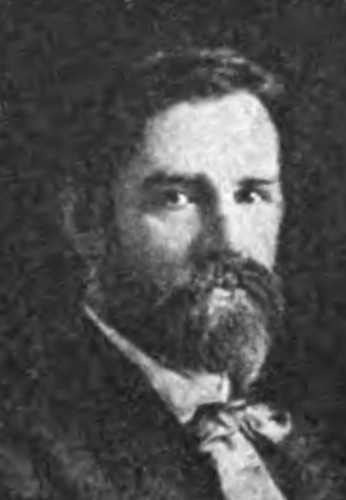
Edwin George Lutz
Personal Information
Description
There is no description yet, we will add it soon.
Books
Practical course in memory drawing
From dustjacket: Mr. Lutz offers here a system of memory drawing that may be followed successfully by the individual in self-study as well as have its lessons adapted for the classroom. The primary purpose of this book, says the author, is to teach memory drawing and to help the art student to work from imagination. Mr. Lutz states that even though it is the general custom for the artist to work from models he should have some skill in drawing imaginative pictures without the necessity of looking for actual scenes for backgrounds to his pictures. A diversity of subjects is treated and the way to draw them from memory explained in clear and simple terms. Among these subjects are Landscapes and Views, the Draped Female Figure, Faces and the Human Figure. There is a division devoted to Ornamental forms and motifs and one to the study of various kinds of solids which will be of special interest to workers in arts and crafts. Several chapters have been given to drawing figures from "imagination" by which the author means the memory of knowledge gained by the analytical study of the human form by the methods advanced in the book. The particulars are presented in clear terms and illustrated by diagrams. In these diagrams the figure has been reduced to the simplest anatomical planes, and interpreted in forms that make elementary structures for the draftsman when he wishes to block-out a figure. This section of the book forms a notable contribution to the field of art education where it applies especially to the drawing of the human form.
Practical engraving and etching
From dustjacket: With the same ease and clarity that have made his earlier volumes so valuable and popular the author here offers complete practical instruction in the art of making linoleum blocks, wood engravings, woodcuts made on the plank, etchings, and aquatints. Mr. Lutz writes for the beginner, although the experienced craftsman will find much of interest and value in his pages. The book is divided into two parts - "Relief Blocks for Printing" and "Intaglio Printing Plates". Part I describes in detailed and fully illustrated chapters the material, tools and processes used in engraving, including much information about color prints, chiaroscuro prints and Japanese print blocks. In the second part Mr. Lutz describes and explains the various processes involved in etching, from laying the ground to "biting" the plate and proving the work. Every point is considered in full, the most complex and difficult processes are reduced to the simplest possible terms, and the equipment of the engraver is viewed from a standpoint that stresses economy as well as efficency. "It is very informative, and the field is thoroughly covered.... Mr. Lutz is nothing if not practical and the serious student or amateur artist will find what he is looking for in the way of advice in this book." -Prints
Practical art lettering
From dustjacket: Lettering in recent years has become one the most remunerative fields of work for artists. There is a wide and constantly growing demand for artistic lettering wherever letters are used, in modern business, in advertising, in window signs, in book and magazine covers, in type faces, and in many other ways. "Practical Alphabets" sets forth clearly the principles of lettering. It is a simple and practical guide that leads the beginner by easy steps to a knowledge and mastery of this important branch of art. The contents include chapters on Skeleton Letters, Proportions and Constructions of the Letters of the Roman Alphabet, Pen-Made Letters, Black Letters, French Ronde and Similarly Pen-Made Letters, Mediæval Letters, Variations of the Roman Alphabet, and Block Letters.
Practical pen drawing
From dustjacket: A most readable, clear, and practical guide to the practice of pen drawing by a writer who in his other books has shown himself an instructor eminently qualified to guide the student by natural and easy gradations in other fields of art. Mr. Lutz has such a comprehensive grasp of the subject, such a clear method of presenting it, that students of pen drawing, experienced or otherwise, will find his book a constant aid and pleasure.
Practical pictorial composition
From dustjacket: "The endeavor in this book will be to call attention to the principles of construction in pictures, to reason upon these principles and explain how they came to be formulated." So says the author in his preface. The practical character and comprehensive range of this valuable book are apparent from a few of the chapter headings: "Pictorial composition and the eye; the real properties of pictures", "How the eye takes in pictures", "Basic plans of pictorial compositions", "Symmetrical compositions", "Pyramidal compositions", "Circular and elliptical compositions", "Tunnel-like compositions", "Compositions of converging lines to a focus", "The silhouette", "Patterns of light and shade", "Landscapes and seascapes".
Practical graphic figures
From dustjacket: How does the comic artist work? How does he achieve those inimitably droll delineations of feature and character that sometimes seem more real than reality? And how does his art differ from that of the ordinary artist or illustrator? Mr. Lutz, answering these questions and many others, has written an invaluable book for the beginner who would learn the technical side of graphic art. By the lavish use of practical diagrams and drawings, directions and explanations are made perfectly clear. The whole is a thoroughly practical and effective manual of instruction for the student of cartoons and fashions.
Practical art anatomy
From dustjacket: Mr. Lutz shows a marked gift for teaching not only the principles and theory but the expedient and practice of graphic art. The text is a selection and simplification of the part of human anatomy which is material for artistic study and practice. The copious illustrations insure the immediate comprehension of the text. The book is an ideal one for both the beginner and for the mature artist who wishes to keep his anatomy at his finger-ends.
Practical drawing
From dustjacket: A volume intended to show in a practical way a method by which any one with a natural inclination for drawing can master the fundamentals of draftsmanship and learn how to go about the start of a drawing. "From simple forms at the beginning the author passes to and through all stages of figure representation. With this work at hand, the mature and practical artist may keep his anatomical knowledge literally at his finger-ends. It is all here -clear, correct, and instantly available."- Philadelphia North American
What to draw and how to draw it
A great example of one of the first step-by-step how to draw books created for children. It is not in particular how an artist would learn, yet it still does has value as one learns to see out of the box.
Animated cartoons
From dustjacket: For the professional artist animated cartoons have opened up a new field of endeavor, while to the general public the little animated figures and dancing letters are one the most interesting and mysterious features of any motion-picture performance. This book has been written for both artist and public. It reviews the development of motion pictures from the toy stage of the old thaumatrope and the beginnings of animated cartoons. It explains, for instance, how simply the letters in a trick title can be made to dance about the screen and finally fall into proper place in the announcement; also the processes, apparatus, photography, and other technical matters - how movement in the human figure is obtained - notes on animal locomotion - dissolving scenes - title balloons - how, by ingenious contrivances, the actual number of drawings required to produce a given effect of motion is lessened - the importance of the animated diagram for educational purposes, etc., etc.
The motion-picture cameraman
From dustjacket: With the increasing popularity of motion-picture cameras, problems have arisen which are quite new to the amateur as well as to the more professional taker of photographs. Mr. Lutz answers almost every conceivable question about the actual mechanics of taking the picture, as well as the developing, cutting of films, and other matters of obvious interest. The chapter titles, "Lenses and Images", "Studio and Location", "Trick Cinematography", "Some Oddities of Screen Pictures", "Developing the Negative", and "Completing the Film for the Projector", suggest how wide is the scope of the problems considered.