Edward L. Glaeser
Personal Information
Description
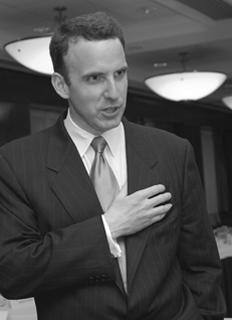
Edward L. Glaeser is the Fred and Eleanor Glimp Professor of Economics at Harvard University. He studies the economics of cities, housing, segregation, obesity, crime, innovation and other subjects, and writes about many of these issues for Economix. He serves as the director of the Taubman Center for State and Local Government and the Rappaport Institute for Greater Boston. He is also a senior fellow at the Manhattan Institute. He received his Ph.D. from the University of Chicago in 1992. (Source: Penguin USA)
Books
Urban colossus
"New York has been remarkably successful relative to any other large city outside of the sunbelt and it remains the nation's premier metropolis. What accounts for New York's rise and continuing success? The rise of New York in the early nineteenth century is the result of technological changes that moved ocean shipping from a point-to-point system to a hub and spoke system; New York's geography made it the natural hub of this system. Manufacturing then centered in New York because the hub of a transport system is, in many cases, the ideal place to transform raw materials into finished goods. This initial dominance was entrenched by New York's role as the hub for immigration. In the late 20th century, New York's survival is based almost entirely on finance and business services, which are also legacies of the port. In this period, New York's role as a hub still matters, but it is far less important than the edge that density and agglomeration give to the acquisition of knowledge"--National Bureau of Economic Research web site.
Why have housing prices gone up?
"Since 1950, housing prices have risen regularly by almost two percent per year. Between 1950 and 1970, this increase reflects rising housing quality and construction costs. Since 1970, this increase reflects the increasing difficulty of obtaining regulatory approval for building new homes. In this paper, we present a simple model of regulatory approval that suggests a number of explanations for this change including changing judicial tastes, decreasing ability to bribe regulators, rising incomes and greater tastes for amenities, and improvements in the ability of homeowners to organize and influence local decisions. Our preliminary evidence suggests that there was a significant increase in the ability of local residents to block new projects and a change of cities from urban growth machines to homeowners' cooperatives"--National Bureau of Economic Research web site.
Paternalism and psychology
"Does bounded rationality make paternalism more attractive? This Essay argues that errors will be larger when suppliers have stronger incentives or lower costs of persuasion and when consumers have weaker incentives to learn the truth. These comparative statics suggest that bounded rationality will often increase the costs of government decisionmaking relative to private decisionmaking, because consumers have better incentives to overcome errors than government decisionmakers, consumers have stronger incentives to choose well when they are purchasing than when they are voting and it is more costly to change the beliefs of millions of consumers than a handful of bureaucrats. As such, recognizing the limits of human cognition may strengthen the case for limited government"--National Bureau of Economic Research web site.
Urban growth and housing supply
"Cities are physical structures, but the modern literature on urban economic development rarely acknowledges that fact. The elasticity of housing supply helps determine the extent to which increases in productivity will create bigger cities or just higher paid workers and more expensive homes. In this paper, we present a simple model that provides a framework for doing empirical work that integrates the heterogeneity of housing supply into urban development. Empirical analysis yields results consistent with the implications of the model that differences in the nature of house supply across space are not only responsible for higher housing prices, but also affect how cities respond to increases in productivity"--National Bureau of Economic Research web site.
Corruption and Reform
"The United States today, according to most studies, is among the least corrupt nations in the world. But America's past was checkered with political scandal and widespread corruption that would not seem unusual compared with the most corrupt developing nation today. We construct a "corruption and fraud index" using word counts from a large number of newspapers for 1815 to 1975, supplemented with other historical facts. The index reveals that America experienced a substantial decrease in corruption from 1870 to 1920, particularly from the late-1870s to the mid-1880s and again in the 1910s. At its peak in the 1870s the "corruption and fraud index" is about five times its level from the end of the Progressive Era to the 1970s. If the United States was once considerably more corrupt than it is today, then America's history should offer lessons about how to reduce corruption. How did America become a less corrupt polity, economy, and society? We review the findings and insights from a series of essays for a conference volume, Corruption and Reform: Lessons from America's History, for which this paper is the introduction that attempt to understand the remarkable evolution of corruption and reform in U.S. history"--National Bureau of Economic Research web site.
Corruption in America
"We use a data set of federal corruption convictions in the U.S. to investigate the causes and consequences of corruption. More educated states, and to a less degree richer states, have less corruption. This relationship holds even when we use historical factors like education in 1928 or Congregationalism in 1890, as instruments for the level of schooling today. The level of corruption is weakly correlated with the level of income inequality and racial fractionalization, and uncorrelated with the size of government. There is a weak negative relationship between corruption and employment and income growth. These results echo the cross-country findings, and support the view that the correlation between development and good political outcomes occurs because more education improves political institutions"--National Bureau of Economic Research web site.
Strategic extremism
"Party platforms differ sharply from one another, especially on issues with religious content, such as abortion or gay marriage. Religious extremism in the U.S. appears to be strategically targeted to win elections, since party platforms diverge significantly, while policy outcomes like abortion rates are not affected by changes in the governing party. Given the high returns from attracting the median voter, why do vote-maximizing politicians veer off into extremism? In this paper, we find that strategic extremism depends on an important intensive margin where politicians want to induce their core constituents to vote (or make donations) and the ability to target political messages towards those core constituents. Our model predicts that the political relevance of religious issues is highest when around one-half of the voting population attends church regularly. Using data from across the world and within the U.S., we indeed find a non-monotonic relationship between religious extremism and religious attendance"--National Bureau of Economic Research web site.
Opportunities, race, and urban location
"Today, no economist studying the spatial economy of urban areas would ignore the effects of race on housing markets and labor market opportunities, but this was not always the case. Through what can be seen as a consistent and integrated research plan, John Kain developed many central ideas of urban economics but, more importantly, legitimized and encouraged scholarly consideration of the geography of racial opportunities. His provocative (and prescient) study of the linkage between housing segregation and the labor market opportunities of Blacks was a natural outgrowth of his prior work on employment decentralization and housing constraints on Black households. His more recent program of research on school outcomes employing detailed administrative data was an extension of the same empirical interest in how the economic opportunities of minority households vary with location. This paper identifies the influence of John Kain's ideas on different areas of research and suggests that his scientific work was thoroughly interrelated"--National Bureau of Economic Research web site.
The rise of the skilled city
"For more than a century, educated cities have grown more quickly than comparable cities with less human capital. This fact survives a battery of other control variables, metropolitan area fixed effects, and tests for reverse causality. The authors also find that skilled cities are growing because they are becoming more economically productive (relative to less skilled cities), not because these cities are becoming more attractive places to live. Most surprisingly, the authors find evidence suggesting that the skills-city growth connection occurs mainly in declining areas and occurs in large part because skilled cities are better at adapting to economic shocks. As in Schultz (1964), skills appear to permit adaptation"--Federal Reserve Bank of Philadelphia web site.
The Governance of Not-for-Profit Organizations (National Bureau of Economic Research Conference Report)
Psychology and the market
"Prospect theory, loss aversion, mental accounts, hyperbolic discounting, cues, and the endowment effect can all be seen as examples of situationalism -- the view that people isolate decisions and overweight immediate aspects of the situation relative to longer term concerns. But outside of the laboratory, emotionally-powerful situational factors -- frames, social influence, mental accounts -- are almost always endogenous and often the result of self-interested entrepreneurs. As such, laboratory work and, indeed, psychology more generally, gives us little guidance as to market outcomes. Economics provides a stronger basis for understanding the supply of emotionally-relevant situational variables. Paradoxically situationalism actually increases the relative importance of economics"--National Bureau of Economic Research web site.
The governance of not-for-profit organizations
Not-for-profit organizations play a critical role in the American economy. In health care, education, culture, and religion, we trust not-for-profit firms to serve the interests of their donors, customers, employees, and society at large. We know that such firms don't try to maximize profits, but what do they maximize?This book attempts to answer that question, assembling leading experts on the economics of the not-for-profit sector to examine the problems of the health care industry, art museums, universities, and even the medieval church. Contributors look at a number of different aspects of not-for-profit operations, from the problems of fundraising, endowments, and governance to specific issues like hospital advertising.The picture that emerges is complex and surprising. In some cases, not-for-profit firms appear to work extremely well: competition for workers, customers, and donors leads not-for-profit organizations to function as efficiently as any for-profit firm. In other contexts, large endowments and weak governance allow elite workers to maximize their own interests, rather than those of their donors, customers, or society at large.Taken together, these papers greatly advance our knowledge of the dynamics and operations of not-for-profit organizations, revealing the under-explored systems of pressures and challenges that shape their governance.
Triumph of the City
A pioneering urban economist offers fascinating, even inspiring proof that the city is humanity's greatest invention and our best hope for the future. America is an urban nation. More than two thirds of us live on the 3 percent of land that contains our cities. Yet cities get a bad rap: they're dirty, poor, unhealthy, crime ridden, expensive, environmentally unfriendly... Or are they? As Edward Glaeser proves in this myth-shattering book, cities are actually the healthiest, greenest, and richest (in cultural and economic terms) places to live. New Yorkers, for instance, live longer than other Americans; heart disease and cancer rates are lower in Gotham than in the nation as a whole. More than half of America's income is earned in twenty-two metropolitan areas. And city dwellers use, on average, 40 percent less energy than suburbanites. Glaeser travels through history and around the globe to reveal the hidden workings of cities and how they bring out the best in humankind. Even the worst cities-Kinshasa, Kolkata, Lagos- confer surprising benefits on the people who flock to them, including better health and more jobs than the rural areas that surround them. Glaeser visits Bangalore and Silicon Valley, whose strangely similar histories prove how essential education is to urban success and how new technology actually encourages people to gather together physically. He discovers why Detroit is dying while other old industrial cities-Chicago, Boston, New York-thrive. He investigates why a new house costs 350 percent more in Los Angeles than in Houston, even though building costs are only 25 percent higher in L.A. He pinpoints the single factor that most influences urban growth-January temperatures-and explains how certain chilly cities manage to defy that link. He explains how West Coast environmentalists have harmed the environment, and how struggling cities from Youngstown to New Orleans can "shrink to greatness." And he exposes the dangerous anti-urban political bias that is harming both cities and the entire country. Using intrepid reportage, keen analysis, and eloquent argument, Glaeser makes an impassioned case for the city's import and splendor. He reminds us forcefully why we should nurture our cities or suffer consequences that will hurt us all, no matter where we live. (Source: Penguin Press blurb)
Inequality
"This paper reviews five striking facts about inequality across countries. As Kuznets (1955) famouslyfirst documented, inequality first rises and then falls with income. More unequal societies are muchless likely to have democracies or governments that respect property rights. Unequal societies haveless redistribution, and we have little idea whether this relationship is caused by redistributionreducing inequality or inequality reducing redistribution. Inequality and ethnic heterogeneity arehighly correlated, either because of differences in educational heritages across ethnicities or becauseethnic heterogeneity reduces redistribution. Finally, there is much more inequality and lessredistribution in the U.S. than in most other developed nations"--National Bureau of Economic Research web site.
Urban Imperative Towards Competitive Cities
Emphasizes the need to rethink cities to make them more competitive and people-centered, looking at challenges such as the changing economic landscape, city competitiveness, entrepreneurship, inclusion, informality, sustainability, and provision of essential services.
