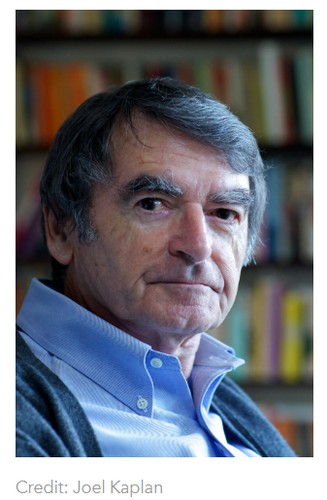

UNITED KINGDOM AUTHOR · FICTION · HISTORY AND CRITICISM
David Lodge
Also known as: DAVID LODGE, Lodge, David, 1935-2025
David Lodge (born January 28, 1935, London, England—died January 1, 2025, Birmingham, England) was an English novelist, literary critic, playwright, and editor known chiefly for his satiric novels about academic life, especially the Campus trilogy: Changing Places: A Tale of Two Campuses (1975), Small World: An Academic Romance (1984), and Nice Work (1988). Lodge was educated at University College, London (B.A., 1955; M.A., 1959), and at the University of Birmingham (Ph.D., 1967). His early novels, known mostly in England, included The Picturegoers (1960), about a group of Roman Catholics living in London; Ginger, You’re Barmy (1962), Lodge’s novelistic response to his army service in the mid-1950s; The British Museum Is Falling Down (1965), which uses stream-of-consciousness technique; and Out of the Shelter (1970), an autobiographical coming-of-age novel. How Far Can You Go? (1980; also published as Souls & Bodies) was well received in both the United States and Britain and takes a satiric look at a group of contemporary English Catholics. Several of Lodge’s novels satirize academic life and share the same setting and recurring characters; these include Changing Places: A Tale of Two Campuses (1975), Small World: An Academic Romance (1984), and Nice Work (1988). The latter two were short-listed for the Booker Prize. Among his later novels were Paradise News (1991), Therapy (1995), Thinks… (2001), and Deaf Sentence (2008). Author, Author (2004) and A Man of Parts (2011) are based on the lives of writers Henry James and H.G. Wells, respectively. In addition to writing fiction, Lodge coauthored the plays Between These Four Walls (produced 1963) and Slap in the Middle (produced 1965). His works of literary theory included Language of Fiction (1966), The Novelist at the Crossroads, and Other Essays on Fiction and Criticism (1971; rev. ed. 1984), Working with Structuralism: Essays and Reviews on Nineteenth- and Twentieth-Century Literature (1981), Write On: Occasional Essays (1986), and After Bakhtin: Essays in Fiction and Criticism (1990). The Art of Fiction (1992) reprints essays from Lodge’s columns written for The Washington Post and the London Independent, and The Practice of Writing (1996) contains essays, lectures, reviews, and a diary. The essay collection Lives in Writing was published in 2014. Lodge was the recipient of numerous honors. He was made a Chevalier de l’Ordre des Arts et des Lettres in 1997 and a Commander of the Order of the British Empire (CBE) in 1998. His memoirs are Quite a Good Time to Be Born (2015), which recounts his life from 1935 to 1975, and Writer’s Luck (2018), set in 1976–91. The Editors of Encyclopaedia Britannica
Literary theory and criticism concerned with the novel are much inferior in both quantity and quality to theory and criticism of poetry.
— from Language of fiction, 1966
Most acclaimed

Therapy
1995
To all appearances, Laurence Passmore is sitting pretty. True, he's almost bald and his nickname is "Tubby," but the TV sitcom he writes keeps the money coming in, he has an exclusive house in Rummidge, a state-of-the-art car, a vigorous sex life with his wife of thirty years, a flat in London, and a platonic mistress to talk shop with on his regular business trips. What his money can't buy, and his many therapists can't deliver, is contentment. It's not the trouble behind the scenes of his TV show that is bugging him, or even the persistent pain in his knee which expensive surgery fails to alleviate. It's a deeper, nameless unease, and his quest for the source of it will lead him into an obsession with Kierkegaard, brushes with the police, gossip-column notoriety, and strange beds and bedrooms worldwide. As his ordered life threatens to unravel, Tubby struggles to tie up the ends by going back to the beginning - to South London, his first love, and an act of bad faith which he had suppressed but never entirely recovered from.
Changing Places
The plate-glass, concrete jungle of Euphoria State University, USA, and the damp red-brick University of Rummidge have an annual exchange scheme. Normally the exchange passes without comment. But when Philip Swallow swaps with Professor Zapp the fates play a hand.