Discover
Jan 21, 1860 — Jul 29, 1944· 84 yrs

UNITED STATES AUTHOR · MATHEMATICS · HISTORY

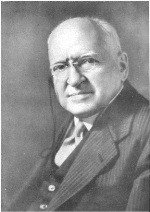
David Eugene Smith

Also known as: DAVID EUGENE SMITH, David EUGENE SMITH

31
BOOKS
0.0
AVG RATING (0)
0
READERS

David Eugene Smith was an American mathematician, educator, and editor. He attended Syracuse University, graduating in 1881 (Ph. D., 1887; LL.D., 1905). He studied to be a lawyer concentrating in arts and humanities, but accepted an instructorship in mathematics at the Cortland Normal School in 1884, where he attended as a young man. He became a professor at the Michigan State Normal College in 1891 (later Eastern Michigan University), the principal at the State Normal School in Brockport, New York (1898), and a professor of mathematics at Teachers College, Columbia University (1901) where he remained until his retirement in 1926. Smith became president of the Mathematical Association of America in 1920 and served as the president of the History of Science Society in 1927. He also wrote a large number of publications of various types. He was editor of the Bulletin of the American Mathematical Society; contributed to other mathematical journals; published a series of textbooks; translated Felix Klein's Famous Problems of Geometry, Fink's History of Mathematics, and the Treviso Arithmetic. He edited Augustus De Morgan's A Budget of Paradoxes (1915) and wrote many books on Mathematics.

Cortland, United States
Wikipedia

Most acclaimed

#1

Primary arithmetic

1904

0.0 (0)
#2

Essentials of plane and solid geometry

1923

0.0 (0)
#3

Mathematics

0.0 (0)

"Mathematics: The New Golden Age offers a glimpse of the extraordinary vistas and bizarre universes opened up by contemporary mathematicians: Hilbert's tenth problem and the four-color theorem, Gaussian integers, chaotic dynamics and the Mandelbrot set, infinite numbers, and strange number systems. Why a "new golden age"? According to Keith Devlin, we are currently witnessing an astronomical amount of mathematical research. Charting the most significant developments that have taken place in mathematics since 1960, Devlin expertly describes these advances for the interested layperson and adroitly summarizes their significance as he leads the reader into the heart of the most interesting mathematical perplexities - from the biggest known prime number to the Shimura-Taniyama conjecture for Fermat's Last Theorem."--BOOK JACKET.
Books

Newest First
