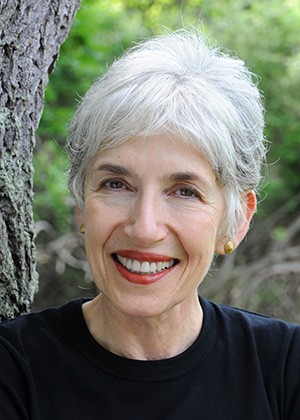
Dava Sobel
Personal Information
Description
There is no description yet, we will add it soon.
Books
Longitude
The dramatic human story of an epic scientific quest and of one man's forty-year obsession to find a solution to the thorniest scientific dilemma of the day--"the longitude problem." Anyone alive in the eighteenth century would have known that "the longitude problem" was the thorniest scientific dilemma of the day-and had been for centuries. Lacking the ability to measure their longitude, sailors throughout the great ages of exploration had been literally lost at sea as soon as they lost sight of land. Thousands of lives and the increasing fortunes of nations hung on a resolution. One man, John Harrison, in complete opposition to the scientific community, dared to imagine a mechanical solution-a clock that would keep precise time at sea, something no clock had ever been able to do on land. Longitude is the dramatic human story of an epic scientific quest and of Harrison's forty-year obsession with building his perfect timekeeper, known today as the chronometer. Full of heroism and chicanery, it is also a fascinating brief history of astronomy, navigation, and clockmaking, and opens a new window on our world.
Galileo's Daughter
A Historical Memoir of Science, Faith, and LoveInspired by her long fascination with Galileo, and by the remarkable surviving letters of his daughter, which she has translated into English for the first time, Dava Sobel has written a book of great originality and power, a biography unlike any ever written on the man Albert Einstein called “the father of modern physics – indeed of modern science altogether.”Galileo Galilei (1564-1642) was the foremost scientist of his day. Though he never left italy, his birthplace, his inventions and discoveries were heralded around the world. His telescopes allowed him to reveal a new reality in the heavens and to publicly propound the astounding argument that the Earth actually moves around the Sun. For this belief he was brought before the Holy Office of the Inquisition, accused of heresy, and threatened with torture. In contrast, his daughter Virginia, became a cloistered nun. Born in 1600, she was thirteen when Galileo placed her in a convent near him in Florence, where she took the most appropriate name of Suor Maria Celeste. Galileo later said of her that she had an “exquisite mind,” and her intelligence and loving support proved to be her father’s greatest source of strength through his most difficult years.“I had two daughters who were nuns and whom I loved dearly, but the eldest in particular, who was a woman of exquisite mind, singular goodness, and most tenderly attached to me.” – Galileo Galilei (July 28, 1634)Galileo’s Daughter brings Galileo to life as never before—boldly compelled to explain the truths he discovered, human in his frailties and faith, devoted to family and, especially, to his daughter. Her presence graces his life now as it did then. Their voices, and those of others who touched their lives, echo down the centuries through letters and writings, which Sobel masterfully weaves into her narrative, building toward the crescendo of history’s most dramatic collision between science and religion. In the process, she illuminates an entire era, when the flamboyant Medici grand dukes became Galileo’s patrons, when the bubonic plague wreaked its terrible devastation and prayer was the most effective medicine, when the Thirty Years’ War tipped fortunes across Europe, and when one man fought, through his trial and betrayal by his former friend, Pope Urban VIII, to reconcile the Heaven he revered as a good Catholic with the heavens he revealed through his telescope. An unforgettable story, Galileo’s Daughter is a stunning achievement.
The planets
To father
"Galileo Galilei was at the heart of the most dramatic collision in history between science and religion. But the great Italian scientist was also a loving father who treasured his illegitimate daughter, Virginia. She was perhaps her father's equal in brilliance, industry and sensibility, and became his greatest source of strength during his most difficult years. Now readers can follow their story, as she told it, in this volume of her surviving 124 letters to Galileo. Both in their original Italian and translated into English by the author of Galileo's Daughter, these letters speak in the present tense, suspended in the urgency of their once current affairs."--BOOK JACKET. The story of Galileo's daughter, Sister Maria Celeste, as told through her letters to her father. A companion to the bestselling "Galileo's Daughter", the letters are edited and introduced by Dava Sobel.
Cosmos
This book is about science in its broadest human context, how science and civilization grew up together. It is the story of our long journey of discovery and the forces and individuals who helped to shape modern science, including Democritus, Hypatia, Kepler, Newton, Huygens, Champollion, Lowell and Humason. The book also explores spacecraft missions of discovery of the nearby planets, the research in the Library of ancient Alexandria, the human brain, Egyptian hieroglyphics, the origin of life, the death of the Sun, the evolution of galaxies and the origins of matter, suns and worlds. The author retraces the fifteen billion years of cosmic evolution that have transformed matter into life and consciousness, enabling the cosmos to wonder about itself. He considers the latest findings on life elsewhere and how we might communicate with the beings of other worlds. ~ WorldCat.org
The glass universe
xii, 324 pages, 16 unnumbered pages of plates : illustrations (some color) ; 24 cm1330L Lexile
And the sun stood still
"Using her deep knowledge, her skills as a storyteller, and her imagination, Dava Sobel illuminates one of history's most significant and far-reaching meetings. In the spring of 1539, a young German mathematician--Georg Joachim Rheticus--journeyed hundreds of miles to northern Poland to meet the legendary, elderly cleric and reluctant astronomer Nicolaus Copernicus. Some two decades earlier, Copernicus had floated the mind-boggling theory that the Sun, not the Earth, was stationary at the center of the universe, and he was rumored to have crafted a book that could prove it. Though exactly what happened between them can never be known, Rheticus shepherded Copernicus's great work into production and De revolutionibus orbium coelestium ultimately changed the course of human understanding. Dava Sobel imagines their dramatic encounter, and with wit and erudition gives them personality. Through clever and dramatic dialogue, she brings alive the months Rheticus and Copernicus spent together--the one a heretical Lutheran, the other a free-thinking Catholic--and in the process illuminates the historic tension between science and religion. An introduction by Dava Sobel will set the stage, putting the scenes in historical context, and an afterword will describe what happened after Copernicus's book was published detailing the impact it had on science and on civilization"--
Arthritis
Describes the symptoms, causes, diagnosis, and both conventional and alternative treatments of arthritis.
A more perfect heaven
The bestselling author of Longitude and Galileo's Daughter tells the story of Nicolaus Copernicus, and the revolution he inspired, in an utterly original and groundbreaking new book. By 1514, the reclusive cleric Nicolaus Copernicus had written and hand-copied an initial outline of his heliocentric theory—in which he defied common sense and received wisdom to place the sun, not the earth, at the center of our universe, and set the earth spinning among the other planets. Over the next two decades, Copernicus expanded his theory through hundreds of observations, while compiling in secret a book-length manuscript that tantalized mathematicians and scientists throughout Europe. For fear of ridicule, he refused to publish. In 1539, a young German mathematician, Georg Joachim Rheticus, drawn by rumors of a revolution to rival the religious upheaval of Martin Luther's Reformation, traveled to Poland to seek out Copernicus. Two years later, the Protestant youth took leave of his aging Catholic mentor and arranged to have Copernicus's manuscript published, in 1543, as De revolutionibus orbium coelestium (On the Revolutions of the Celestial Spheres)—the book that forever changed humankind's place in the universe. In her elegant, compelling style, Dava Sobel chronicles, as nobody has, the conflicting personalities and extraordinary discoveries that shaped the Copernican Revolution. At the heart of the book is her play And the Sun Stood Still, imagining Rheticus's struggle to convince Copernicus to let his manuscript see the light of day. As she achieved with her bestsellers Longitude and Galileo's Daughter, Sobel expands the bounds of narration, giving us an unforgettable portrait of scientific achievement, and of the ever-present tensions between science and faith. - Publisher.
