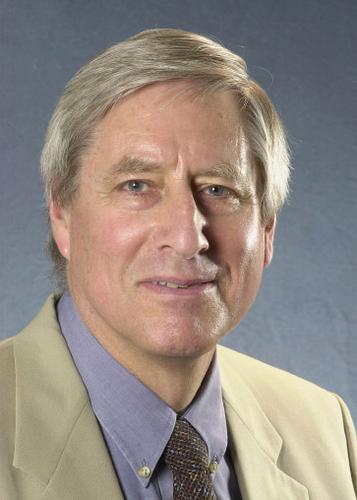
Christopher R. Browning
Personal Information
Description
Christopher Robert Browning (born May 22, 1944) is an American historian who is the professor emeritus of history at the University of North Carolina at Chapel Hill (UNC). A specialist on the Holocaust, Browning is known for his work documenting the Final Solution, the behavior of those implementing Nazi policies, and the use of survivor testimony. He is the author of nine books, including Ordinary Men (1992) and The Origins of the Final Solution (2004). Source: [Christopher R. Browning]( on Wikipedia
Books
Ordinary Men
Christopher R. Browning’s shocking account of how a unit of average middle-aged Germans became the cold-blooded murderers of tens of thousands of Jews. Ordinary Men is the true story of Reserve Police Battalion 101 of the German Order Police, which was responsible for mass shootings as well as round-ups of Jewish people for deportation to Nazi death camps in Poland in 1942. Browning argues that most of the men of RPB 101 were not fanatical Nazis but, rather, ordinary middle-aged, working-class men who committed these atrocities out of a mixture of motives, including the group dynamics of conformity, deference to authority, role adaptation, and the altering of moral norms to justify their actions. Very quickly three groups emerged within the battalion: a core of eager killers, a plurality who carried out their duties reliably but without initiative, and a small minority who evaded participation in the acts of killing without diminishing the murderous efficiency of the battalion whatsoever. While this book discusses a specific Reserve Unit during WWII, the general argument Browning makes is that most people succumb to the pressures of a group setting and commit actions they would never do of their own volition. Ordinary Men is a powerful, chilling, and important work, with themes and arguments that continue to resonate today.
Holocaust Scholarship
This collection of essays arises from a conference held at the University of Cape Town under the auspices of the Isaac and Jessie Kaplan Centre for Jewish Studies and Research. Leading international Holocaust scholars met to reflect on the ways their personal experiences influenced their professional trajectories over many decades of immersion in studies of the Holocaust. Participants examined changes and developments in the field within the context of their own personal odysseys, including shifting cultural milieus and robust academic conflicts. Meeting in South Africa provided a special ambience as the country had emerged only two decades earlier from a race-based system defined by the United Nations as a crime against humanity. The massive corpus of scholarly engagement with the Holocaust - with reverberations across the globe - has ensured that its study today is paradigmatic for scholars exploring genocide, as well as perpetrators and victims of antisemitism, racism, and the Second World War.
The Origins of the Final Solution
In 1939, the Nazi regime's plans for redrawing the demographic map of Eastern Europe entailed the expulsion of millions of Jews. By the fall of 1941, these plans had shifted from expulsion to systematic and total mass murder of all Jews within the Nazi grasp. The Origins of the Final Solution is the most detailed and comprehensive analysis ever written of what took place during this crucial period -- of how, precisely, the Nazis' racial policies evolved from persecution and "ethnic cleansing" to the Final Solution of the Holocaust. Focusing on the months between the German conquest of Poland in September 1939 -- which brought nearly two million additional Jews under Nazi control -- and the beginning of the deportation of Jews to the death camps in the spring of 1942, Christopher R. Browning describes how Poland became a laboratory for experiments in racial policies, from expulsion and decimation to ghettoization and exploitation under local occupation authorities. He reveals how the subsequent attack on the Soviet Union opened the door for an immense radicalization of Nazi Jewish policy and marked the beginning of the Final Solution. Meticulously documenting the process that led to this fatal development, Browning shows that Adolf Hitler was the key decision-maker throughout, approving major escalations in Nazi persecution of the Jews at victory-induced moments of euphoria. Thoroughly researched and lucidly written, this groundbreaking work provides an essential chapter in the history of the Holocaust. - Publisher.
The path to genocide
The Path to Genocide studies three aspects of the events leading up to the Final Solution in Nazi Germany. First, Nazi's "solutions" to their self-imposed "Jewish problem" before resorting to mass-murder are examined, specifically ghettoization and early resettlement plans to expel Jews to Eastern Poland or the island of Madagascar. Second, the responsibility of shaping Nazi Jewish policy is shown to extend to the lower and middle echelon of government, through accommodation and conformity of a wide variety of perpetrators, including bureaucrats, doctors and policemen. Finally the role of Adolf Hitler in the decisionmaking process is examined, with a historiographical analysis of other accounts of his role. Browning argues that while Hitler did not operate according to a premeditated plan or blueprint, he did make the key decisions. This volume of essays provides perspectives on German Jewish policy both from the bottom of the government apparatus and from the top.
Every Day Lasts A Year
Richard Hollander was devastated when his parents were killed in an automobile accident in 1986. While rummaging through their attic, he discovered letters from a family he never knew - his father's mother, three sisters, and their husbands and children. The letters were written from Krakow, Poland, between 1939 and 1942. They depict day-to-day life under the most extraordinary pain and stress, yet the family remained a caring, loving unit. At the same time, Richard's father, Joseph Hollander, was fighting the United States government to avoid deportation and death. The struggle over whether to deport Joseph involves such historic figures as Eleanor Roosevelt, Secretary of State Cordell Hull, senators, congressmen, federal agency heads, and judges. Richard was astounded to learn that his father saved the lives of many Polish Jews, but - despite heroic efforts - could not save his family.