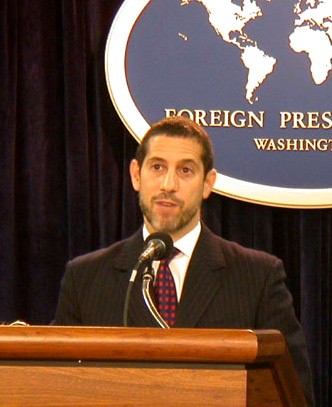
Bruce Hoffman
Description
American academic
Books
Anonymous soldiers
Draws on newly available documents from the National Archives in Britain to chronicle the historical events and key campaigns that led to the creation of Israel.
State of the struggle
"Assesses the West's progress across a wide array of counterterrorism imperatives. From ethical questions of balancing security and core values to the problems of creating viable counterterrorism coalitions to the likelihood of biological, chemical, and nuclear weapons, report examines a wide swath of issues necessary to create workable counterterrorism strategies"--Provided by publisher.
Terrorism in the United States and the potential threat to nuclear facilities
"This report examines the threat posed by terrorists to U.S. nuclear weapons production and research facilities. It identifies and reviews the activities of three classes of terrorist groups in the United States: (1) ethnic separatist and emigre groups; (2) left-wing radical organizations; and (3) right-wing racist, anti-authority, survivalist-type groups. Although the situation could change suddenly in the future, the historical record suggests that U.S.-based terrorist groups are unlikely to attack a defended site such as a nuclear weapons facility. However, it is not possible to rule out such an attack by a terrorist group operating in the United States at the behest and under the direction of a foreign government. These state-sponsored terrorists have greater resources and fewer political constraints, and therefore pose a potentially greater threat to nuclear weapons sites."--Rand Abstracts.
A reassessment of potential adversaries to U.S. nuclear programs
"This report reviews recent developments and trends in international terrorism that could affect the safety and security of U.S. nuclear weapons research sites and production facilities. It is based on an examination of prior research findings and new evidence concerning the terrorist threat to U.S. nuclear weapons facilities. The findings suggest that the motivation, characteristics, and capabilities of potential adversaries have changed little in the past decade. However, two developments--a dramatic increase in state sponsorship of terrorism (i.e., sponsorship of terrorist groups by foreign governments) and a shift in emphasis within both the American and European anti-nuclear protest movements from energy to weapons--may necessitate some revisions in nuclear facility defense requirements."--Rand Abstracts.
British air power in peripheral conflict, 1919-1976
Although they rarely involve the vital interests of major powers, peripheral conflicts can be lengthy, can have a potential for escalation, can be marked by intense fighting, and can generate relatively heavy casualties. These traits typify many of the campaigns in which Britain has been involved since World War I and in which air power has been used. This report examines the use of air power by the British in such peripheral conflicts. Five key themes emerge from the operations reviewed in the report: (1) "high-tech," sophisticated aircraft were not always an improvement over the older, slower aircraft that could take off from and land on short, rough airstrips; (2) in almost all of the peripheral conflicts in which Britain was involved, the air-defense threat posed by the enemy was at best negligible; (3) successful operations often hinged on close coordination and communication between air and ground forces; (4) air strikes were often inappropriate or ineffective in rural campaigns and were useless in conflicts with a prominent urban component; and (5) the British appreciated {u2014} particularly in pre-1939 conflicts {u2014} the comparative cost savings of air operations over traditional ground-force operations with similar goals and outcomes.
Inside terrorism
Are religious terrorist groups more likely than secular groups to use weapons of mass destruction? How do the media at once promote and combat terrorist attacks? How has terrorism evolved into a multimillion-dollar operation in the Middle East? Bruce Hoffman addresses these questions as he describes the changing face of terrorism, probing the new adversaries, new motivations, and new methods that have surfaced in recent years to challenge many of our most fundamental assumptions about terrorists and how they operate. Hoffman dissects terrorism past and present, charting its evolution and predicting where it might be headed in the next century. These fringe groups are built upon - and react to - a sense of isolation, and are more likely to use weapons of mass destruction than the nationalist terrorist groups with which we are familiar. Hoffman also considers the issue of media coverage and how it relates to political power. Although the media provide a platform for terrorist agendas, terrorists achieve their ultimate political goals by exploiting the media, and are often captured as a result of news reports - as in the Unabomber case. South Africa's African National Congress, which won sympathy for its plight and eventually obtained power in part through terrorist activities, is a rare exception to the rule.