Discover

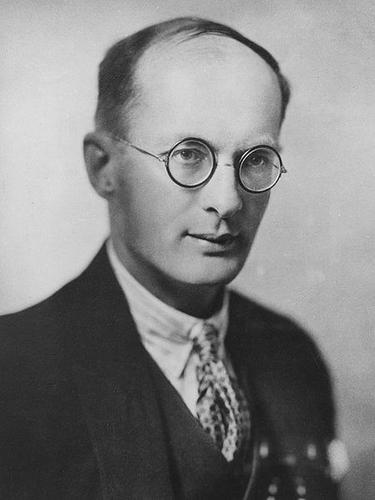
Bronisław Malinowski

Personal Information

Born April 7, 1884
Died May 16, 1942 (58 years old)
Kraków, Second Polish Republic
Also known as: B. Malinowski, Malinowski
42 books
3.8 (5)
117 readers

Description

A Polish anthropologist. His pioneering ethnographic fieldwork made a major contribution to the study of Melanesia and of phenomena relating to reciprocity.

Books

Newest First

Les argonautes du Pacifique occidental

0.0 (0)
0

Description ethnographique de la culture des habitants des îles Trobriand (Nouvelle-Guinée) et plus particulièrement du système d'échanges intertribaux connu dans cette région sous le nom de "kula". Un classique de l'ethnologie. SDM

Dziennik w ścisłym znaczeniu tego wyrazu

2.0 (1)
5

When it was first published (in 1967, posthumously), Bronislaw Malinowski's diary, covering the period of his fieldwork in 1914-15 and 1917-18 in New Guinea and the Trobriand Islands, set off a storm of controversy. Many anthropologists felt that the publication of the diary -- which Raymond Firth describes as "this revealing, egocentric, obsessional document"--Was a profound disservice to the memory of one of the giant figures in the history of anthropology. Almost certainly never intended to be published, Malinowski's diary was intensely personal and brutally honest. He kept it, he said, "as a means of self-analysis." Reviews ranged from "it is to the discredit of all concerned that the diary has now been committed to print" to "fascinating reading." Twenty years have passed, and Raymond Firth suggests that the book has moved over to a more central place in the literature of anthropological reflection. In 1967, Clifford Geertz felt that the "gross, tiresome" diary revealed Malinowski as "a crabbed, self-preoccupied, hypochondriacal narcissist, whose fellow-feeling for the people he lived with was limited in the extreme." But in 1988, Geertz referred to the diary as a "backstage masterpiece of anthropology, our The Double Helix." Similarly, in 1987, James Clifford called it "a crucial document for the history of anthropology." It is clearly time for a reissue of this controversial work, which has long been out of print. For this reissue, Raymond Firth, who wrote the original Introduction, has prepared a new Introduction that reviews the reception the diary originally received and describes how judgments about it have changed over the past twenty years. -- Back cover.

Magic, science, and religion, and other essays

0.0 (0)
3

This book presents essays by renowned anthropologist Malinowski, known for his talent to bring together the warm reality of human living with the cool abstractions of science. His pages have become an almost indispensable link between the knowing of exotic and remote people with theoretical knowledge about humankind. This collection offers readers a set of concepts about religion, magic, science, rite and myth in the course of forming vivid impressions and understandings of the Trobrianders of New Guinea.

Magic, science and religion

5.0 (1)
15

The Book Malinowski's research has had a profound impact on the study of magical and religious practice in both the modern and ancient worlds, along with the works of Mauss. Three famous Malinowski essays. Malinowski, one of the all-time great anthropologists, had a talent for bringing together in single comprehension the warm reality of human living with the cool abstractions of science. His pages have become an almost indispensable link between the knowing of exotic and remote people with theoretical knowledge about humankind. An important collection of three of his most famous essays, Magic, Science and Religion offers readers a set of concepts about religion, magic, science, rite and myth in the course of forming vivid impressions and understandings of the Trobrianders of New Guinea. About the Author Bronislaw Malinowski (1884-1942), Anglo-Polish anthropologist, was born in what was then Austrian Poland of a long line of Polish nobility and landed gentry. He was educated at the Polish University of Cracow, from which he received his doctorate in 1908 with the highest honors of the Austro-Hungarian Empire. He also studied at the University of Leipzig and later went on to London, where from 1910 he was associated with the London School of Economics. From 1914 to 1918 Dr. Malinowski was a member of the Robert Mond Expedition to New Guinea and North Melanesia, and it was the research done on this expedition that was later published in Argonauts of the Western Pacific. In later years Dr. Malinowski taught at the University of London, at Cornell University, and at Yale University. (Amazon)

The dynamics of culture change

0.0 (0)
2

"Published on the Louis Stern memorial fund."Includes index. Bibliography: p. -165.
