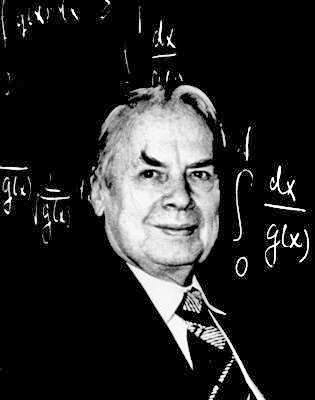
Boris Vladimirovich Gnedenko
Personal Information
Description
Russian mathematician
Books
Probabilistic reliability engineering
With the growing complexity of engineered systems, reliability has increased in importance throughout the twentieth century. Initially developed to meet practical needs, reliability theory has become an applied mathematical discipline that permits a priori evaluations of various reliability indices at the design stages. These evaluations help engineers choose an optimal system structure, improve methods of maintenance, and estimate the reliability on the basis of special testing. Probabilistic Reliability Engineering focuses on the creation of mathematical models for solving problems of system design. To provide readers with all necessary background material, this text incorporates a thorough review of the fundamentals of probability theory and the theory of stochastic processes. It offers clear and detailed treatment of reliability indices, the structure function, load-strength reliability models, distributions with monotone intensity functions, repairable systems, the Markov models, analysis of performance effectiveness, two-pole networks, optimal redundancy, optimal technical diagnosis, and heuristic methods in reliability. Throughout the text, an abundance of real world examples and case studies illustrate and illuminate the theoretical points under consideration.
Predelʹnye raspredelenii︠a︡ dli︠a︡ summ nezavisimykh sluchaĭnykh velichin
Random summation
This book provides an introduction to the asymptotic theory of random summation, combining a strict exposition of the foundations of this theory and recent results. It also includes a description of its applications to solving practical problems in hardware and software reliability, insurance, finance, and more. The authors show how practice interacts with theory, and how new mathematical formulations of problems appear and develop. Attention is mainly focused on transfer theorems, description of the classes of limit laws, and criteria for convergence of distributions of sums for a random number of random variables. Theoretical background is given for the choice of approximations for the distribution of stock prices or surplus processes. General mathematical theory of reliability growth of modified systems, including software, is presented. Special sections deal with doubling with repair, rarefaction of renewal processes, limit theorems for supercritical Galton-Watson processes, information properties of probability distributions, and asymptotic behavior of doubly stochastic Poisson processes. Random Summation: Limit Theorems and Applications will be of use to specialists and students in probability theory, mathematical statistics, and stochastic processes, as well as to financial mathematicians, actuaries, and to engineers desiring to improve probability models for solving practical problems and for finding new approaches to the construction of mathematical models.
Statistical reliability engineering
While probabilistic methods of system reliability analysis have reached an unparalleled degree of refinement, Russian engineers have concentrated on developing more advanced statistical methods. Over the past several decades, their efforts have yielded highly evolved statistical models that have proven to be especially valuable in the estimation of reliability based upon tests of individual units of systems. Now Statistical Reliability Engineering affords engineers a unique opportunity to learn both the theory behind and applications of those statistical methods. Statistical Reliability Engineering is an important professional resource for reliability and design engineers, especially those in the telecommunications and electronics industries. It is also an excellent course text for advanced courses in reliability engineering.
Kurs teorii veroi︠a︡tnosteĭ
This book is the sixth edition of a classic text that was first published in 1950 in the former Soviet Union. The clear presentation of the subject and extensive applications supported with real data helped establish the book as a standard for the field. To date, it has been published into more that ten languages and has gone through five editions. The sixth edition is a major revision over the fifth. It contains new material and results on the Local Limit Theorem, the Integral Law of Large Numbers, and Characteristic Functions. The new edition retains the feature of developing the subject from intuitive concepts and demonstrating techniques and theory through large numbers of examples. The author has, for the first time, included a brief history of probability and its development. Exercise problems and examples have been revised and new ones added.--