Discover

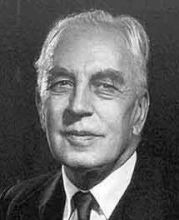
Arnold J. Toynbee

Personal Information

Born April 14, 1889
Died October 22, 1975 (86 years old)
London, United Kingdom
Also known as: Arnold J. Toynbee, Arnold Toynbee
58 books
4.2 (25)
441 readers

Description

Arnold Joseph Toynbee (14 April 1889 – 22 October 1975) was a British historian, philosopher of history, research professor of International History at the London School of Economics and the University of London and author of numerous books. Source: [Arnold J. Toynbee]( on Wikipedia

Books

Newest First

A Study of History

4.5 (8)
254

A masterful attempt to describe a universal history. Staggering depth of scholarship and breath of thought.

The world and the West

0.0 (0)
1

"The World and the West reaches from such diverse cases as the Maya and Yaqui of Mexico, the Ghost Dance of North America, cargo cults of Melanesia, to Meiji Japan and the Ottoman Empire. In discussing a variety of questions about the relations between the world and the West in recent centuries, Curtin ultimately introduces a new perspective on the underlying question: How do human societies change through time?"--Jacket.

On the future of art

0.0 (0)
0

"In today's world, the question of what the future will bring--if, indeed, we are to have a future at all--has become a matter of critical concern. Through developments in science and technology, we are rapidly approaching the point where we will be able to comprehend and even control the present in order to predict the future more accurately than ever before. But the influence of the creative individual is one aspect of the future that always eludes such predictions. In this collection of essays, based on a series of lectures given at the Guggenheim Museum in New York, seven prominent intellectuals and artists speculate on the future of art in light of their own ideas about what the world will be like. Although historian Arnold Toynbee, anthropologist Claude Lévi-Strauss (perceptively interpreted by critic Annette Michelson), psychologist B. F. Skinner, and philosopher Herbert Marcuse envision the future in very different ways, each chooses to consider the arts in terms of the artist's role in society. The artists themselves (architect Louis Kahn, sculptor James Seawright, artist-author J. W. Burnham) characteristically look ahead to the artistic possibilities offered by technological advances rather than to their relationship with a future public. Revised by the authors for book publication, edited and introduced by Edward Fry, Associate curator of the Guggenheim Museum, these essays make up a provocative symposium which sheds a great deal of light on present-day thinking as it anticipates the world of tomorrow." -- Provided by publisher

Choose Life

0.0 (0)
16

Also known as The Toynbee-Ikeda Dialogue.
