
UNITED KINGDOM AUTHOR · FICTION · SOCIAL LIFE AND CUSTOMS
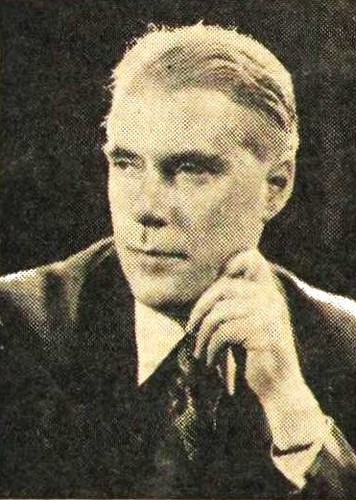
Anthony Powell
Also known as: ANTHONY POWELL, Powell, Anthony
Anthony Powell was born in London in 1905 and was educated at Eton and Balliol College, Oxford. He worked for a London publisher from 1927 to 1935. and as a film scriptwriter from 1935 to 1936. He has written reviews and literary columns for various newspapers and periodicals and was Literary Editor of Punch from 1952 to 1958. He was commissioned in the Welch Regiment in 1939 and subsequently transferred to the Intelligence Corps where he served as a liaison officer with the Allied Forces. His published works are: Afternoon Men (1931), Venusberg (1932), From a View to a Death (1933), What's Become of Waring (1939), John Aubrey and His Friends (1948). Selections from John Aubrey (1949), A Question of Upbringing (1951). A Buyer's Market (1952). The Acceptance World (1955), At Lady Molly's (James Tait Black Memorial Prize (1957), and Casanova's Chinese Restaurant (I960). The last five books form the first half of the Music of Time sequence. Anthony Powell married Lady Violet Pakenham in 1934 and they had two sons.
THE first three weeks of November have gone with such a rush that I have neglected my diary and can only patch it up from memory.
— from Journals, 1897
Most acclaimed

A writer's notebook
Writers are like other people, except for at least one important difference. Other people have daily thoughts and feelings, notice this sky or that smell, but they don't do much about it. Not writers. Writers react. And writers need a place to record those reactions. That's what a writer's notebook is for. It gives you a place to write down what makes you angry or sad or amazed, to write down what you noticed and don't want to forget . . . .
The fisher king
2000
"In 1949, Sonny-Rett Payne, a black jazz pianist, fled New York for Paris to escape both his family's disapproval of his art and the racism that shadowed his career. His spectacular success in Europe and his subsequent death there form the dramatic background of Paule Marshall's fifth novel, a moving and revelatory story of jazz, family conflict, and the artist's struggles in society.". "Decades after Sonny-Rett left, his eight-year-old Parisian grandson is brought to his old Brooklyn neighborhood to attend a memorial concert in Payne's honor. The child's visit reveals the persistent rivalries within the family and the community that drove his grandfather into exile." "Will the young boy be a harbinger of change and reconciliation or a pawn in the power struggle of those who now wish to claim him in Sonny-Rett's name?"--BOOK JACKET.
Journals
1897
A landmark publication in the history of American letters, and a unique opportunity to celebrate the legacy of the one of the great public intellectuals of our time.For more than a half century, Arthur Schlesinger, Jr. was at the vital center of American political and cultural life. From his entrance into political leadership circles in the 1950s through his years in the Kennedy White House and up until his very last days, he was that rare thing, a master historian who enjoyed an extraordinary eyewitness vantage on history as it was being made. On intimate terms with many of the most prominent political, cultural and intellectual figures of the last fifty years, he was a man whose proximity to power never obscured his appreciation for the reality of those who have none. For that capacity for empathy and for much else, he was often called American liberalism's greatest voice.For most of his adult life, Arthur Schlesinger, Jr. dutifully recorded his experiences and opinions in journals that, until now, have never been seen. Edited by his oldest sons, they offer remarkably fresh and lucid observations on a half century of public life, and a rare and privileged view into the mind of one of America's most distinguished men of letters. Frank, revelatory, suffused with wit and humanity, these entries offer an intimate history of postwar America, from his days on Adlai Stevenson's campaign team to his years in JFK and RFK's inner circle, through to the election of George W. Bush. They contain his candid reminiscences about many of the signal events of our time - the Bay of Pigs, the devastating assassinations of the 1960s, Vietnam, Watergate, the fall of the Soviet Union, Bush v. Gore. These journals also offer an extraordinary window into the lives of the wide range of politicians, intellectuals, writers and actors who were his friends - from the Kennedys to the Clintons, from Henry Kissinger to Adlai Stevenson, from Norman Mailer to Lauren Bacall. Together they form an astonishingly vivid portrait of American politics and culture in the second half of the 20th century - one that only a man who knew everyone and missed nothing, could provide.Arthur Schlesinger, Jr. was one of America's greatest moral and intellectual forces, and the publication of his journals is both itself an epic event in the history of American letters, and a fitting opportunity to celebrate this most remarkable American life.