
UNITED KINGDOM AUTHOR · FICTION · HISTORY
Angela Lambert
Also known as: Angela Maria Helps Lambert, Angela Lambert
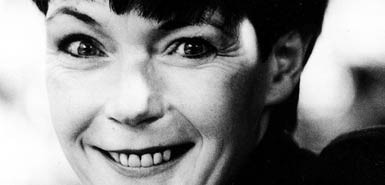
Angela Maria Helps was born on 14 April 1940, to a English civil servant and a German-born housewife. She wanted to be a writer from childhood. She read politics, philosophy and economics at Oxford. In 1962, she married Martin Lambert, they had a son a daughter, but the union ended five years later, when he left her with two young children to support. She also had other daughter with the Hungarian-born writer Stephen Vizinczey In 1969, Angela began her career in journalism as an assistant editor at Modern Woman magazine, only to be sacked when she was pregnant. She later became a television journalist at ITN and then joined The Independent newspaper in 1988. She was the author of two volumes of British social history entitled Unquiet Souls: The Indian Summer of the British Aristocracy (1984), and 1939, The Last Season of Peace (1989). She also wrote seven novels, of which the best known was A Rather English Marriage (1992) which was later adapted for a television drama of the same title. Her last published work was a biography of Hitler’s mistress entitled The Lost Life of Eva Braun (2006). In 1998, her novel Kiss and Kin won the Romantic Novel of the Year Award by the Romantic Novelists' Association. Angela suffered multiple immune disorders and hepatitis C (caught from a blood transfusion) which led to cirrhosis of the liver. Having survived a critical illness in February 2006, she never quite recovered, and became increasingly disabled. She lived in London and France (having bought a house in the Dordogne in 1972). She passed away on 26 September 2007, she is survived by TV director Tony Price, her partner of 21 years, and by her son and two daughters.
Most acclaimed

1939
In 1939, exhausted by a decade-long depression, Americans faced a brewing European conflict that would prove to be the most destructive war in history. At this dark juncture, a World's Fair was held in New York City that evoked such acute hope in its promise of a glorious future that a whole generation was drawn to it and transformed by its vision. People came from all over the world to see the fair, and it was not uncommon for many to attend ten, twenty, even thirty times. There, the awed spectators gazed at a utopian world of superhighways, spacious suburbs and other technological wonders. As David Gelernter brilliantly recounts in 1939, it was a future that has largely come to pass, but one that, in its realization, has drained us of the very pride and hope that were so palpable at the fair itself. In 1939, Gelernter gives us a virtual reality picture of the World's Fair and the passionate feelings it still evokes in those who were there. In entering that picture, we gain a clearer understanding of why our future stands in such dark contrast to the glittering utopian vision of 1939.