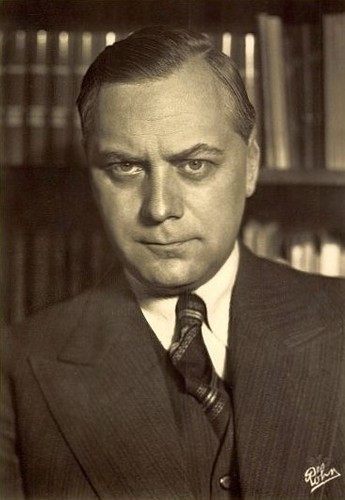
Alfred Rosenberg
Personal Information
Description
There is no description yet, we will add it soon.
Books
The Myth of the Twentieth Century
"Based on a selective reading of earlier works of philosophers, neo-pagan authors, and racial theorists such as Houston Stewart Chamberlain, the volume embodied a dichotomist world view that positioned the Aryan and the Jewish races irreconcilably against one another. All the fruits of Western culture, Rosenberg posited, had evolved solely from the Germanic tribes; yet the Roman priestly caste which had arisen with Christianity had combined with Freemasons, Jesuits, and international Jewry to erode this culture and with it German spiritual values. While Rosenberg's völkisch arguments and his emphasis on Lebensraum (German living room in the East) corresponded with Party ideology, many fellow Nazis found his mystical constructs and his prose hard going. Hitler himself held political reservations about Rosenberg's anti-Christian rhetoric. Until the end of his life, however, Rosenberg remained convinced his racist utopia would provide a recipe for Germany's future as the leading European power."--United States Holocaust Memorial Museum Holocaust Encyclopedia
Wesen, Grundsätze und Ziele der Nationalsozialistischen Deutschen Arbeiterpartei
Der Mythus des 20. Jahrhunderts
"As population estimates for 2050 reach over 9 billion, issues of food security and nutrition have been dominating academic and policy debates. A total of 805 million people are undernourished worldwide and malnutrition affects nearly every country on the planet. Despite impressive productivity increases, there is growing evidence that conventional agricultural strategies fall short of eliminating global hunger, as well as having long-term ecological consequences. Forests can play an important role in complementing agricultural production to address the Sustainable Development Goals on zero hunger. Forests and trees can be managed to provide better and more nutritionally-balanced diets, greater control over food inputs--particularly during lean seasons and periods of vulnerability (especially for marginalised groups)--and deliver ecosystem services for crop production. However forests are undergoing a rapid process of degradation, a complex process that governments are struggling to reverse. This volume provides important evidence and insights about the potential of forests to reducing global hunger and malnutrition, exploring the different roles of landscapes, and the governance approaches that are required for the equitable delivery of these benefits. Forests and Food is essential reading for researchers, students, NGOs and government departments responsible for agriculture, forestry, food security and poverty alleviation around the globe. This book is based on the International Union of Forest Research Organizations (IUFRO) Global Forest Expert Panel report on Forest and Food Security