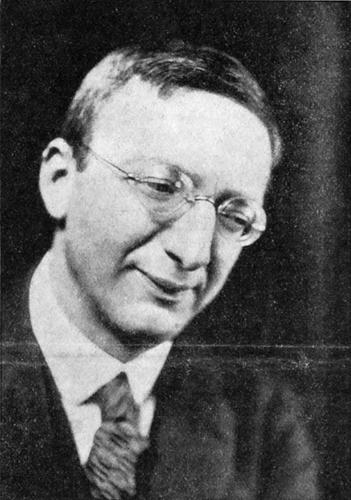
Alfred Döblin
Description
German expressionist novelist
Books
Destiny's journey
"Alfred Doblin, author of the classic novel Berlin Alexanderplatz, has been hailed by Kafka and Gunter Grass as one of the greatest German writers of this century. In this stunning autobiography, Doblin recounts his nightmarish flight from the Nazis."--BOOK JACKET. "As Jewish refugees living in Paris, Doblin and his family were forced to flee Hitler's armies in 1940. This story of his tortured journey through France, Spain, Portugal, and finally to America reads like an adventure novel. Here is Doblin carrying heavy luggage and a manuscript along the dusty roads of France, traveling in a cattle car, stuck in one obscure provincial town after another, in and out of refugee camps, constantly out of money. He had left Paris after his family, and only after desperately searching for them are they reunited. Fortunately, when it comes to their final escape from Europe through Marseille and Lisbon, their passports are prolonged, exit visas granted, and an unknown French civil servant provides them with money for their tickets to America. The last part of the book chronicles Doblin's stay in Hollywood and gives a devastating portrait of Alexanderplatz upon his return to Germany."--BOOK JACKET. "What makes Destiny's Journey so wonderfully rich is that we witness not only the flight of a refugee, but also a significant stage in the author's intellectual journey - Doblin's personal transformation from a Jewish radical socialist to a Catholic. How astonishing that the author of Journey to Poland, who had written so movingly of the spirituality of the Jewish people, here experiences a conversion to Christianity in a refugee camp in southern France."--BOOK JACKET. "Destiny's Journey is a moving chronicle of two journeys - one of the refugee and the other of the spirit - and makes us understand Doblin's lifelong, stubborn, and contradictory thirst for a metaphysical view of the world and himself."--BOOK JACKET.
Die drei Sprünge des Wang-lun
"In 1915, fourteen years before Berlin Alexanderplatz, Alfred Doblin published his first novel, an amazing, extensively researched Chinese historical extravaganza: The Three Leaps of Wang Lun. Even more remarkably, given its subject matter, the book was written in expressionist style and is now considered the first modern German novel, as well as the first Western novel to depict a China untouched by the West. Based on actual accounts of a doomed rebellion during the reign of Emperor Qianlong in the late eighteenth century, the novel tells the story of Wang Lun, a historical martial arts master and charismatic leader of the White Lotus sect, who leads a futile revolt of the "Truly Powerless." Densely packed cities and Tibetan wastes, political intrigue and religious yearning, imperial court life and the fate of wandering outcasts are depicted in a language of enormous vigor and matchless imagination, unfolding the theme of timidity against force and a mystical sense of the world against the realities of power"-- "China 1760-1774 Novel translated from the German"--
Berlin Alexanderplatz
"The inspiration for Rainer Werner Fassbinder's epic film and that The Guardian named one of the "Top 100 Books of All Time," Berlin Alexanderplatz is considered one of the most important works of the Weimar Republic and twentieth century literature. Franz Biberkopf, pimp and petty thief, has just finished serving a term in prison for murdering his girlfriend. He's on his own in Weimar Berlin with its lousy economy and frontier morality, but Franz is determined to turn over new leaf, get ahead, make an honest man of himself, and so on and so forth. He hawks papers, chases girls, needs and bleeds money, gets mixed up in spite of himself in various criminal and political schemes, and when he tries to back out of them, it's at the cost of an arm. This is only the beginning of our modern everyman's multiplying misfortunes, but though Franz is more dupe than hustler, in the end, well, persistence is rewarded and things might be said to work out. Just like in a novel. Lucky Franz.Berlin, Alexanderplatz is one of great twentieth-century novels. Taking off from the work of Dos Passos and Joyce, Doblin depicts modern life in all its shocking violence, corruption, splendor, and horror. Michael Hofmann, celebrated for his translations of Joseph Roth and Franz Kafka, has prepared a new version, the first in over 75 years, in which Doblin's sublime and scurrilous masterpiece comes alive in English as never before"-- "Franz Biberkopf, pimp and petty thief, has just finished serving a term in prison for murdering his girlfriend. He's on his own in Weimar Berlin with its lousy economy and frontier morality, but Franz is determined to turn over new leaf, get ahead, make an honest man of himself, and so on and so forth. He hawks papers, chases girls, needs and bleeds money, gets mixed up in various criminal and political schemes in spite of himself, and when he tries to back out of them, it's at the cost of an arm. This is only the beginning of our modern everyman's multiplying misfortunes, but though Franz is more dupe than hustler, in the end, well, persistence is rewarded and things might be said to work out. Just like in a novel. Lucky Franz. Berlin Alexanderplatz is one of great twentieth-century novels. Taking off from the work of John Dos Passos and James Joyce, Alfred D.
November 1918
November 1918: A German Revolution (German: November 1918, eine deutsche Revolution) is a tetralogy of novels by German writer Alfred Döblin about the German Revolution of 1918–1919. The four volumes—Vol. I: Bürger und Soldaten (Citizens and Soldiers), Vol. II Verratenes Volk (A People Betrayed), Vol. III, Heimkehr der Fronttruppen (Return of the Frontline Troops), and Vol. IV, Karl und Rosa (Karl and Rosa)—together comprise the most significant work from Döblin's period of exile (1933–1945). The work was highly praised by figures such as Bertolt Brecht, and critic Gabriele Sander has described the tetralogy as representing the culmination of Döblin’s work in the genre of the historical novel. It deals with the German revolution of 1918–19. (Source: [Wikipedia](
November 1918. Eine deutsche Revolution
November 1918: A German Revolution (German: November 1918, eine deutsche Revolution) is a tetralogy of novels by German writer Alfred Döblin about the German Revolution of 1918–1919. The four volumes—Vol. I: Bürger und Soldaten (Citizens and Soldiers), Vol. II Verratenes Volk (A People Betrayed), Vol. III, Heimkehr der Fronttruppen (Return of the Frontline Troops), and Vol. IV, Karl und Rosa (Karl and Rosa)—together comprise the most significant work from Döblin's period of exile (1933–1945). The work was highly praised by figures such as Bertolt Brecht, and critic Gabriele Sander has described the tetralogy as representing the culmination of Döblin’s work in the genre of the historical novel. It deals with the German revolution of 1918–19. (Source: [Wikipedia](