
ITALY AUTHOR · FICTION · TRANSLATIONS INTO ENGLISH
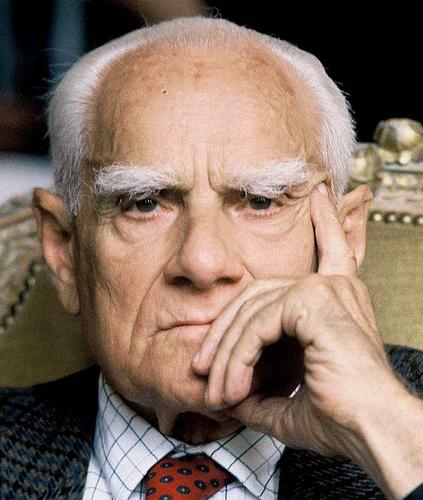
Alberto Moravia
Also known as: alberto moravia, Alberto.- MORAVIA
Alberto Moravia is an Italian journalist, short-story writer, and novelist known for his fictional portrayals of social alienation and loveless sexuality. He was a major figure in 20th-century Italian literature. Moravia contracted tuberculosis of the bone (a form of osteomyelitis usually caused by Mycobacterium tuberculosis) at the age of 8, but, during several years in which he was confined to bed and two years in sanatoriums, he studied French, German, and English; read Giovanni Boccaccio, Ludovico Ariosto, William Shakespeare, and Molire; and began to write. Moravia was a journalist for a time in Turin and a foreign correspondent in London. His first novel, Gli indifferenti (1929; Time of Indifference), is a scathingly realistic study of the moral corruption of a middle-class mother and two of her children. It became a sensation. Some of his more important novels are Agostino (1944; Two Adolescents); La Romana (1947; The Woman of Rome); La disubbidienza (1948; Disobedience); and Il conformista (1951; The Conformist), all on themes of isolation and alienation. La ciociara (1957; Two Women) tells of an adaptation to post-World War II Italian life. La noia (1960; The Empty Canvas) is the story of a painter unable to find meaning either in love or work. Many of Moravia's books were made into motion pictures. His books of short stories include Racconti romani (1954; Roman Tales) and Nuovi racconti romani (1959; More Roman Tales). Racconti di Alberto Moravia (1968) is a collection of earlier stories. Later short-story collections include Il paradiso (1970; “Paradise”) and Boh (1976; The Voice of the Sea and Other Stories). Most of Moravia's works deal with emotional aridity, isolation, and existential frustration and express the futility of either sexual promiscuity or conjugal love as an escape. Critics have praised the author's stark, unadorned style, his psychological penetration, his narrative skill, and his ability to create authentic characters and realistic dialogue. Moravia's views on literature and realism are expressed in a stimulating book of essays, L'uomo come fine (1963; Man as an End), and his autobiography, Alberto Moravia's Life, was published in 1990. He was married for a time to the novelist Elsa Morante. Copyright © 1994-2011 Encyclopædia Britannica, Inc. For more information visit Britannica.com - [Source]
AH, THOSE GOOD DAYS when I was a young bride and left my native village and came to Rome!
— from La ciociara, 1957
Most acclaimed

Erotic tales
1985
Throughout these twenty erotic stories, peopled with a gallery of eccentric individuals, run the recurring themes of violence, sexual yearnings, frustration, boredom, and the bourgeoisie.
Roman Tales
Racconti romani (Roman Tales) is a series of sixty-one short stories. Written and published initially in the Italian newspaper, Il Corriere della Sera, they were published as a collection in 1954 by Bompiani. All of the stories are set in Rome or its surroundings after World War II and focus on 'the common people of Rome' (Roma popolana). The characters in these stories tend to be the unemployed, ex-convicts, waiters, drivers, con artists, thieves and petty criminals, the average man (or woman) and the lower classes aspiring to climb out of poverty. All the stories are told in the first person with the narrator often unnamed, although details are usually furnished to provide a clue to the narrator's identity, such as their occupation, motivations and social status. Moravia's Racconti Romani provide a snapshot on life in Rome after World War II, revealing much about the inhabitants of Rome in the early 1950s.
La ciociara
1957
"The two women of Alberto Moravia's powerful story are mother and daughter - Cesira, a widowed Roman shopkeeper, and Rosetta, a naive teenager of haunting beauty and devout faith. When the German army prepares to occupy Rome, Cesira packs a few provisions, sews her life savings into the seams of her dress, and flees south with Rosetta to her native province of Ciociara, a poor, mountainous region famous for providing the domestic servants of Rome. For nine months the two women endure hunger, cold, and filth as they await the arrival of the Allied forces.". "But the Liberation, when it comes, brings unexpected tragedy. On their way home the pair are attacked and Rosetta brutally raped by a group of Allied Moroccan soldiers. This act of violence so embitters Rosetta that she falls numbly into a life of prostitution. In his story of two women Moravia offers up an intimate portrayal of the anguish and destruction wrought by war, as devastating behind the lines as it is on the battlefield."--BOOK JACKET.