Discover

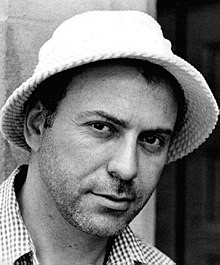
Alan Arkin

Personal Information

Born January 1, 1934
Died January 1, 2023 (89 years old)
Brooklyn, United States
11 books
0.0 (0)
36 readers

Description

Alan Wolf Arkin (born March 26, 1934) is an American actor, director and screenwriter. With a film career spanning six decades, Arkin is known for his performances in Popi; Wait Until Dark; The Russians Are Coming, the Russians Are Coming; The Heart Is a Lonely Hunter; Catch-22; The In-Laws; Edward Scissorhands; Glengarry Glen Ross; Thirteen Conversations About One Thing; Little Miss Sunshine; and Argo. He has been nominated for the Academy Award for Best Actor twice for his performances in The Russians Are Coming, the Russians Are Coming and The Heart Is a Lonely Hunter. He won an Academy Award for Best Supporting Actor for his performance in Little Miss Sunshine and received a Best Supporting Actor nomination for his performance in Argo.

Books

Newest First

Cassie loves Beethoven

0.0 (0)
1

Relates the startling effects of Beethoven's music on the Kennedys' new cow.

One present from Flekman's

0.0 (0)
1

Molly's grandfather offers to take her to a huge toy store in New York City and buy her one toy, but he does not realize what a difficult time Molly will have making a decision about what to buy.

Some fine grampa!

0.0 (0)
1

Grampa's amazing stories about living in the jungle with card-playing gorillas and meeting a polar bear who knits sweaters make people think his mind is wandering, but Molly believes he is telling the truth.

The Clearing

0.0 (0)
0

Bubber the Lemming joins a group of forest animals in their quest for spiritual understanding and self-knowledge.

Halfway Through the Door

0.0 (0)
1

In this dreary pamphlet, actor Arkin recounts (without a trace of humor) his gradual conversion to yoga/meditation--and urges the rest of us to come along to the ashram. Some years back, after six years of psychoanalysis, he found himself with a thriving marriage and a great career; but he wasn't happy, needing drugs or performing to supply his highs. Then he met John, an unsuccessful actor who nonetheless had total serenity--a guru, in fact, who soon persuaded Arkin to start meditating. At first a bit skeptical, Arkin got only minor benefits (his leaky sinuses drained), but then he began finding transcendence: his brain speeded up, he had a ""vision of harmony"" that felt as if ""I was plugged in directly to the Milky Way"" (""I fell in love with myself""), he started vibrating, and then the Big Stuff--astral travel (""The back of my head came right through the front of my skull and I was left sitting in front of myself""), visions of earlier incarnations (a French Revolution casualty, a Samurai), and ""a burning in my heart"" that meant his heart had opened. No doubt about Arkin's sincerity here, and he tries his best to be down-to-earth. But most readers will find his guru-worship hard to stomach (""Guru, in his brilliance, knew, as he always knows. . .""), and the few references to his wife (who eventually joined in) and family are off-puttingly remote and condescending. Unengaging, then, unlikely to win converts--and not for fans of Arkin's comedy.
Tony's hard work day

0.0 (0)
1

Because no one will let him help renovate the family's new country house, Tony builds one of his own.

Power plays

0.0 (0)
1

"The pursuit and wielding of power is one of America's most consuming passions. Now, in this new book, John M. Barry, award-winning author of Rising Tide: The Great Mississippi Flood of 1927 and How It Changed America (1997), uses his unusual vantage point as both a former Washington journalist and a onetime major college football coach to find common threads in the pursuit, exercise, and abuse of power in the media, in politics, and in sports.". "The Washington Post has said that Barry's work has "the potential to change the way we think." In Power Plays: Politics, Football, and Other Blood Sports, he once again makes us see the world differently." "Power Plays tells the compelling inside story of how House Speaker Newt Gingrich engineered the downfall of Speaker Jim Wright, a story in which Vice President Dick Cheney, Senator Trent Lott, and Representative David Bonior played major roles."--BOOK JACKET.

Galaxy

0.0 (0)
28

Horace L. Gold - essay by Frederik Pohl Gold on Galaxy - essay by H. L. Gold Coming Attraction - short story by Fritz Leiber To Serve Man - short story by Damon Knight Memoir (To Serve Man) - essay by Damon Knight Betelgeuse Bridge - short story by William Tenn From a Cave Deep in Stuyvesant Town — A Memoir of Galaxy's Most Creative Years - essay by William Tenn [as by Philip Klass] Cost of Living - short story by Robert Sheckley Memoir of Galaxy Magazine - essay by Robert Sheckley The Model of a Judge - short story by William Morrison Memoir (The Model of a Judge) - essay by William Morrison The Holes Around Mars - short story by Jerome Bixby Memoir (The Holes Around Mars) - essay by Jerome Bixby Horrer Howce - short story by Margaret St. Clair Memoir (Horrer Howce) - essay by Margaret St. Clair People Soup - short story by Alan Arkin Memoir (People Soup) - essay by Alan Arkin Something Bright - short story by Zenna Henderson The Lady Who Sailed the Soul - novelette by Genevieve Linebarger and Cordwainer Smith [as by Cordwainer Smith] The Deep Down Dragon - short story by Judith Merril Memoir (The Deep Down Dragon) - essay by Judith Merril Wall of Crystal, Eye of Night - novelette by Algis Budrys Memoir: Spilled Milk - essay by Algis Budrys The Place Where Chicago Was - novelette by Jim Harmon Memoir (The Place Where Chicago Was) - essay by Jim Harmon The Great Nebraska Sea - short story by Allan Danzig Memoir (The Great Nebraska Sea) - essay by Allan Danzig Oh, to Be a Blobel! - novelette by Philip K. Dick Memoir (Oh, To Be a Blobel!) - essay by Philip K. Dick Founding Father - short story by Isaac Asimov Memoir (Founding Father) - essay by Isaac Asimov (variant of Introduction to Founding Father 1968) Going Down Smooth - short story by Robert Silverberg Memoir (Going Down Smooth) - essay by Robert Silverberg All the Myriad Ways - short story by Larry Niven Memoir (All the Myriad Ways) - essay by Larry Niven The Last Flight of Dr. Ain - short story by James Tiptree, Jr. Memoir (Galaxy Book Shelf) - essay by Algis Budrys Galaxy Book Shelf (Galaxy, September 1969) - essay by Algis Budrys Slow Sculpture - short story by Theodore Sturgeon Memoir (Slow Sculpture) - essay by Theodore Sturgeon About a Secret Crocodile - short story by R. A. Lafferty Memoir (About a Secret Crocodile) - essay by R. A. Lafferty Cold Friend - short story by Harlan Ellison Memoir (Cold Friend) - essay by Harlan Ellison The Day Before the Revolution - short story by Ursula K. Le Guin The Gift of Garigolli - novelette by C. M. Kornbluth and Frederik Pohl Overdrawn at the Memory Bank - novelette by John Varley Note (Overdrawn at the Memory Bank) - essay by John Varley Horace, Galaxyca - essay by Alfred Bester

The Lemming Condition

0.0 (0)
0

A young lemming is haunted by doubts about the purpose of the great march westward to the sea.

An improvised life

0.0 (0)
2

Arkin looks back on his career as an actor, but this memoir forgoes the backstage gossip and star-studded anecdotes readers might expect. In fact, the author largely ignores his accomplishments in favor of charting his inner evolution as an artist, focusing on intellectual and spiritual epiphanies that have shaped his approach to acting. Arkin’s approach to autobiography is a bit unexpected—the intensely earnest, verging-on-New-Age tone is distinctly at odds with his familiar brusque, comedic persona—but rewarding, as the author illustrates the principles of his acting philosophy with a wealth of concrete details taken directly from his experience, resulting in a coherent and provocative manifesto. There are some intriguing glimpses at the process and personalities behind Chicago’s seminal Second City acting troupe, in which Arkin first made a name for himself, and a handful of familiar tropes about the struggling young artist looking for work. But the author’s interest is primarily in the discoveries he has made conducting improvisational-theater workshops, working with various acting mentors and performing on stage and screen. Arkin’s basic premise is that good acting is born of an actor’s commitment to the present moment, an embrace of spontaneity and willingness to give up rigid control. This Zen-like approach, which largely consists of the actor getting out of his own way, is hardly revolutionary, but Arkin has a knack for making it feel fresh and wholly sensible. He also displays a refreshing lack of egocentrism; many of the most profound lessons he recounts are the result of watching other actors, often amateurs, struggle with the challenges of improvisation laid out in his workshops. For an actor famous for his anxious, intense brand of comedy, Arkin’s tone is surprisingly cool and measured, often wry but rarely laugh-out-loud funny. Earnest, intelligent and well-observed—less a celebrity memoir than a serious consideration of the principles of acting and improvisation.
