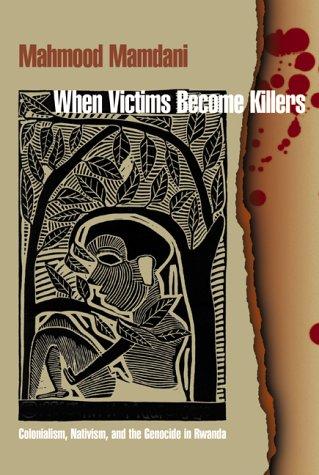
When victims become killers
First sentence
IN THE decade that followed African political independence, militant nationalist intellectuals focused on the expropriation of the native as the great crime of colonialism...
Description
"Rejecting easy explanations of the genocide as a mysterious evil force that was bizarrely unleashed, one of Africa's best-known intellectuals situates the tragedy in its proper context. He coaxes to the surface the historical, geographical, and political forces that made it possible for so many Hutu to turn so brutally on their neighbors. He finds answers in the nature of political identities generated during colonialism, in the failures of the nationalist revolution to transcend these identities, and in regional demographic and political currents that reach well beyond Rwanda. In so doing, Mahmood Mamdani broadens understanding of citizenship and political identity in postcolonial Africa." "Mamdani's analysis provides a foundation for future studies of the massacre. His answers point a way out of crisis: a direction for reforming political identity in central Africa and preventing future tragedies."--Jacket. "Rejecting easy explanations of the genocide as a mysterious evil force that was bizarrely unleashed, one of Africa's best-known intellectuals situates the tragedy in its proper context. He coaxes to the surface the historical, geographical, and political forces that made it possible for so many Hutu to turn so brutally on their neighbors. He finds answers in the nature of political identities generated during colonialism, in the failures of the nationalist revolution to transcend these identities, and in regional demographic and political currents that reach well beyond Rwanda. In so doing, Mahmood Mamdani broadens understanding of citizenship and political identity in postcolonial Africa.". "Mamdani's analysis provides a foundation for future studies of the massacre. His answers point a way out of crisis: a direction for reforming political identity in central Africa and preventing future tragedies."--BOOK JACKET.