Discover

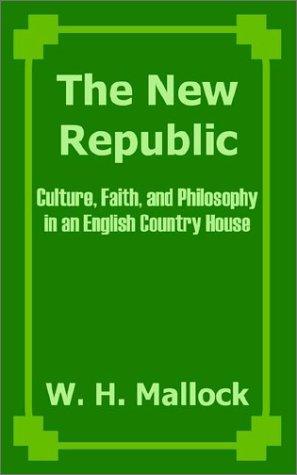
The new republic

Minsik readers
0.0
0 ratings
Other platforms
0.0
0 ratings
124
PAGES
~2h 4min
READING TIME
English
LANGUAGE
Published 1800 J. F. Torrey 7 views
7 views
Minsik want to read: 0
Minsik reading: 0
Minsik read: 0
Open Library want to read: 0
Open Library reading: 0
Open Library read: 0

About Author

L. U. Reavis

Logan Uriah Reavis, born in Sangamon Bottom, Mason County, Illinois, was an American journalist, lecturer, and writer. In 1855, he entered the office of the Beardstown, Illinois, Gazette, in which he purchased an interest, and continued its publication under the name of The Central Illinoian until he sold his share and moved to Nebraska in 1857. Returning to Beardstown, he repurchased The Illinoian after the nomination of Abraham Lincoln for the presidency. In 1866, he disposed of that journal for the last time and, settling in St. Louis, earnestly advocated the removal of the National capital to that city in his publication of a pamphlet entitled The New Republic, or the Transition Complete, with an Approaching Change of National Empire, based upon the Commercial and Industrial Expansion of the Great West (St. Louis, 1867). This was followed by A Change of National Empire, or Arguments for the Removal of the National Capital from Washington to the Mississippi Valley, with maps (1869). Mr. Reavis lectured extensively throughout the country on the same subject. He visited England in 1879 and, on his return to St. Louis, he began a movement to promote emigration to Missouri, twice returning to London to further that object. Among other works, he also published St. Louis the Future Great City of the World (1867); A Representative Life of Horace Greeley (New York, 1872); Thoughts for the Young Men and Women of America (1873); The Life and Military Services of Gen. William Selby Harney (St. Louis, 1875); and Railway and River System (1879). Source: [Famous Americans](

Description

"Ostracized as a kid, Edgar Kellogg has always yearned to be popular. A disgruntled New York corporate lawyer, he's more than ready to leave his lucrative career for the excitement and uncertainty of journalism. When he's offered the post of foreign correspondent in a Portuguese backwater that has sprouted a homegrown terrorist movement, Edgar recognizes the disappeared larger-than-life reporter he's been sent to replace, Barrington Saddler, as exactly the outsize character he longs to emulate. Infuriatingly, all his fellow journalists cannot stop talking about their beloved "Bear," who is no longer lighting up their work lives. Yet all is not as it appears. Os Soldados Ousados de Barba - "The Daring Soldiers of Barba"--Have been blowing up the rest of the world for years in order to win independence for a province so dismal, backward, and windblown that you couldn't give the rat hole away. So why, with Barrington vanished, do terrorist incidents claimed by the "SOB" suddenly dry up? A droll, playful novel, The New Republic addresses weighty issues like terrorism with the deft, tongue-in-cheek touch that is vintage Shriver. It also presses the more intimate question: What makes particular people so magnetic, while the rest of us inspire a shrug? What's their secret? And in the end, who has the better life - the admired, or the admirer? "--Publisher.

Detailed Ratings

0.0Emotional Impact
No ratings yet
0.0Intellectual Depth
No ratings yet
0.0Writing Quality
No ratings yet
0.0Rereadability
No ratings yet
0.0Pacing
No ratings yet
0.0Readability
No ratings yet
0.0Plot Complexity
No ratings yet
0.0Humor
No ratings yet