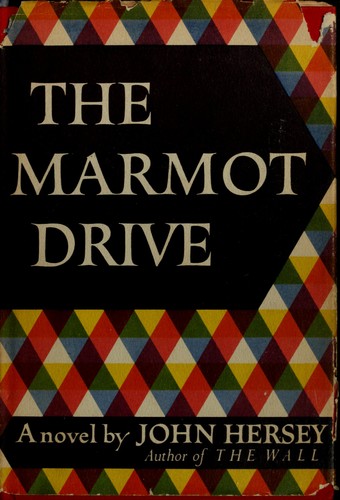
John HerseyJohn Richard Hersey (June 17, 1914 – March 24, 1993) was an American writer and journalist. He is considered one of the earliest practitioners of the so-called New Journalism, in which storytelling techniques of fiction are adapted to non-fiction reportage. In 1999, Hiroshima, Hersey's account of the aftermath of the atomic bomb dropped on Hiroshima, Japan, was adjudged the finest work of American journalism of the 20th century by a 36-member panel associated with New York University's journalism department.
John Hersey was born in Tientsin, China, the son of missionaries. He returned to the United States with his family at the age of ten. He attended the Hotchkiss School, then Yale University, then Cambridge University. In 1937 he worked as a secretary for Sinclair Lewis, and that fall he got a position at Time magazine. Two years later he was transferred to Time's Chongqing bureau. During World War II he reported on the war in both Europe and Asia, writing articles for Time, Life, and The New Yorker. He published several books during this time, including Men on Bataan, Into the Valley, A Bell for Adano (which won the Pulitzer Prize for the Novel in 1945), and Hiroshima, his most famous work (originally published in The New Yorker). He also wrote The Wall (1950) about the Warsaw Ghetto during the Holocaust. Hersey was the head of Pierson College at Yale University from 1965-1970, and he taught writing at the undergraduate level there.