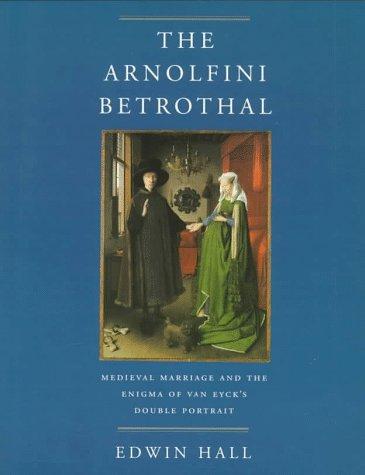
The Arnolfini betrothal
Description
Commonly known as the "Arnolfi Wedding" or "Giovanni Arnolfi and His Bride," Jan van Eyck's double portrait in the National Gallery, London, painted in 1434, is probably the most widely recognized panel painting of the fifteenth century. One of the great masterpieces of early Flemish art, this enigmatic picture has also aroused intense speculation as to its precise meaning. Erwin Panofsky's view that the painting represents a clandestine marriage was almost universally accepted until recently, when scholars began to abandon his principle of "disguised symbolism" in favor of more theoretical approaches to the panel's interpretation. Edwin Hall's study - firmly grounded in Roman and canon law, theology, literature, and the social history of the period - reveals new meaning for this wonderful painting: instead of depicting the sacrament of marriage, Hall argues, Van Eyck's double portrait commemorates the alliance between two wealthy and important Italian mercantile families, a ceremonious betrothal that reflects the social conventions of the time. Hall's illuminating book not only unlocks the mystery surrounding the content of this work of art; it also makes a unique contribution to the fascinating history of betrothal and marriage custom, ritual, and ceremony, tracing their evolution from the late Roman Empire thorough the fifteenth century and providing persuasive visual evidence for their development. Since the fifteenth century, Jan van Eyck has been one of the most admired artists in the history of early northern painting. His pictures are jewels in themselves, crafted in luminous colors on wooden panels with a newly perfected oil technique, achieved by the application of transparent glazes over more opaque underlayers of pigment, permitting each detail to be rendered with astonishing verisimilitude. The Arnolfini double portrait is Van Eyck's quintessential work and a striking example of how art and its meaning endure and engage us for centuries.