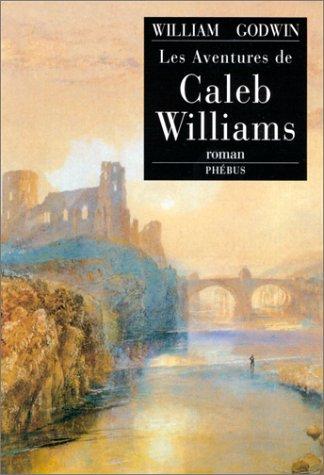
The Adventures of Caleb Williams

Description
The Adventures of Caleb Williams, or Things as They Are (1794) by William Godwin is a three-volume novel written as a call to end the abuse of power by what Godwin saw as a tyrannical government. Intended as a popularization of the ideas presented in his 1793 treatise Political Justice Godwin uses Caleb Williams to show how legal and other institutions can and do destroy individuals, even when the people the justice system touches are innocent of any crime. This reality, in Godwin's mind was therefore a description of "things as they are."The novel describes the downfall of Ferdinando Falkland, a British squire, and his attempts to ruin and destroy the life of Caleb Williams, a poor but ambitious young man that Falkland hires as his personal secretary. Caleb accidentally discovers a terrible secret in his master's past. Though Caleb promises to be bound to silence, Falkland, irrationally attached (in Godwin's view) to ideas of social status and inborn virtue, cannot bear that his servant should possibly have power over him, and sets out to use various means--unfair trials, imprisonment, pursuit, to make sure that the information of which Caleb is the bearer will never be revealed.Godwin described the book as "a series of adventures of flight and pursuit; the fugitive in perpetual apprehension of being overwhelmed with the worst calamities", so that Caleb Williams can be classified as an early thriller or mystery novel.In order to evade a censorship ban on presenting the novel on the stage, the impresario Richard Brinsley Sheridan presented the piece on the stage of his Drury Lane Theatre in 1796 under the title The Iron Chest, his pretext for avoiding censorship being that his resident composer Stephen Storace had made an "operatic version" of the story.