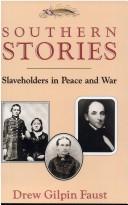
Southern stories
Description
"We all live within the stories we tell," writes Drew Faust, "for these tales fashion a coherent direction and identity out of the discontinuities of our past, present, and future." Forging an identity was an extraordinary task for white southerners of the late antebellum and Civil War era. Seeking to explain and justify their individual lives and their slave society, they told stories about themselves and their world - in diaries and letters, sermons and songs, novels. And paintings - which reveal the foundations of power, meaning, and personal identity in the Old South. In a series of eloquent essays, Faust investigates the experiences of wealthy planters, common soldiers, intellectuals, and Confederate women. She breaks especially fresh ground in her attention to southern thought and belief, to southern society and culture during the Civil War, and to the role of gender relations within the Confederate South. Sometimes southern. Stories were collective, as in the case of the antebellum proslavery argument or Confederate discourses about women. Sometimes they were personal, as in the private writings of figures such as Lizzie Neblett, Mary Chesnut, Thornton Stringfellow, or James Henry Hammond. These men and women regularly employed their pens to create coherence and order amid the tangled circumstances of their particular lives and within a context of social prescriptions and expectations. Southern Stories: Slaveholders in Peace and War represents some of the most interesting work in southern history of the past two decades. Faust's approach reveals a society so involved in defining itself and its legitimacy that it became embroiled in a war of words and ideas long before the onset of armed conflict. By exploring the cultural, moral, and personal dilemmas that confronted white southerners, Faust has made an important contribution to our understanding of. Southern culture, both before and after the Civil War.