Discover
Jan 1, 1856 — Jan 1, 1935· 79 yrs

UNITED KINGDOM AUTHOR · DESCRIPTION AND TRAVEL · FICTION

Vernon Lee

Also known as: Violet Paget

21
BOOKS
3.5
AVG RATING (4)
0
READERS

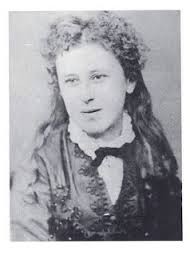
Vernon Lee was the pseudonym of the British writer Violet Paget (14 October 1856 – 13 February 1935). She is remembered today primarily for her supernatural fiction and her work on aesthetics. An early follower of Walter Pater, she wrote over a dozen volumes of essays on art, music, and travel.

Boulogne-sur-Mer, United Kingdom
Wikipedia

Urbania, August 20th, 1885.-I had longed, these years and years, to be in Italy, to come face to face with the Past; and was this Italy, was this the Past?

— from Hauntings

Most acclaimed

#1

Juvenilia

0.0 (0)

Jane Austen's remarkable juvenilia date from 1787, when she was eleven, to 1793, when she was seventeen. She preserved these early writings in three manuscript notebooks, entitled 'Volume the first', 'Volume the second' and 'Volume the third'. Most of the twenty-seven items in these notebooks are short fictions, but the young Austen also wrote the opening of what could have become a full-length novel, 'Catharine', as well as dramatic sketches, verses and a few non-fictional pieces. Astonishingly sophisticated and inventive, these writings, with their anarchic energy, violence and irreverence, are now receiving the scholarly attention they deserve. This edition provides a fresh transcription of Austen's manuscripts, with comprehensive explanatory notes, an extensive critical introduction covering the context and publication history of the juvenilia, a chronology of Austen's life, and an authoritative textual apparatus. It also prints, for the first time, the copious satirical marginalia that Austen wrote on her copies of Oliver Goldsmith's History of England.--Book jacket.
#2

In praise of old gardens

0.0 (0)
#3

Works

0.0 (0)

Hippocrates, said to have been born in Cos in or before 460 BCE, learned medicine and philosophy; travelled widely as a medical doctor and teacher; was consulted by King Perdiccas of Macedon and Artaxerxes of Persia; and died perhaps at Larissa. Apparently he rejected superstition in favour of inductive reasoning and the study of real medicine as subject to natural laws, in general and in individual people as patients for treatment by medicines and surgery. Of the roughly 70 works in the Hippocratic Collection," many are not by Hippocrates; even the famous oath may not be his. But he was undeniably the "Father of Medicine."

Books

Newest First
