Discover

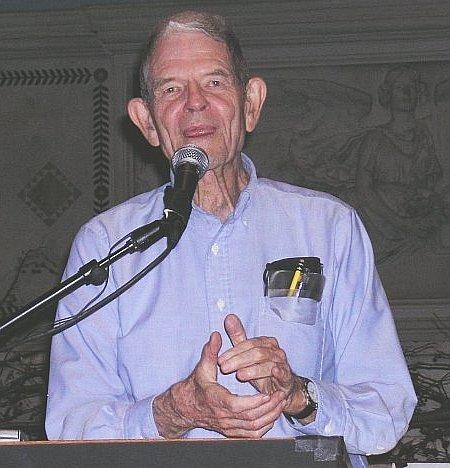
Staughton Lynd

Personal Information

Born November 22, 1929
Died November 17, 2022 (92 years old)
Philadelphia, United States
Also known as: Staughton Craig Lynd
25 books
4.5 (2)
47 readers

Description

American activist and lawyer

Books

Newest First

Lucasville

0.0 (0)
1

In telling the story of one of the longest prison uprisings in U.S. history, in which hundreds of inmates seized a major area of an Ohio correctional facility, this chronicle examines the causes of the disturbance, what happened during its 11-day duration, and the fairness of the trials in the aftermath of the rioting. Recounted from the prisoners? side and viewed through a lawyer?s and an activist's lens, this expos sheds light on the horrific and inhumane prison conditions, the rebellion and killing of 10 people, the drivers of the negotiated surrender, and the trial that was filled with misrepresentations and evasions on the part of those running the prison. The eloquent new foreword from the renowned political prisoner Mumia Abu Jamal underlines the theme of the interracial character of the uprising and the basic desire of the prisoners to be recognized as men. A detailed view on a major prison uprising, this new edition will appeal to legal scholars, history buffs, prisoner and human rights activists, and family members of incarcerated individuals alike.

Nonviolence in America

0.0 (0)
3

Nonviolence in America is a comprehensive compilation of first-hand sources that document the history of nonviolence in the United States from colonial times to the present. Editors Staughton and Alice Lynd bring together materials from diverse sources that illuminate a movement in American history that is sometimes assumed to have begun and ended with the anti-nuclear and civil rights struggles of the '50s and '60s but which is, in fact, older than the Republic itself. This revised and expanded edition of Nonviolence in America opens with writings of William Penn and John Woolman, of abolitionists like William Lloyd Garrison and Henry David Thoreau, and of anarchists Emma Goldman and William Haywood. It continues with testimonies of suffragettes and conscientious objectors of both World Wars, trade unionists and anti-nuclear activists. It includes classics such as Henry David Thoreau's "Civil Disobedience," William James's "The Moral Equivalent of War," and Martin Luther King, Jr.'s "Letter from Birmingham City Jail." A section is devoted to what the Lynds call "New Catholicism" and includes selections by Dorothy Day, Thomas Merton, and Jim and Shelley Douglass. Bringing Non-violence in America right up to the present are writings on the Vietnam and Persian Gulf Wars, and the continuing struggles against nuclear power plants and weaponry and for preservation of the Earth and its peoples.

Moral Injury and Nonviolent Resistance

0.0 (0)
2

In this thoughtful book culled from a wide range of experiences, Alice and Staughton Lynd introduce readers to what modern clinicians, philosophers, and theologians have attempted to describe as'moral injury.'From combat veterans of America's foreign wars to Israeli refuseniks, and from'hardened'criminals in supermax confinement in Ohio to hunger strikers in California's Pelican Bay prison, the Lynds give us the voices of those breaking the cycle of moral injury with courageous acts of nonviolent resistance.

Solidarity Unionism

4.0 (1)
3

Solidarity Unionism is critical reading for all who care about the future of labor. Drawing deeply on Staughton Lynd's experiences as a labor lawyer and activist in Youngstown, OH, and on his profound understanding of the history of the Congress of Industrial Organizations (CIO), Solidarity Unionism helps us begin to put not only movement but also vision back into the labor movement. While many lament the decline of traditional unions, Lynd takes succor in the blossoming of rank-and-file worker organizations throughout the world that are countering rapacious capitalists and those comfortable labor leaders that think they know more about work and struggle than their own members. If we apply a new measure of workers' power that is deeply rooted in gatherings of workers and communities, the bleak and static perspective about the sorry state of labor today becomes bright and dynamic. To secure the gains of solidarity unions, Staughton has proposed parallel bodies of workers who share the principles of rank-and-file solidarity and can coordinate the activities of local workers' assemblies. Detailed and inspiring examples include experiments in workers' self-organization across industries in steel-producing Youngstown, as well as horizontal networks of solidarity formed in a variety of U.S. cities and successful direct actions overseas. This is a tradition that workers understand but labor leaders reject. After so many failures, it is time to frankly recognize that the century-old system of recognition of a single union as exclusive collective bargaining agent was fatally flawed from the beginning, and doesn't work for most workers. If we are to live with dignity, we must collectively resist. This book is not a prescription but reveals the lived experience of working people continuously taking risks for the common good.

From Here to There

0.0 (0)
6

"How is it that we can walk unfamiliar streets while maintaining a sense of direction? Come up with shortcuts on the fly, in places we've never traveled? The answer is the complex mental map in our brains. This feature of our cognition is easily taken for granted, but it's also critical to our species' evolutionary success. In From Here to There Michael Bond tells stories of the lost and found-Polynesian sailors, orienteering champions, early aviators-and surveys the science of human navigation. Navigation skills are deeply embedded in our biology. The ability to find our way over large distances in prehistoric times gave Homo sapiens an advantage, allowing us to explore the farthest regions of the planet. Wayfinding also shaped vital cognitive functions outside the realm of navigation, including abstract thinking, imagination, and memory. Bond brings a reporter's curiosity and nose for narrative to the latest research from psychologists, neuroscientists, animal behaviorists, and anthropologists. He also turns to the people who design and expertly maneuver the world we navigate: search-and-rescue volunteers, cartographers, ordnance mappers, urban planners, and more. The result is a global expedition that furthers our understanding of human orienting in the natural and built environments"--

Wobblies & Zapatistas

0.0 (0)
5

Wobblies and Zapatistas offers the reader an encounter between two generations and two traditions. Andrej Grubacic is an anarchist from the Balkans. Staughton Lynd is a lifelong pacifist, influenced by Marxism. They meet in dialogue in an effort to bring together the anarchist and Marxist traditions, to discuss the writing of history by those who make it, and to remind us of the idea that “my country is the world.” Encompassing a Left-libertarian perspective and an emphatically activist standpoint, these conversations are meant to be read in the clubs and affinity groups of the new Movement. The authors accompany us on a journey through modern revolutions, direct actions, antiglobalist counter-summits, Freedom Schools, Zapatista cooperatives, Haymarket and Petrograd, Hanoi and Belgrade, “intentional” communities, wildcat strikes, early Protestant communities, Native American democratic practices, the Workers’ Solidarity Club of Youngstown, occupied factories, self-organized councils and soviets, the lives of forgotten revolutionaries, Quaker meetings, antiwar movements, and prison rebellions. Neglected and forgotten moments of interracial self-activity are brought to light. The book invites the attention of readers who believe that a better world, on the other side of capitalism and state bureaucracy, may indeed be possible. (Source: [PM Press](

New Forms of Worker Organization

0.0 (0)
1

As bureaucratic labor unions are currently under assault throughout the world, most have surrendered the achievements of the mid-20th century, when the working class was a militant force for change. As unions implode and weaken, workers are independently forming their own unions, rooted in the tradition of syndicalism and autonomism and unions rooted in the tradition of self-directed action are auguring a new period of class struggle throughout the world. In Africa, Asia, the Americas, and Europe, workers are rejecting leaders and forming authentic class-struggle unions rooted in sabotage, direct action, and striking to achieve concrete gains. This is the first book to compile workers struggles on a global basis, examining the formation and expansion of radical unions in the Global South and Global North. The tangible evidence marshaled in this book serves as a handbook for understanding the formidable obstacles and concrete opportunities for workers challenging neoliberal capitalism, even as the unions of the old decline and disappear. Contributors include Au Loong-Yu, Bai Ruixue, Arup K. Sen, Shawn Hattingh, Piotr Bizyukov and Irina Olimpieva, Genese M. Sodikoff, Aviva Chomsky, Dario Bursztyn, Gabriel Kuhn, Erik Forman, Steven Manicastri, and Jack Kirkpatrick.
