
UNITED STATES AUTHOR · PORTRAITS · PORTRAIT PHOTOGRAPHY
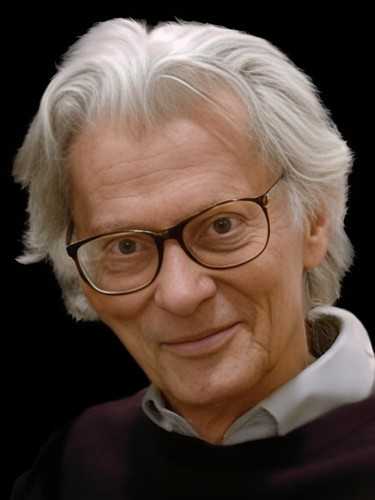
Richard Avedon
Richard is a masculine given name. It originates, via Old French, from Old Frankish and is a compound of the words descending from Proto-Germanic rīk- 'ruler, leader, king' and hardu- 'strong, brave, hardy', and it therefore means 'strong in rule'. Nicknames include "Richie", "Dick", "Dickon", "Dickie", "Rich", "Rick", "Rico", "Ricky", and more. Richard is a common English (the name was introduced into England by the Normans), German and French male name. It is also used in many more languages, particularly Germanic, such as Norwegian, Danish, Swedish, Icelandic, and Dutch, as well as other languages including Irish, Scottish, Welsh and Finnish.
The Gandhis belong to the Bania caste and seem to have been originally grocers. But for three generations, from my grandfather, they have been Prime Ministers in several Kathiawad States.
— from An Autobiography
Most acclaimed

Portraits
"A major new book from one of the world's leading writers and art critics One of the world's most celebrated art writers, John Berger, takes us through centuries of art revealing his fascination with the artist. In Portraits, Berger connects the artist and history in revolutionary ways, from the prehistoric paintings of the Chauvet caves to Cy Twombly's radical work. In his penetrating and singular prose, Berger presents entirely new ways of thinking about artists both canonized and obscure, from Rembrandt to Henry Moore, Jackson Pollock to Picasso. Throughout, Berger maintains the essential connection between politics, art and the wider study of culture. A beautifully illustrated walk through many centuries of visual culture from one of the contemporary world's most incisive critical voices"--
An Autobiography
This inspiring life-story by a towering figure of our era is an epic of genius in relation to the twentieth century. In these pages, Frank Lloyd Wright's personal revelations illumine an astonishing variety of experiences, opening with his life as a child with his Welsh forebears in the Midwest, his running away to plunge into the creative ferment of the Chicago of the Nineties, the beginning of one of the world's most productive careers, through his long dramatic life which culminated in his transforming influence on the modern world. His autobiography is a book of triumph over nearly incredible adversity. It is filled with memorable descriptions: of the young architect's apprentice with the pioneer Louis Sullivan; the fire which destroyed his renowned home, Taliesin, in the tragedy that took several lives, and his courageous re-building of his Imperial Hotel, in which he reveals why it rode out the disastrous 1923 earthquake in Tokyo, unharmed, while the city lay bout it in ruins; his romantic meeting with the woman whose devotion was to transform his life; the ordeals to which he and Olgivanna Lloyd Wright were early subjected and out of which they built a new life; the story of how they established the Taliesin Fellowship, the now renowned school of architecture to which students come from every part of the world; his friendships with Carl Sandburg, Alexander Woollcott, Lloyd Lewis, Ferdinand Schevill, among his others; his journeys to Japan and Russia; his creation of building after building-low cost houses, skyscrapers, churches, celebrated dwellings such as Hollyhock House, La Miniatura, Fallingwater, the Jacobs House (cost $5,500, including the architect's fee in 1936), etc.-which revolutionized the architecture of our century. During what he called "a very bad time in my life" Mrs. Wright urged him to begin work on his life-story and encouraged him through the years to complete it; and it is to her that he dedicated this final, definitive edition. Shortly after the preceding version of his autobiography appeared thirty-five years ago, Frank Lloyd Wright began to revise it, adding material over a period of sixteen years. This is the first edition of the corrected manuscript. Besides all his revisions of the earlier (and unillustrated) version, this new edition includes eighty-two illustrations, photographs of his family and of the people involved in his life, as well as his architectural masterpieces produced over a span of seventy years (including houses built as recently as 1976). This volume consists of six books, of which Book Six, titled BROADACRE CITY, comprises one of the most important additions to this comprehensive edition: the master's concepts of the future city and government-a major presentation of his ideas, prophecies being increasingly borne out in our time and destined to have an enduring influence in the future. Frank Lloyd Wright's autobiography is an incomparable book, a frankly revealing and uncompromising personal achievement to stand with his great buildings.
Performance
Performance: A Critical Introduction is the first textbook to provide an overview of the modern concept of performance and how it has developed in various fields. In a highly accessible style, Marvin Carlson introduces the reader to the contested interpretations of performance art as a theatrical activity and to the ways that performance has been understood by ethnographers, anthropologists, linguists, and cultural theorists. The topic he discusses include: - the evolution of performance art since the 1960s - developments of performance as a concept within the various social sciences - the relationships between performance, postmodernism, and the politics of identity. For any student of performance studies, visual and performing arts or theatre history, Performance: A Critical Introduction provides a vital insight into the diverse meanings and uses of performance.