
SOVIET UNION AUTHOR · POLITICS AND GOVERNMENT · FOREIGN RELATIONS
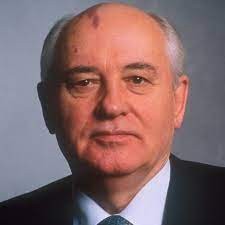
Mikhail Sergeevich Gorbachev
Also known as: Mikhail Gorbachev, Mikhail S. Gorbachev
Mikhail Sergeyevich Gorbachev was a Soviet and Russian politician who served as the eighth and final leader of the Soviet Union from 1985 to the country's dissolution in 1991. He served as General Secretary of the Communist Party of the Soviet Union from 1985 and additionally as head of state beginning in 1988, as Chairman of the Presidium of the Supreme Soviet from 1988 to 1989, Chairman of the Supreme Soviet from 1989 to 1990 and the only President of the Soviet Union from 1990 to 1991. Ideologically, Gorbachev initially adhered to Marxism–Leninism but moved towards social democracy by the early 1990s.
SOME OF MY FOREFATHERS WERE SWABIANS, SOME CAME FROM POOR PEASants of the Westerwald, others from Silesia and Westphalia.
— from Erinnerungen, 2004
Most acclaimed

Memoirs
Pierre Trudeau was prime minister of Canada from 1968 to 1979 and from 1980 to 1984. This is his story, told in his own words. As if he were sitting across the table from you, Pierre Trudeau reminisces about his life in an informal, direct way. He starts with his memories of his family, especially his mother and father, to whom the book is dedicated. There are memorable events from childhood here, such as a visit to complain to the principal on his second day at school. Later there is a lunchroom encounter with a high school bully and then, at the age of fifteen, real tragedy. After an extensive education at the Universite de Montreal, Harvard, the London School of Economics, and the Ecole libre des sciences politiques in Paris (where postwar shortages meant that he had "to undergo an appendectomy in a hospital that was short of anaesthetics"), Trudeau set off with a backpack to travel around the world. He tells how he went through one war zone after another, encountering armed bandits and narrowly missing pirates, and being arrested in wartime Jordan as a Jewish spy (where a truckload of hostile Arab soldiers made it clear that "there was nothing to stop them from killing me and dumping my corpse into the ravine that bordered the highway"). These adventures and further travels through India and war-torn China left him with a deep belief in the rights of the individual and the vital role of government in protecting these rights. From the day he decided to go to Ottawa as a Liberal member of Parliament in 1965, Trudeau was clearly on a fast track. After becoming minister of justice in 1967 he ran for the leadership and became prime minister in 1968. He talks about his use of "the Liberal machine" and all the electoral fights that followed over the years, providing interesting insights into these contests. As a leader whose time in office ran from the fall of Charles de Gaulle to the rise of Mikhail Gorbachev, Pierre Trudeau was able to exert his influence to break down the Cold War mentality. He enjoyed good personal rapport with such different leaders as Chou Enlai, Gerald Ford, Fidel Castro, Jimmy Carter, Francois Mitterrand, and Helmut Schmidt. His relations with Richard Nixon and Margaret Thatcher were less warm, and he was less impressed by Ronald Reagan's intellect than by the wisdom of the Queen. Whether they loved him or hated him, Canadians knew that in Pierre Trudeau's time, the government stood up for Canada. He stood up to the domestic terrorism of the FLQ - and he makes no apologies here for his tough response to the October Crisis in 1970 - just as he stood up to the provincial premiers (including Rene Levesque) who he believed were blocking Canada's attempt to gain its own constitution ten years later. Although most of this book deals with the years between 1968 and 1984, Trudeau also talks about his life today. He brings you up to date on his travels with his sons ("the boys") and also deals with his opinions - at variance with those of Henry Kissinger - on trends in the modern world. A fascinating view from a major world statesman.
Erinnerungen
2004
»Es sind so viele politische Klischees über meinen Werdegang und meine Regierungszeit in die Welt gesetzt worden, dass die Legenden über die historischen Zusammenhänge bereits zu verdrängen drohen, wie es wirklich war. Deshalb habe ich nun selbst zur Feder gegriffen.« Helmut Kohl Klug, kämpferisch und mit manch überraschender Wendung schildert Helmut Kohl in den Erinnerungen 1930 – 1982 seinen Weg zur Kanzlerschaft – von den Anfängen seines politischen Engagements als Sechzehnjähriger bis zu jenen dramatischen Tagen im Herbst 1982, als die Regierung Schmidt in einem konstruktiven Misstrauensvotum abgelöst und Helmut Kohl zum neuen Bundeskanzler gewählt wird. Vor allem zwei Einflüsse waren maßgeblich für Helmut Kohls weiteren Lebensweg: das Elternhaus mit seiner christlich-liberalen und patriotischen Grundeinstellung und die Erfahrung des Krieges, in dem er seinen Bruder Walter verlor. Helmut Kohl spannt den Bogen dieses ersten Teils seiner Erinnerungen von den Kriegsjahren in Ludwigshafen bis zu den siebziger und achtziger Jahren, die in einem heute kaum mehr vorstellbaren Ausmaß polarisiert waren. Es waren die Jahre der Studentenunruhen, des Terrorismus und des erbitterten Streits um die Nato-Nachrüstung, und es war die Zeit der ersten Ölkrise, als die wirtschaftliche und soziale Sicherheit der jungen Bundesrepublik zum ersten Mal erschüttert wurde. So sind diese Memoiren weit mehr als die Bilanz seines persönlichen Lebens: Helmut Kohl ruft ein halbes Jahrhundert Zeitgeschichte wach, die Geschichte Deutschlands seit dem Krieg, wie er sie erlebt hat. Und Helmut Kohl erzählt von den Menschen, die diese Zeit prägten. Konrad Adenauer, Theodor Heuss, Kurt Schumacher oder Ludwig Erhard, die »großen alten Männer« der Nachkriegszeit, werden in seinen Schilderungen ebenso wieder lebendig wie Kurt Georg Kiesinger, Herbert Wehner, Willy Brandt und Franz Josef Strauß. Gleichzeitig mit Helmut Kohl kam eine neue Generation von Politikern in Führungsämter. Manche haben seinen Lebensweg nur gekreuzt, viele begleiteten ihn lange, ob als Mitstreiter oder Widersacher. Wenn Helmut Kohl von den vielen persönlichen Begegnungen und Erfahrungen mit Bernhard Vogel, Heiner Geißler, Kurt Biedenkopf, Rainer Barzel, Hans-Dietrich Genscher und anderen berichtet, wird mancher überraschende Hintergrund politischer Richtungsentscheidungen deutlich. Zentrales Thema seiner Memoiren ist auch seine Partei, deren Vorsitzender Helmut Kohl fünfundzwanzig Jahre lang war. Mit viel Energie hat er die programmatische Erneuerung der Christlich Demokratischen Union und ihre Entwicklung zur Volkspartei mitgestaltet. In der CDU und mit der CDU hat er Themen gesetzt, die für die Zukunft des Landes von entscheidender Bedeutung waren. So entsteht in den Erinnerungen 1930 – 1982, denen ein zweiter Band folgen wird, das Panorama einer ganzen Epoche, gespiegelt in den Erfahrungen, Einsichten, Gedanken und Bewertungen eines Mannes, dessen Name aufs engste mit der Geschichte der Bundesrepublik verbunden ist.
The new Russia
After years of rapprochement, the relationship between Russia and the West is more strained now than it has been in the past 25 years. Putin's motives, his reasons for seeking confrontation with the West, remain for many a mystery. Not for Mikhail Gorbachev. In this new work, Russia's elder statesman draws on his wealth of knowledge and experience to reveal the development of Putin's regime and the intentions behind it. He argues that Putin has significantly diminished the achievements of perestroika and is part of an over-centralized system that presents a precarious future for Russia. Faced with this, Gorbachev advocates a radical reform of politics and a new fostering of pluralism and social democracy. Gorbachev's insightful analysis moves beyond internal politics to address wider problems in the region, including the Ukraine conflict, as well as the global challenges of poverty and climate change. Above all else, he insists that solutions are to be found by returning to the atmosphere of dialogue and cooperation which was so instrumental in ending the Cold War. Gorbachev's insightful analysis moves beyond internal politics to address wider problems in the region, including the Ukraine conflict, as well as the global challenges of poverty and climate change. Above all else, he insists that solutions are to be found by returning to the atmosphere of dialogue and cooperation which was so instrumental in ending the Cold War. This book represents the summation of Gorbachev's thinking on the course that Russia has taken since 1991 and stands as a testament to one of the greatest and most influential statesmen of the twentieth century.