
POLITICS AND GOVERNMENT · PRESIDENTS
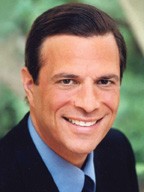
Michael R. Beschloss
Also known as: Michael Beschloss, Beschloss, Michael R
Michael Richard Beschloss is an American historian. A specialist in the United States presidency, he is the author of more than nine books. - Wikipedia
A GENERAL STRIKE HAS BEEN CALLED IN CANTON.
— from The conquerors
Most acclaimed

The conquerors
As Allied soldiers fought the Nazis, Franklin Roosevelt and, later, Harry Truman fought in private with Churchill and Stalin over how to ensure that Germany could never threaten the world again. Eleven years in the writing, drawing on newly opened American, Soviet and British documents as well as private diaries, letters and secret audio recordings, Michael Beschloss's gripping narrative lets us eavesdrop on private conversations and telephone calls among a cast of historical giants. The book casts new light upon Roosevelt's concealment of what America knew about Hitler's war against the Jews and his foot-dragging on saving refugees. FDR's actions so shocked his closest friend in the Cabinet, Secretary of the Treasury Henry Morgenthau, Jr., that Morgenthau risked their friendship by accusing the President of "acquiescence" in the "murder of the Jews." After the Normandy invasion, "obsessed" by what he had learned about the Nazis and the Holocaust, Morgenthau drew up a secret blueprint for the Allies to crush Germany by destroying German mines and factories after the European victory. As The conquerors shows, FDR endorsed most of Morgenthau's plan, and privately pressured a reluctant Churchill to concur. Horrified, Secretary of State Cordell Hull and Secretary of War Henry Stimson leaked the plan to the press at the zenith of the 1944 campaign. Hitler's propagandist Joseph Goebbels denounced the Roosevelt-Churchill "Jewish murder plan" and claimed it would kill forty-three million Germans. Republican presidential candidate Thomas Dewey charged that by stiffening German resistance, publicity about Morgenthau's plan had cost many U.S. soldiers' lives. The conquerors explores suspicions that Soviet secret agents manipulated Roosevelt and his officials to do Stalin's bidding on Germany. It reveals new information on FDR's hidden illnesses and how they affected his leadership--and his private talk about quitting his job during his fourth term and letting Harry Truman become President. It shows us FDR's final dinner, in April 1945, in Warm Springs, Georgia, at which the President and Morgenthau were still arguing over postwar Germany. Finally it shows how the unprepared new President Truman managed to pick up the pieces and push Stalin and Churchill to accede to a bargain that would let the Anglo-Americans block Soviet threats against Western Europe and ensure that the world would not have to fear another Adolf Hitler.
The presidents
Contains analysis of U.S. Presidents and their administrations, with discussion of each man's rise to power, the problems he confronted in office, and his effect on the institution of the presidency, and includes a chapter on the role of First Ladies in shaping the presidency.
Eisenhower
In his magisterial bestseller FDR, Jean Edward Smith gave us a fresh, modern look at one of the most indelible figures in American history. Now this peerless biographer returns with a new life of Dwight D. Eisenhower that is as full, rich, and revealing as anything ever written about America's thirty-fourth president. As America searches for new heroes to lead it out of its present-day predicaments, Jean Edward Smith's achievement lies in reintroducing us to a hero from the past whose virtues have become clouded in the mists of history. Here is Eisenhower the young dreamer, charting a course from Abilene, Kansas, to West Point, to Paris under Pershing, and beyond. Drawing on a wealth of untapped primary sources, Smith provides new insight into Ike's maddening apprenticeship under Douglas MacArthur in Washington and the Philippines. Then the whole panorama of World War II unfolds, with Eisenhower's superlative generalship forging the Allied path to victory through multiple reversals of fortune in North Africa and Italy, culminating in the triumphant invasion of Normandy. Smith also gives us an intriguing examination of Ike's finances, details his wartime affair with Kay Summersby, and reveals the inside story of the 1952 Republican convention that catapulted him to the White House. Smith's chronicle of Eisenhower's presidential years is as compelling as it is comprehensive. Derided by his detractors as a somnambulant caretaker, Eisenhower emerges in Smith's perceptive retelling as both a canny politician and a skillful, decisive leader. Smith convincingly portrays an Eisenhower who engineered an end to America's three-year no-win war in Korea, resisted calls for preventative wars against the Soviet Union and China, and boldly deployed the Seventh Fleet to protect Formosa from invasion. This Eisenhower, Smith shows us, stared down Khrushchev over Berlin and forced the withdrawal of British, French, and Israeli forces from the Suez Canal. He managed not only to keep the peace -- after Ike made peace in Korea, not one American soldier was killed in action during his tenure—but also to enhance America's prestige in the Middle East and throughout the world. Domestically, Eisenhower reduced defense spending, balanced the budget, constructed the interstate highway system, and provided social security coverage for millions who were self-employed. Ike believed that traditional American values encompassed change and progress. Unmatched in insight, Eisenhower in War and Peace at last gives us an Eisenhower for our time -- and for the ages. - Publisher.