
UNITED STATES AUTHOR · FOOD
Michael Pollan
Also known as: 이경식., M. Pollan
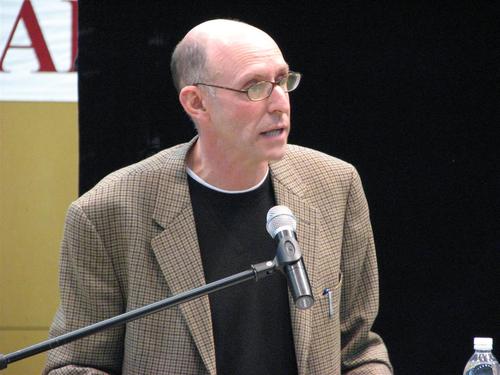
Michael Pollan is an American author, journalist, activist, and professor of journalism at the UC Berkeley Graduate School of Journalism. He writes about the places where nature and culture intersect: on our plates, in our farms and gardens, and in the built environment.
Eat food. Not too much. Mostly plants.
— from In Defense of Food, 2008
Most acclaimed

In Defense of Food
2008
What to eat, what not to eat, and how to think about health: a manifesto for our times"Eat food. Not too much. Mostly plants." These simple words go to the heart of Michael Pollan's In Defense of Food, the well-considered answers he provides to the que
Cooked
"Fire, water, air, earth--our most trusted food expert recounts the story of his culinary education In Cooked, Michael Pollan explores the previously uncharted territory of his own kitchen. Here, he discovers the enduring power of the four classical elements--fire, water, air, and earth--to transform the stuff of nature into delicious things to eat and drink. Apprenticing himself to a succession of culinary masters, Pollan learns how to grill with fire, cook with liquid, bake bread, and ferment everything from cheese to beer. In the course of his journey, he discovers that the cook occupies a special place in the world, standing squarely between nature and culture. Both realms are transformed by cooking, and so, in the process, is the cook. Each section of Cooked tracks Pollan's effort to master a single classic recipe using one of the four elements.^ A North Carolina barbecue pit master tutors him in the primal magic of fire; a Chez Panisse-trained cook schools him in the art of braising; a celebrated baker teaches him how air transforms grain and water into a fragrant loaf of bread; and finally, several mad-genius "fermentos" (a tribe that includes brewers, cheese makers, and all kinds of picklers) reveal how fungi and bacteria can perform the most amazing alchemies of all. The reader learns alongside Pollan, but the lessons move beyond the practical to become an investigation of how cooking involves us in a web of social and ecological relationships: with plants and animals, the soil, farmers, our history and culture, and, of course, the people our cooking nourishes and delights. Cooking, above all, connects us. The effects of not cooking are similarly far reaching.^ Relying upon corporations to process our food means we consume huge quantities of fat, sugar, and salt; disrupt an essential link to the natural world; and weaken our relationships with family and friends. In fact, Cooked argues, taking back control of cooking may be the single most important step anyone can take to help make the American food system healthier and more sustainable. Reclaiming cooking as an act of enjoyment and self-reliance, learning to perform the magic of these everyday transformations, opens the door to a more nourishing life. "-- "In Cooked, Pollan explores the previously uncharted territory of his own kitchen. Here, he discovers the enduring power of the four classical elements--fire, water, air, and earth--to transform the stuff of nature into delicious things to eat and drink. In the course of his journey, he discovers that the cook occupies a special place in the world, standing squarely between nature and culture. Both realms are transformed by cooking, and so, in the process, is the cook"--
SECOND NATURE
One day, Harper's Magazine editor Michael Pollan bought an old Connecticut dairy farm. He planted a garden and attempted to follow Thoreau's example: do not impose your will upon the wilderness, the woodchucks, or the weeds. That ethic, of course, did not work. But neither did pesticides or firebombing the woodchuck burrow. So Pollan began to think about the troubled borders between nature and contemporary life. The result is a funny, profound, and beautifully written book which has become a classic of American nature writing. It inspires thoughts on the war of the roses; sex and class conflict in the garden; virtuous composting; the American lawn; seed catalogs, and the politics of planting a tree. A blend of meditation, autobiography, and social history, Second Nature is ultimately a modern Walden.--From publisher description.