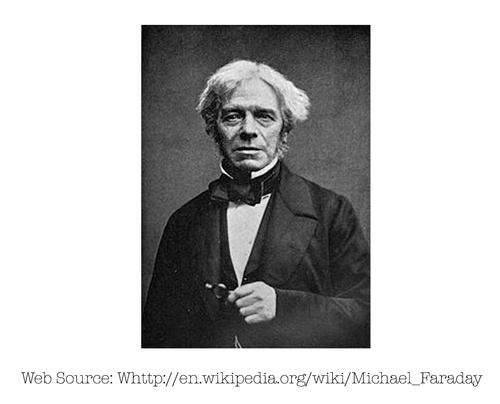
Michael Faraday
Personal Information
Description
There is no description yet, we will add it soon.
Books
The philosopher's tree
"Michael Faraday has a good case to be crowned as the greatest experimental scientist who ever lived. His discoveries in electrochemistry, electromagnetism, dia-and para-magnetism and above all the unification of the forces of nature, continue to provide the backdrop against which the physical sciences operate at the end of the 20th century."--BOOK JACKET. "Yet his contribution was more than simply scientific discovery. He was a fervent advocate of better understanding of science by the population at large, an inspirational lecturer on science to young people, advisor to governments and, perhaps most importantly, a deeply moral and spiritual man, whose life was founded on strongly held beliefs about man, society and religion."--Jacket. "This book brings together for the first time a comprehensive selection of his writings, taken from all aspects of his life, intimate and public. They show the relationships between his many activities, especially with the Royal Institution, for whose bicentenary this collection is published."--Jacket.
Michael Faraday's 'Chemical notes, hints, suggestions, and objects of pursuit' of 1822
The correspondence of Michael Faraday
The Correspondence of Michael Faraday Michael Faraday (1791-1867) was one of the most important men of science in nineteenth century Britain. His discoveries of electro-magnetic rotations (1821) and electro-magnetic induction (1831) laid the foundations of the modern electrical industry. His discovery of the magneto-optical effect and diamagnetism (1845) led him to formulate the field theory of electro-magnetism, which forms one of the cornerstones of modern physics. These and a whole host of other fundamental discoveries in physics and chemistry, together with his lecturing at the Royal Institution, his work for the state (including Trinity House), his religious beliefs and his lack of mathematical ability, make Faraday one of the most fascinating scientific figures ever. All these aspects of his life and work and others, such as his health, are reflected in his letters which, in this final volume, cover Faraday's life to his death in August 1867. Also published here are letters that could not be dated and letters that should have been included in volumes one to five but which had not been located when those volumes were published. In total just over 80% of the letters in this volume are previously unpublished. The dominant topic of the 1860s (covered in nearly 40% of the letters) is Faraday's involvement with the lighthouse service relating in particular to his advice to Trinity House and the Board of Trade on matters such as electric light and the controversial issue of fog signals. Also detailed is the complex process by which his various posts were transferred to John Tyndall. Similar issues existed with Faraday's gradual withdrawal from his duties at the Royal Institution, including the misguided attempt to make him President. And, of course, running through many of the letters are comments on his declining health and impending death. Major correspondents include the Astronomer Royal G.B. Airy, the Secretary of Trinity House P.H. Berthon, the Birmingham glassmaker J.T. Chance, the Assistant Secretary of the Board of Trade T.H. Farrer, the German mathematician Julius Plü cker, the Cambridge trained mathematical natural philosophers James Clerk Maxwell and William Thomson, Faraday's colleagues at the Royal Institution Henry Bence Jones, John Tyndall and Benjamin Vincent, the Swiss chemist Christian Schoenbein and the astronomer James South.
Michael Faraday in Wales: including Faraday's journal of his tour through Wales in 1819
The letters of Faraday and Schoenbein, 1836-1862
Course of six lectures on the chemical history of a candle
Presents a newly illustrated edition of Faraday's six classic lectures that provide an introduction to the principles of combustion. Includes twenty-two experiments that demonstrate the argument of the lectures.
A course of six lectures on the various forces of matter and their relations to each other
Identity of electricities derived from different sources ; Relation by measurement of common and voltaic electricity
The Correlation and Conservation of Forces: A Series of Expositions
Book digitized by Google and uploaded to the Internet Archive by user tpb.
