Discover

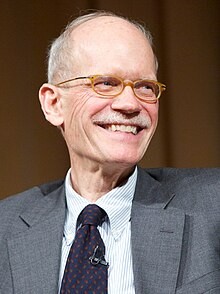
Mark E. Neely, Jr.

Personal Information

Born November 10, 1944 (81 years old)
Amarillo, United States
Also known as: Mark E. Neely
21 books
0.0 (0)
10 readers

Description

Mark E. Neely Jr. (born November 10, 1944, in Amarillo, Texas) is an American historian best known as an authority on the U.S. Civil War in general and Abraham Lincoln in particular.

Books

Newest First

Lincoln's Legacy

0.0 (0)
2

Third graders travel through time to keep history on track! Abigail loves Mondays, and so does the rest of class 305. That's the day Mr. Caruthers asks them cool questions about history. Today Mr. C asks, "What if Abraham Lincoln never freed the slaves?" Abigail and her friends are ready to put their thinking caps on. But this time Mr. C wants them to do more than put their heads together-he wants them to travel back in time! Turns out the "What If?" questions are real, and Mr. C has just come back from a visit to the past. He needs their help because it looks like President Lincoln might quit and never free the slaves! With a time-travel gadget and only two hours to spare, Abigail and her friends are going back to the past. But even though time traveling isn't hard, convincing Abraham Lincoln not to give up isn't going to be easy ... With a dollop of The Magic Tree House, a dash of Back to the Future, and pinch of Bill & Ted's Excellent Adventure, Blast to the Past is a recipe for fun!

Lincoln and the triumph of the nation

0.0 (0)
0

"The Civil War placed the U.S. Constitution under unprecedented--and, to this day, still unmatched--strain. In Lincoln and the Triumph of the Nation, Pulitzer Prize-winning historian Mark Neely examines for the first time in one book the U.S. Constitution and its often overlooked cousin, the Confederate Constitution, and the ways the documents shaped the struggle for national survival. Previous scholars have examined wartime challenges to civil liberties and questions of presidential power, but Neely argues that the constitutional conflict extended to the largest questions of national existence. Drawing on judicial opinions, presidential state papers, and political pamphlets spiced with the everyday immediacy of the partisan press, Neely reveals how judges, lawyers, editors, politicians, and government officials, both North and South, used their constitutions to fight the war and save, or create, their nation. Lincoln and the triumph of the nation illuminates how the U.S. Constitution not only survived its greatest test but emerged stronger after the war. That this happened at a time when the nation's very existence was threatened, Neely argues, speaks ultimately to the wisdom of the Union leadership, notably President Lincoln and his vision of the American nation"--Provided by publisher. "The Civil War placed the U.S. Constitution under unprecedented--and, to this day, still unmatched--strain. Neely examines for the first time in one book the U.S. Constitution and its often overlooked cousin, the Confederate Constitution, and the ways the documents shaped the struggle for national survival"--Provided by publisher.
Southern Rights: Political Prisoners and the Myth of Confederate Constitutionalism

0.0 (0)
0

"On the day Fort Sumter surrendered to Confederate authorities, General Braxton Bragg reacted to a newspaper report that might have revealed the position of gun emplacements by arresting the correspondent, a Southern loyalist. Thus the Confederate army's first detention of a citizen occurred before President Lincoln had even called out troops to suppress the rebellion. During the civil war that followed, not a day would pass when Confederate military prisons did not contain political prisoners."--BOOK JACKET. "Based on the discovery of records of over four thousand of these prisoners, Mark E. Neely, Jr.'s book undermines the common understanding that Jefferson Davis and the Confederates were scrupulous in their respect for constitutional rights while Lincoln and the Unionists regularly violated the rights of dissenters. Neely reveals for the first time the extent of repression of Unionists and other civilians in the Confederacy and uncovers and marshals convincing evidence that Southerners were as ready as their Northern counterparts to give up civil liberties in response to the real or imagined threats of wartime."--BOOK JACKET.

The Fate of Liberty

0.0 (0)
1

"In the Pulitzer Prize-winning The Fate of Liberty, Mark Neely -- one of America's leading authorities on Lincoln -- explores the whole range of Lincoln's constitutional policies, examining his controversial restriction of civil liberties and the abuses of power that arose under martial law." "Neely depicts Lincoln's suspension of habeas corpus as a well-intentioned attempt to deal with a floodtide of unforeseen events -- from the disintegrating public order in the border states to the outcry against the first draft in U.S. history. Drawing on letters from prisoners, records of military courts and federal prisons, memoirs, and federal archives, he paints a vivid picture of how Lincoln responded to these problems, how his policies were actually executed, and the virulent political debates that followed. Lincoln emerges from this account with his legendary statesmanship intact -- mindful of political realities and prone to temper the sentences of military courts, concerned not with persecuting his opponents but with prosecuting the war efficiently." "Written with keen insight and an intimate grasp of the original sources, The Fate of Liberty brings to life the crises and chaos of a nation at war with itself, changing our understanding of Lincoln and his most controversial policies. Book jacket."--Jacket.

The Civil War and the Limits of Destruction

0.0 (0)
1

The Civil War is often portrayed as the most brutal war in America's history, a premonition of 20th century slaughter and carnage. In challenging this view, the author considers the war's destructiveness in a comparative context, revealing the sense of limits that guided the conduct of American soldiers and statesmen.

Lincoln's Generals

0.0 (0)
3

From the moment the battle ended, Gettysburg was hailed as one of the greatest triumphs of the Union army. Celebrations erupted across the North as a grateful people cheered the victory. But Gabor Boritt turns our attention away from the rejoicing millions to the dark mood of the White House - where Lincoln cried in frustration as General Meade let the largest Confederate army escape safely into Virginia. Such unexpected portraits abound in Lincoln's Generals, as a team of distinguished historians probes beyond the popular anecdotes and conventional wisdom to offer a fascinating look at Lincoln's relationship with his commanders. In Lincoln's Generals, Boritt and his fellow contributors examine the interaction between the president and five key generals: McClellan, Hooker, Meade, Sherman, and Grant. In each chapter, the authors provide new insight into this mixed bag of officers and the president's tireless efforts to work with them. Even Lincoln's choice of generals was not as ill-starred as we think, writes Pulitzer Prize-winner Mark E. Neely, Jr.: compared to most Victorian-era heads of state, he had a fine record of selecting commanders (for example, the contemporary British gave us such bywords for incompetence as "the charge of the Light Brigade," while Napoleon III managed to lose the entire French army). But the president's relationship with his commanders in chief was never easy. In these pages, Stephen Sears underscores McClellan's perverse obstinancy as Lincoln tried everything to drive him ahead. Neely sheds new light on the president's relationship with Hooker, arguing that he was wrong to push the general to attack at Chancellorsville. Boritt writes about Lincoln's prickly relationship with the victor of Gettysburg, "old snapping turtle" George Meade. Michael Fellman reveals the political stress between the White House and William T. Sherman, a staunch conservative who did not want blacks in his army but who was crucial to the war effort. And John Y. Simon looks past the legendary camaraderie between Lincoln and Grant to reveal the tensions in their relationship. . Perhaps no other episode has been more pivotal in the nation's history than the Civil War - and yet so much of these massive events turned on a few distinctive personalities. Lincoln's Generals is a brilliant portrait that takes us inside the individual relationships that shaped the course of our most costly war.

The Union Divided

0.0 (0)
0

"In 1863, Union soldiers from Illinois threatened to march from the battlefield to their state capital. Springfield had not been seized by the Rebels - but the state government was in danger of being captured by the Democrats.". "In The Union Divided, Mark E. Neely, Jr., recounts the story of political conflict in the North during the Civil War. Examining party conflict as viewed through the lens of the developing war, the excesses of party patronage, the impact of wartime elections, the highly partisan press, and the role of the loyal opposition, Neely dismantles the argument long established in Civil War scholarship that the survival of the party system in the North contributed to its victory.". "The many positive effects attributed to the party system were in fact the result of the fundamental operation of the Constitution, in particular a four-year president who was commander in chief. In several ways, the party system actually undermined the Northern war effort; Americans uneasy about normal party operations in the abnormal circumstances of civil war saw near treason in the loyal opposition."--BOOK JACKET.

The Union image

0.0 (0)
0

Focusing on the popular prints used by the Northern side of the American Civil War, this book examines the importance of graphic arts in rallying support for the Union during the war and in shaping the national memory after the war.

The Emancipation proclamation

0.0 (0)
1

Looks at the political and moral issues that caused President Lincoln to issue the 1863 document that freed many slaves, and at the immediate and long-term consequences of his action.

The Abraham Lincoln encyclopedia

0.0 (0)
0

Among the many novel features of this volume: It carefully examines Lincoln's views on a wide variety of subjects such as economics, race, the Constitution, Indians, patronage, habeas corpus, and dozens more. It offers biographical sketches of members of Lincoln's family and describes how he felt about them, including his "rebel" sister-in-law and an enterprising cousin who used Lincoln's Presidential nomination to launch a flourishing souvenir business. It portrays and clearly captures scores of Lincoln's associates, assistants, colleagues, and enemies, from Charles Francis Adams and George Atzerodt to Fernando Wood and Richard Yates. It appraises all the major Lincoln biographers and their books and also covers others associated with the subject: collectors and collections, portrait painters and photographers, famous documents and sites. - From Publisher.

The boundaries of American political culture in the Civil War era

0.0 (0)
0

Did preoccupations with family and work crowd out interest in politics in the nineteenth century, as some have argued? Arguing that social historians have gone too far in concluding that Americans were not deeply engaged in public life, and that political historians have gone too far in asserting that politics informed all of Americans' lives, the author of this book seeks to gauge the importance of politics for ordinary people in the Civil War era.

Lincoln and the Democrats

0.0 (0)
0

"Lincoln and the Democrats describes the vexatious behavior of a two-party system in war and points to the sound parts of the American system which proved to be the country's salvation: local civic pride, and quiet nonpartisanship in mobilization and funding for the war, for example. While revealing that the role of a noxious 'white supremacy' in American politics of the period has been exaggerated - as has the power of the Copperheads - Neely revives the claim that the Civil War put the country on the road to 'human rights', and also uncovers a previously unnoticed tendency toward deceptive and impractical grandstanding on the Constitution during war in the United States." -- Publisher's description
