Discover

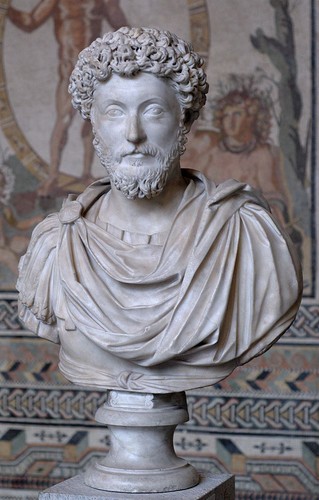
Marcus Aurelius

Personal Information

Born April 26, 121
Died March 17, 180 (58 years old)
Rome, Ancient Rome
Also known as: Marcus Aurelius, Emperor of Rome Marcus Aurelius
22 books
3.6 (7)
163 readers
Categories

Description

Marcus Aurelius Antoninus was Roman Emperor from 161 to 180. He ruled with Lucius Verus as co-emperor from 161 until Verus' death in 169. He was the last of the "Five Good Emperors", and is also considered one of the most important Stoic philosophers. During his reign, the empire defeated a revitalized Parthian Empire; Aurelius' general Avidius Cassius sacked the capital Ctesiphon in 164. Aurelius fought the Marcomanni, Quadi, and Sarmatians with success during the Marcomannic Wars, but the threat of the Germanic Tribes began to represent a troubling reality for the empire. A revolt in the east led by Avidius Cassius failed to gain momentum and was suppressed immediately. Marcus Aurelius' work Meditations, written in Greek while on campaign between 170 and 180, is still revered as a literary monument to a government of service and duty. It serves as an example of how Aurelius approached the Platonic ideal of a philosopher-king and how he symbolized much of what was best about Roman civilization.

Books

Newest First

Marcus Aurelius in love

0.0 (0)
0

"In 1815 a manuscript containing one of the long-lost treasures of antiquity was discovered - the letters of Marcus Cornelius Fronto, reputed to have been one of the greatest Roman orators. But this find disappointed many nineteenth-century readers, who had hoped for the letters to convey all of the political drama of Cicero's. That the collection included passionate love letters between Fronto and the future emperor Marcus Aurelius was politely ignored - or concealed. And for almost two hundred years these letters have lain hidden in plain sight." "Marcus Aurelius in Love rescues these letters from obscurity and returns them to the public eye. The story of Marcus and Fronto began in 139 CE when Fronto was selected to instruct Marcus in rhetoric. Marcus was eighteen then and by all appearances the pupil and teacher fell in love. Spanning the years in which the relationship flowered and died, these are the only love letters to survive from antiquity - homoerotic or otherwise. With a translation that reproduces the effusive, slangy style of the young prince and the rhetorical flourishes of his master, the letters between Marcus and Fronto will rightfully be reconsidered as key documents in the study of the history of sexuality and classics."--BOOK JACKET.

The thoughts of Marcus Aurelius

0.0 (0)
8

Perhaps some may question the wisdom of putting out the Thoughts of Marcus Aurelius Antoninus to be used as a Reader by children in the schools. It may appear to them better suited to the mature mind. The principle, however, that has governed us in selecting reading for the young has been to secure the best that we could find in all ages for grown-up people. The milk and water diet provided for my dear children is not especially complimentary to them.

Meditaciones

4.0 (1)
27

Descendiente de una familia de origen hispánico, Marco Aurelio nació en Roma en el año 121 de nuestra era y, tras ser adoptado por Antonio Pío, lo sucedió como emperador, ocupando el cargo desde el año 161 hasta su muerte en 180. Su reinado estuvo marcado por las numerosas y dilatadas guerras que mantuvo contra los pueblos que habitaban en los límites del Imperio. Sin embargo, su devoción por las letras fue notoria y Marco Aurelio dedicó muchas horas al estudio de la filosofía. Durante los descansos que le daban su intensa actividad bélica y sus obligaciones políticas compuso las Meditaciones, una de las principales obras del estoicismo romano, pese a estar redactadas en griego. Los doce libros en que se organiza esta obra constituyen una compilación de ideas y sentencias breves en la que Marco Aurelio reflexiona sobre temas como los límites de la naturaleza humana, la fugacidad del tiempo, las valores morales o la manera correcta de conducirse en la vida.
