Discover
Jan 1, 1908 — Jan 1, 1968· 60 yrs

AZERBAIJAN DEMOCRATIC REPUBLIC AUTHOR · PHYSICS · QUANTUM THEORY

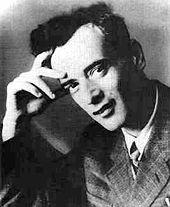
L.D Landau

Also known as: L. D Landau, Landau Lev D.

19
BOOKS
5.0
AVG RATING (1)
2
READERS

Lev Davidovich Landau (Russian: Лев Дави́дович Ланда́у; 22 January 1908 – 1 April 1968) was a Soviet physicist who made fundamental contributions to many areas of theoretical physics. He was considered as one of the last scientists who were universally well-versed and made seminal contributions to all branches of physics. He is credited with laying the foundations of twentieth century condensed matter physics, and is also considered arguably the greatest Soviet theoretical physicist. His accomplishments include the independent co-discovery of the density matrix method in quantum mechanics (alongside John von Neumann), the quantum mechanical theory of diamagnetism, the theory of superfluidity, the theory of second-order phase transitions, invention of order parameter technique, the Ginzburg–Landau theory of superconductivity, the theory of Fermi liquids, the explanation of Landau damping in plasma physics, the Landau pole in quantum electrodynamics, the two-component theory of neutrinos, and Landau's equations for S-matrix singularities. He received the 1962 Nobel Prize in Physics for his development of a mathematical theory of superfluidity that accounts for the properties of liquid helium II at a temperature below 2.17 K (−270.98 °C).

Baku, Azerbaijan Democratic Republic
Wikipedia

Statistical physics, often called for brevity simply statistics, consists in the study of the special laws which govern the behaviour and properties of macroscopic bodies (that is, bodies formed of a very large number of individual particles, such as atoms and molecules).

— from Statistical Physics (Course of Theoretical Physics, Volume 5)

Most acclaimed

#1

Chto takoe teorii︠a︡ otnositelʹnosti

1960

5.0 (1)

Here two Russian theoretical physicists give a lighthearted presentation of the special theory of relativity. It is so simply written that the reader needs no technical knowledge beyond arithmetic. Their witty text, illustrated by a series of Russian cartoons, explains the paradoxes of relativity--its funny trains, contracting rulers, and capricious clocks--in a charming way.

#2

Statisticheskai︠a︡ fizika

1938

0.0 (0)

2nd Impression of 2nd Revised and Enlarged Edition

#3

Lekt︠s︡ii po teorii atomnogo i︠a︡dra

1955

0.0 (0)

Books

Newest First