
FRANCE AUTHOR · BIOGRAPHY · HISTORY
Jean Lacouture
Also known as: Lacouture,Jean., Jean LACOUTURE
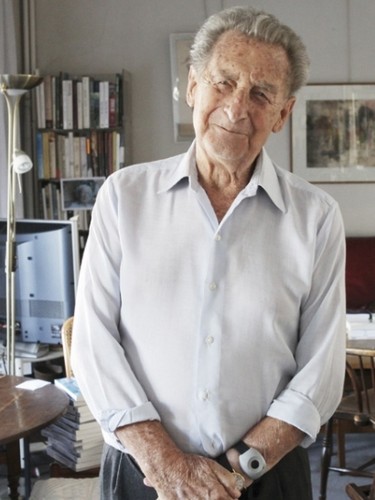
Jean Lacouture (French pronunciation: [ʒɑ̃ lakutyʁ]; 9 June 1921 – 16 July 2015) was a journalist, historian and author. He was particularly famous for his biographies.
LAME MAN PULLED himself along the banks of the Llobregat River.
— from Jésuites, 1991
Most acclaimed

Nasser
2004
What this book lacks in analytic strength it makes up for in psychological immediacy and firsthand political color. By comparison, the more industrious studies by Anthony Nutting (Nasser, 1972) and Robert Stephens (Nasser, 1972) seem pedestrian. Lacouture is a well-known liberal French journalist with personal knowledge of Nasser and Egypt; his sketches of rural life, the sociology of the army, Nasser's youth, etc., are so refreshingly sophisticated that the reader tends to pardon the book's journalistic lapses. Questions eventually persist, however: what was the Anglo-versus-American stake in the overthrow of Farouk? Did the Nasser regime's affinities with classical dictatorships and European fascist movements mean more than Lacouture's coy hints would indicate? The strength of Nasser's original affiliation with the West, and the way he kept the army from becoming an independent force (a success which, the book suggests, helps explain the army's weakness vis-a-vis the Israelis) exemplify the important interpretations Lacouture somewhat casually tosses off. The London Times Literary Supplement has already lengthily identified various undeveloped and unsubstantiated claims here; but the most important criticism is Lacouture's semi-infatuation with ""a man of power,"" which undermines his best insights, a posture already exposed in his Egypt in Transition (1967) and The Demigods (1970), from both of which, it should be noted, this book draws on heavily. However, readers who share Lacouture's fascination with the Nasser characterology, will enjoy the book.
Malraux
1976
"Si, comme le dit Malraux, "l'homme ne se construit qu'en poursuivant ce qui le dépasse", il va devoir franchir des frontières. Sans cesse. Car, une fois une frontière franchie, il devra en franchir une autre, pour ne pas être englué en lui-même, chosifié, pour que son style ne devienne pas répétition. Pour que sa vie et son style soient vifs, comme une métaphore. Et cela est vrai pour l'artiste qu'il fut, pour l'homme engagé qu'il était, pour le colonel de la guerre civile espagnole et de la Deuxième Guerre mondiale, pour l'homme politique et le grand ministre qu'il décida d'être. Pour celui qui passa du roman au cinéma, à l'essai et aux méditations sur l'art. Et, s'il nous éduque et nous apprend quelque chose dans ce devoir de passer les frontières, c'est qu'il en a franchi plus d'une au péril de sa vie, au risque d'échouer et de perdre, de se perdre, de paraître ridicule, d'être ridiculisé : frontières de la vie & des engagements, frontières de la mort & des oeuvres, frontières des arts & des pensées."--Back cover.