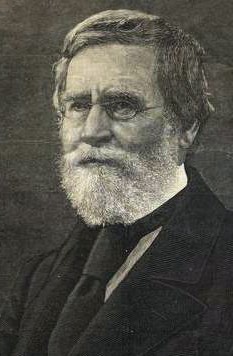

UNITED STATES AUTHOR · JUVENILE · CHILDREN
Jacob Abbott
Also known as: jacob abbott, Jacob Abbot
From 1825 to 1829 Abbott was professor of mathematics and natural philosophy at Amherst College; was licensed to preach by the Hampshire Association in 1826; founded the Mount Vernon School for Young Ladies in Boston in 1829, and was principal of it in 1829–1833; was pastor of Eliot Congregational Church (which he founded), at Roxbury, Massachusetts in 1834–1835; and was, with his brothers, a founder, and in 1843–1851 a principal of Abbott's Institute, and in 1845–1848 of the Mount Vernon School for Boys, in New York City. He was a prolific author, writing juvenile fiction, brief histories, biographies, religious books for the general reader, and a few works in popular science. He wrote 180 books and was a coauthor or editor of 31 more. He died in Farmington, Maine, where he had spent part of his time after 1839, and where his brother, Samuel Phillips Abbott, founded the Abbott School. [Wikipedia]
FLAVIUS Hence! Home, you idle creatures, get you home!
— from Julius Caesar
Most acclaimed

Heat
2006
Started to worry about just how hot our world is going to get, and whether you can do anything about it? As the effect of climate change grows by the day, so does the amount of hot air and bluster spouted by politicians and businessmen on what we should do about it. What with the excuses, the lies, the fudged figures, the PR greenwashing and the downright misinformation on the power of everything from wind turbines to carbon trading, when it comes to saving the world, most people don't know what they're talking about.Luckily, George Monbiot – scourge of big business, riler of governments, arch-enemy of climate change deniers everywhere – does. Packed with killer facts and inspiring ideas, shot through with passion and underlined by brilliant investigative journalism, with a copy of Heat you really can protect the planet.'I defy you to read this book and not feel motivated to change' The Times
American history
Alan Brinkley's American History sets the standard for balance of perspective and the exploration of ongoing historical questions. In this AP edition, we are pleased to announce a number of firsts for American History: a new primary-source feature that makes connections between the present and the past; a new pedagogy program that helps students to comprehend and think critically about content; and a groundbreaking set of digital tools, powered by Connect; that create a unique learning environment. The result is greater course success. Connect to the stories, connect to the experience, connect to success in history. - Back cover.
Light
1968
[Comment from Jon Courtenay Grimwood]: > Light is the kind of novel other writers read and think: "Why don't I just give up and go home?" That was certainly my first reaction on reading its mix of coldly perfect prose and attractively twisted insanity. It's also the only book to bring me unpleasantly close to sympathising with a serial killer. But this is M John Harrison: so antihero Michael Kearney is a mathematically brilliant, dice-throwing, reality-changing hyper-intelligent serial killer haunted by a horse-skulled personal demon. > Harrison's genius is to tie Kearney's narrative thread to those of Seria Mau – a far-future girl existing in harmony with White Cat, her spaceship, surfing a part of the galaxy known as the Kefahuchi Tract – and Chinese Ed, a sleazy if likeable cyberpunky chancer with a passion for virtual sex. > This is not a kind book, or even a particularly likeable book. But then I suspected it was never intended to be, and the author wouldn't want the kind of people who want to like characters as his readers anyway. What it is is stunningly written, meticulously plotted, hallucinogenically realised and brutally honest. No one who reads it could doubt that Harrison might win the Booker if he could be bothered. > Light is also the book that novelist and critic Adam Roberts was so sure would win the Arthur C Clarke award, he offered to change his name to Adam Van Hoogenroberts if it didn't. We're still waiting . . .