
UNITED KINGDOM AUTHOR · FICTION · ARTHURIAN ROMANCES
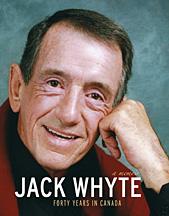
Jack Whyte
È nato in Scozia, e ha studiato in Inghilterra e in Francia. Nel 1967 si è trasferito in Canada. Da sempre interessato alle saghe arturiane, ha ottenuto uno straordinario successo con la pubblicazione delle Cronache di Camelot e della serie dedicata a Lancillotto. La caduta dei Templari è l’ultimo romanzo della serie Saint-Clair, interamente dedicata alla storia dei Templari. Vive a Vancouver, è sposato, e ha cinque figli. I suoi libri tradotti in italiano: Le cronache di Camelot; La pietra del cielo; La spada che canta; La stirpe dell’aquila; Il sogno di Merlino; Il forte sul fiume; Il segno di Excalibur; Le porte di Camelot; La donna di Avalon; Io Lancillotto; Il cavaliere di Artù; Il marchio di Merlino; Il destino di Camelot; Il sogno di Ginevra; Saint-Clair; I custodi del codice; Il leone dei Templari;
In the years since Jim had died, Julie Barenson had somehow found a way to start living again.
— from The guardian
Most acclaimed

Resistance
Great Britain. July 1951. Three years ago, Russia went dark. Nothing got in. Nothing got out. The world assumed it was political strife. But it was the Chimera: voracious extraterrestrial invaders. And in December 1949, they burst across the Russian border and poured into Europe. The luckiest humans died. The less fortunate succumbed to an alien virus--and changed.Within a year, most of Europe had fallen. Only Great Britain, after struggling desperately, had kept the conquerors at bay. But as the Chimera were repelled, they were evolving. Building. Planning.America. November 1952.The Chimera have crossed the Atlantic. Their lightning strikes on American borders are devastating. Cities are lost. Small towns overrun. Citizens transformed into monstrosities. Enter Lieutenant Nathan Hale, U.S. Ranger. A veteran of the Chimeran conflict, he is uniquely immune to the alien virus. And when regular troops can't stem the Chimeran onslaught, Hale and his special-operations team meet the menace head-on.But while they battle the relentless Chimera, deadly power games rage in the White House. And when Hale discovers a far-reaching conspiracy, one with deadly consequences for the human race, his allegiance to country and mankind is stretched to the breaking point.From the Paperback edition.
Rebel
Tom Paine, the intellectual father of the American Revolution, was the prime maker of public opinion in the New World at the end of the eighteenth century. The most influential American pamphleteer of that period, he was also far more -- a "radical" who proposed a democracy in England; a member of the French revolutionary government; an inventor; a secret drinker; above all, an extraordinary, complex character. Rebel! covers Paine's entire life, from his beginnings in rural England to his death in the United States of America. Born into a poor family, Paine at first followed his father's trade of corset-maker. Seeking to improve his lot, he became an exciseman, but lost that position when he started to write radical political pamphlets. It was on the advice of Benjamin Franklin that he emigrated to the colonies, where he edited a magazine in Philadelphia. Paine supported the Revolution not only as the pamphleteer whose Common Sense roused the populace but as an enlisted man in the Continental Army as well. After America's triumph over Britain, Paine, an inveterate seeker of popular causes, returned to the land of his birth and got into trouble by proposing the abolition of the monarchy there. Fleeing to France, where post-revolutionary excesses were in full swing, he was welcomed as a hero of American independence and made a member of the National Convention and a citizen of France. Paine counseled moderation at a time when immoderation was the rule; jailed during the Reign of Terror, he came close to losing his head on the guillotine. When, freed at last, he returned to America, he was denounced as an atheist for the views he expressed in The Age of Reason. In later life, he became increasingly cantankerous and thus made many enemies. In his loneliness he was unable to recognize the truth that thousands revered him. In Rebel! Samuel Edwards vividly recreates the political issues of the American Revolution as seen and influenced by the man who, perhaps more than anyone else, was responsible for swaying public opinion in favor of the war. Tom Paine was both an intellectual and a man of action. Accustomed to turmoil, he thrived only in adversity; always a center of controversy, he often generated it with his radical and innovative social and political ideas. Among his friends in America were George Washington, Samuel Adams, James Monroe, Benjamin Franklin, and Thomas Jefferson; in France he was welcomed by Napoleon. Rebel! is filled with people, places, events, and a generous selection of Paine's writings. - Jacket flap.
The guardian
Some men strive for greatness. And some men find themselves thrust into the role of their nation's saviors. Such are the two heroes who reshaped and reconfigured the entire destiny of the kingdom of Scotland. Wallace the Braveheart would become the only legendary, heroic, commoner in medieval British history; the undying champion of the common man. The other, Robert Bruce, earl of Carrick, would perfect the techniques of guerrilla warfare developed by Wallace and use them to create his own place in history as the greatest king of Scots. In the spring of 1297, the two men meet in Ayr, in the south of Scotland, each having recently lost a young wife, one in childbirth and the other by murder. Each is heartbroken but determined in his grief to defy the ambitions of England and its malignant king, Edward Plantagenet, whose lust to conquer and consume the realm of Scotland is blatant and unyielding. Their combined anger at the injustices of the invading English is about to unleash a storm in Scotland that will last for sixteen years--and destroy England's military power for decades--before giving rise to a new nation of free men.