
CISLEITHANIA AUTHOR · POLITICS AND GOVERNMENT · BIOGRAPHY
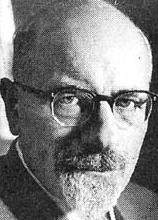
Isaac Deutscher
Also known as: Isaac Duetscher
"Isaac Deutscher was a Polish writer, journalist and political activist who moved to the United Kingdom at the outbreak of World War II. He is best known as a biographer of Leon Trotsky and Joseph Stalin and as a commentator on Soviet affairs. His three-volume biography of Trotsky, in particular, was highly influential among the British New Left." - Wikipedia
When Stalin was long established in Moscow as the ruler of a vast, largely Russian empire, his young son told his even younger daughter, 'You know, Papa used to be a Georgian once' The comment is true.
— from Stalin
Most acclaimed

The Unfinished Revolution
In a world spiralling into a state of technological excess, Michael Dertouzos shows us how to make technology - in all its infinite varieties - work for, rather than against, us in our everday business lives. Now includes a new foreword by Tim Berners-Lee, inventor of the World Wide Web.At its core, Dertouzos' manifesto is this: Simplify the use of technology to the point where it works FOR us rather than having it dictate the way we live and work. This book is about getting to the point where computer fads give way to a true Information Revolution. To get there, we must abandon our current preoccupation with machine complexities and set a goal that is as simple as it is powerful: Information technology should help people do more by doing less.Dertouzos offers a look at the future and place of technology in everyday life: Where would a world of truly easy to use technology lead the human race? How might people change their way of life and work, their politics, their self perception and their quest for the meaning of life in such an environment?
The prophet
1984
The Prophet is a book of 26 poetic essays written in English in 1923 by the Lebanese-American artist, philosopher and writer Khalil Gibran. In the book, the prophet Almustafa who has lived in the foreign city of Orphalese for 12 years is about to board a ship which will carry him home. He is stopped by a group of people, with whom he discusses many issues of life and the human condition. The book is divided into chapters dealing with love, marriage, children, giving, eating and drinking, work, joy and sorrow, houses, clothes, buying and selling, crime and punishment, laws, freedom, reason and passion, pain, self-knowledge, teaching, friendship, talking, time, good and evil, prayer, pleasure, beauty, religion, and death.
Stalin
"A magnificent new biography that revolutionizes our understanding of Stalin and his world. It has the quality of myth: a poor cobbler's son, a seminarian from an oppressed outer province of the Russian empire, reinvents himself as a top leader in a band of revolutionary zealots. When the band seizes control of the country in the aftermath of total world war, the former seminarian ruthlessly dominates the new regime until he stands as absolute ruler of a vast and terrible state apparatus, with dominion over Eurasia. While still building his power base within the Bolshevik dictatorship, he embarks upon the greatest gamble of his political life and the largest program of social reengineering ever attempted: the collectivization of all agriculture and industry across one sixth of the earth. Millions will die, and many more millions will suffer, but the man will push through to the end against all resistance and doubts. Where did such power come from? In Stalin, Stephen Kotkin offers a biography that, at long last, is equal to this shrewd, sociopathic, charismatic dictator in all his dimensions. The character of Stalin emerges as both astute and blinkered, cynical and true believing, people oriented and vicious, canny enough to see through people but prone to nonsensical beliefs. We see a man inclined to despotism who could be utterly charming, a pragmatic ideologue, a leader who obsessed over slights yet was a precocious geostrategic thinker--unique among Bolsheviks--and yet who made egregious strategic blunders. Through it all, we see Stalin's unflinching persistence, his sheer force of will--perhaps the ultimate key to understanding his indelible mark on history. Stalin gives an intimate view of the Bolshevik regime's inner geography of power, bringing to the fore fresh materials from Soviet military intelligence and the secret police. Kotkin rejects the inherited wisdom about Stalin's psychological makeup, showing us instead how Stalin's near paranoia was fundamentally political, and closely tracks the Bolshevik revolution's structural paranoia, the predicament of a Communist regime in an overwhelmingly capitalist world, surrounded and penetrated by enemies. At the same time, Kotkin demonstrates the impossibility of understanding Stalin's momentous decisions outside of the context of the tragic history of imperial Russia. The product of a decade of intrepid research, Stalin is a landmark achievement, a work that recasts the way we think about the Soviet Union, revolution, dictatorship, the twentieth century, and indeed the art of history itself"--