Discover

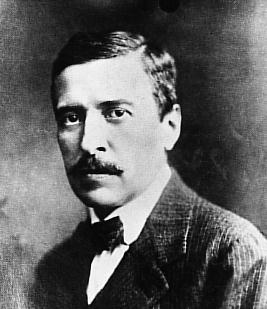
Hugo von Hofmannsthal

Personal Information

Born February 1, 1874
Died July 15, 1929 (55 years old)
Vienna, Cisleithania
Also known as: Hugo Von Hofmannsthal, Hugo von Hoffmanstahl
24 books
4.0 (4)
20 readers

Description

Austrian novelist, librettist, poet, dramatist, narrator, and essayist

Books

Newest First

The Lord Chandos letter and other writings

0.0 (0)
2

"Hugo von Hofmannsthal made his mark as a poet, as a playwright, and as the librettist for Richard Strauss's greatest operas, but he was no less accomplished as a writer of short, strangely evocative prose works. The atmospheric stories and sketches collected here - fin de siecle fairy tales from the Vienna of Klimt and Freud, a number of them never before translated into English propel the reader into a shadowy world of uncanny fates and secret desires. An aristocrat from Paris in the plague years shares a single night of passion with an unknown woman, a cavalry sergeant meets his double on the battlefield, an orphaned man withdraws from the world with his four servants, each of whom has a mysterious power over his destiny." "The most influential of all of Hofmannsthal's writings is the title story, a fictional letter to the English philosopher Francis Bacon in which Lord Chandos explains why he is no longer able to write. The "Letter" not only symbolized Hofmannsthal's own turn away from poetry, it captured the psychological crisis of faith and language which was to define the twentieth century."--Jacket.
Jedermann

4.0 (2)
6

Nach dem Vorbild spätmittelalterlicher Mysterienspiele und dramatischer Bearbeitungen aus der frühen Neuzeit (Elckerlijc/Everyman, Homulus, Hecastus) treten im Jedermann Gott, der Tod, der Teufel und andere abstrakte Wesen als Personifikationen auf. Der wohlhabende Jedermann sieht sich mit dem unerwarteten Tod konfrontiert, der ihn vor seinen Schöpfer führen will. Weder sein treuer Knecht, noch seine Freunde, noch sein Geld wollen ihn ins Grab begleiten; erst der Auftritt seiner Werke und des Glaubens bringen ihn dazu, sich zur Christenheit zu bekennen und als reuiger Bekehrter ins Grab zu steigen. - Wikipedia.

The poet and the countess

0.0 (0)
1

"The early death in 1908 of her husband, Count Christoph Martin Degenfeld, combined with the birth of her child, left Ottonie Degenfeld confined to a wheelchair and in a state of severe depression. But two years earlier, in December 1906, she had met the famous young Austrian poet, Hugo von Hofmannsthal. Learning of her situation, he now started writing to the twenty-seven-year-old countess, and her road to a new life enriched by literature and the arts began. Presented here for the first time in the English language, their correspondence provides insights into the creative processes of Hofmannsthal, whose works were strongly influenced by this unusual relationship.". "The lively correspondence is a window into a vanished world of European high society. It is a period piece reflecting the life of the affluent German aristocracy and its interaction with the arts in the first quarter of the century. Against this background, the lives and works of a number of prominent cultural figures, such as Richard Strauss and Max Reinhardt, are brought into a new light. Hofmannsthal's reports on the trials and triumphs of his libretti for Strauss's revolutionary operas are fascinating, as are his poignant comments on the First World War, and its catastrophic consequences.". "The correspondence reveals an intense friendship and shows how a sensitive and compassionate man, considered one of the foremost writers in the German language, helped a young woman to recover from the depths of despair and to find new meaning in her shattered life. At the same time, the correspondence reveals that, as Ottonie matured, it was she who helped lift the poet from his own gloom and personal problems."--BOOK JACKET.
