
UNITED STATES AUTHOR · CRITICAL PEDAGOGY · EDUCATION
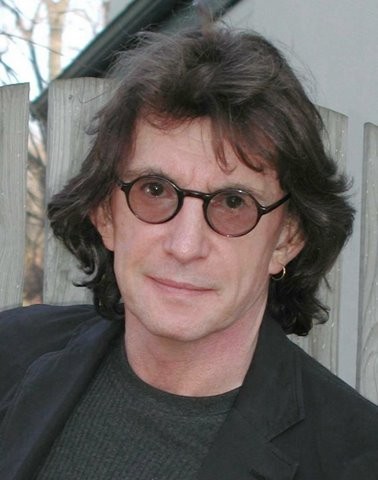
Henry A. Giroux
Also known as: Henry Giroux
Henry Armand Giroux (born September 19, 1943) is an American and Canadian scholar and cultural critic. One of the founding theorists of critical pedagogy in the United States, he is best known for his pioneering work in public pedagogy, cultural studies, youth studies, higher education, media studies, and critical theory. In 2002, Keith Morrison wrote about Giroux as among the top fifty influential figures in 20th-century educational discourse. A high-school social studies teacher in Barrington, Rhode Island, for six years, Giroux has held positions at Boston University, Miami University, and Pennsylvania State University. In 2004, Giroux began serving as the Global TV Network Chair in Communication at McMaster University in Hamilton, Ontario.
Following the tragic events of September 11, 2001, the United States garnered the sympathy and respect of many nations all over the globe.
— from The Terror of Neoliberalism, 2004
Most acclaimed

Border Crossings
Since 1992, Border Crossings has show cased Henry A. Giroux's extraordinary range as a thinker by bringing together a series of essays that refigure the relationship between post-modernism, feminism, cultural studies and critical pedagogy. With discussions of topics including the struggle over academic canon, the role of popular culture in the curriculum and the cultural war the New Right has waged on schools, Giroux identified the most pressing issues facing critical educators at the turn of the century. In this revised edition, Giroux reflects on the limits and possibilities of border crossings in the 21st century. "Borders" in our post 9/11 world have not been collapsing, he argues, but vigorously rebuilt. In order to have a truly critically engaged citizenry the challenges of these new "borders"- such as the increased militarization of public spaces, the rise of neo-liberalism, and the war in Iraq- must play a vital role in any debate on school and pedagogy.
Public Spaces, Private Lives
2002
"While many of the essays in this book were written before 9/11, they point to a number of important issues such as the commercialization of public life, the stepped up militarization, racial profiling, and the threat to basic civil liberties that have been resurrected since the terrorist attacks. Public Spaces, Private Lives serves to legitimate the claim that there is much in America that has not changed since 9/11. Rather than a dramatic change, what we are witnessing is an intensification and acceleration of the contradictions that threatened American democracy before the tragic events of 9/11. Hence, Public Spaces, Private Lives offers a context for both understanding and critically engaging the combined threats posed by the increase in domestic militarization and a neoliberal ideology that substitutes market values for those democratic values that are crucial to rethinking what a vibrant democracy would look like in the aftermath of September 11th."--
Violence
We live in a time when we are overwhelmed with talk and images of violence. Whether on television, the internet, films or the video screen, we canʹt escape representations of actual or fictional violence - another murder, another killing spree in a high school or movie theatre, another action movie filled with images of violence. Our age could well be called "The Age of Violence" because representations of real or imagined violence, sometimes fused together, are pervasive. But what do we mean by violence? What can violence achieve? Are there limits to violence and, if so, what are they? In this new book Richard Bernstein seeks to answer these questions by examining the work of five figures who have thought deeply about violence - Carl Schmitt, Walter Benjamin, Hannah Arendt, Frantz Fanon, and Jan Assmann. He shows that we have much to learn from their work about the meaning of violence in our times. Through the critical examination of their writings he also brings out the limits of violence. There are compelling reasons to commit ourselves to non-violence, and yet at the same time we have to acknowledge that there are exceptional circumstances in which violence can be justified. Bernstein argues that there can be no general criteria for determining when violence is justified. The only plausible way of dealing with this issue is to cultivate publics in which there is free and open discussion and in which individuals are committed to listen to one other: when public debate withers, there is nothing to prevent the triumph of murderous violence. -- Publisher description.