Discover
Jul 30, 1511 — Jun 27, 1574· 62 yrs

GRAND DUCHY OF TUSCANY AUTHOR · BIOGRAPHY · ARTISTS

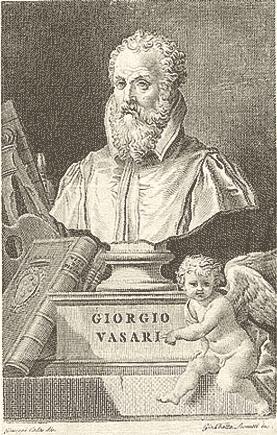
Giorgio Vasari

Also known as: G. Vasari, Gilorgio Vasari

21
BOOKS
3.0
AVG RATING (4)
1
READERS

Giorgio Vasari (30 July 1511 – 27 June 1574) was an Italian Renaissance painter, architect, art historian, and biographer known for his work Lives of the Most Excellent Painters, Sculptors, and Architects, considered the ideological foundation of Western art-historical writing, and still much cited in modern biographies of the many Italian Renaissance artists he covers, including Leonardo da Vinci and Michelangelo, although he is since regarded as including many factual errors, especially when covering artists from before he was born. Vasari was a Mannerist painter highly regarded both as a painter and architect in his day, but rather less so in later centuries. He was effectively what would later be called the minister of culture to the Medici court in Florence, and the Lives promoted, with enduring success, the idea of Florentine superiority in the visual arts. Vasari designed the Tomb of Michelangelo, his hero, in the Basilica of Santa Croce, Florence, which was completed in 1578. Based on Vasari's text in print about Giotto's new manner of painting as a rinascita (rebirth), author Jules Michelet, in his Histoire de France (1835), suggested the adoption of Vasari's concept, using the term Renaissance (from French) to distinguish the cultural change.

Arezzo, Grand Duchy of Tuscany
Wikipedia

HAVING discussed drawing and painting in the life of Cimabue, and architecture in that of Arnolfo di Lapo, in this life of Nicola and of Giovanni Pisano I shall deal with sculpture, and also with the very important buildings which they created.

— from Vite de' più eccellenti pittori, scultori et architettori, 1759

Most acclaimed

#1

Vite de' più eccellenti pittori, scultori et architettori

1759

3.0 (4)

In his Lives of the Artists of the Italian Renaissance, Vasari demonstrated a literary talent that outshone even his outstanding abilities as a painter and architect. Through character sketches and anecdotes he depicts Piero di Cosimo shut away in his derelict house, living only to paint; Giulio Romano's startling painting of Jove striking down the giants; and his friend Francesco Salviati, whose biography also tells us much about Vasari's own early career. Vasari's original and soaring vision plus his acute aesthetic judgements have made him one of the most influential art historians of all time.

#2

Lives of the most eminent painters, sculptors, and architects

0.0 (0)
#3

Leonardo da Vinci

0.0 (0)

The author of the acclaimed bestsellers Steve Jobs, Einstein, and Benjamin Franklin brings Leonardo da Vinci to life in this exciting new biography. Based on thousands of pages from Leonardo’s astonishing notebooks and new discoveries about his life and work, Walter Isaacson weaves a narrative that connects his art to his science. He shows how Leonardo’s genius was based on skills we can improve in ourselves, such as passionate curiosity, careful observation, and an imagination so playful that it flirted with fantasy. He produced the two most famous paintings in history, The Last Supper and the Mona Lisa. But in his own mind, he was just as much a man of science and technology. With a passion that sometimes became obsessive, he pursued innovative studies of anatomy, fossils, birds, the heart, flying machines, botany, geology, and weaponry. His ability to stand at the crossroads of the humanities and the sciences, made iconic by his drawing of Vitruvian Man, made him history’s most creative genius. His creativity, like that of other great innovators, came from having wide-ranging passions. He peeled flesh off the faces of cadavers, drew the muscles that move the lips, and then painted history’s most memorable smile. He explored the math of optics, showed how light rays strike the cornea, and produced illusions of changing perspectives in The Last Supper. Isaacson also describes how Leonardo’s lifelong enthusiasm for staging theatrical productions informed his paintings and inventions. Leonardo’s delight at combining diverse passions remains the ultimate recipe for creativity. So, too, does his ease at being a bit of a misfit: illegitimate, gay, vegetarian, left-handed, easily distracted, and at times heretical. His life should remind us of the importance of instilling, both in ourselves and our children, not just received knowledge but a willingness to question it—to be imaginative and, like talented misfits and rebels in any era, to think different.
Books

Newest First
