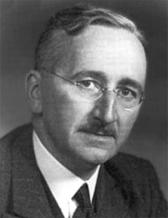
Friedrich A. von Hayek
Personal Information
Description
There is no description yet, we will add it soon.
Books
Hayek for the 21st Century
A selection of Hayek's essays regarding subjects relevant for the contemporary reader. It aims to be a primer for a new generation of laypersons open to explore the ideas of the Austrian School of economic thought.
Freiburger Studien
Ten of the essays were translated from English. Bibliographical footnotes. Vorwort, von K. F. Maier.--Wirtschaft, Wissenschaft und Politik.--Alte Wahrheiten und neue Irrtèumer.--Arten der Ordnung.--Recht, Gesetz und Wirtschaftsfreiheit.--Die Anschauungen der Mehrheit und die zeitgenèossische Demokratie.--Arten des Rationalismus.--Persèonliche Errinerungen an Keynes und die "Keynessche Revolution".--Die Ergebnisse menschlichen Handelns, aber nicht menschlichen Entwurfs.--Grundsèatze einer liberalen Gesellschaftsordnung.--Dr. Bernard Mandeville.--Bemerkungen èuber die Entwicklung von Systemen von Verhaltensregeln.--Rechtsordnung und Handelnsordnung.--Die Verfassung eines freien Staates.--Die Sprachverwirrung im politischen Denken.--Die Rechts- und Staatsphilosophie David Humes.--Der Wettbewerb als Entdeckungsverfahren.--Drei Erlèauterungen zum Ricardo-Effekt.--Bibliographie der Schriften von F. A. von Hayek (p. -284).
The constitution of liberty
"A Gateway edition, 6163." Bibliography: p. -531.
Good Money
Througout his life Hayek had a profound interest in money and its role within the economy. Money plays a critical part in his 1920s work on the trade cycle, which attempts to integrate capital theory and monetary theory. As late as the 1970s, Hayek was advocating radical reform of the monetary system, suggesting that the supply of money be turned over to private enterprise. This volume, together with Volume Five, Good Money, Part One, collect all of Hayek's significant writings on money. Together they amply demonstrate both the significance of 'sound money' in Hayek's economic vision, and Hayek's importance as a monetary theorist.
New studies in philosophy, politics, economics and the history of ideas
Monetary nationalism andinternational stability
Printed in Belgium.Five lectures delivered before the Graduate Institute of International Studies at Geneva.
Rent Control – a Popular Paradox
Profits, interests, and investment, and other essays on the theory ofindustrial fluctuations
The Trend of Economic Thinking
This volume presents much newly published work by Hayek on methodology of economics, its development as a subject, its key thinkers and its important debates. It is published in corrected, revised and annotated form with a long introduction.
The Markets and Other Orders
In addition to his groundbreaking contributions to pure economic theory, F. A. Hayek also closely examined the ways in which the knowledge of many individual market participants could culminate in an overall order of economic activity. His attempts to come to terms with the "knowledge problem" thread through his career and comprise the writings collected in the fifteenth volume of Routledge's Collected Works of F. A. Hayek series. The Market and Other Orders brings together more than twenty works spanning almost forty years that consider this question. Consisting of speeches, essays, and lectures, including Hayek's 1974 Nobel lecture, "The Pretense of Knowledge," the works in this volume draw on a broad range of perspectives, including the philosophy of science, the physiology of the brain, legal theory, and political philosophy. Taking readers from Hayek's early development of the idea of spontaneous order in economics through his integration of this insight into political theory and other disciplines, the book culminates with Hayek's integration of his work on these topics into an overarching social theory that accounts for spontaneous order in the variety of complex systems that Hayek studied throughout his career. Edited by renowned Hayek scholar Bruce Caldwell, who also contributes a masterly introduction that provides biographical and historical context, The Market and Other Orders forms the definitive compilation of Hayek's work on spontaneous order.
The Fatal Conceit
F.A. Hayek presents a fundamental examination and critique of the central issues of socialism. His analysis begins with David Hume's insight that 'the rules of morality ...are not conclusions of our reason.' 'Was Socialism a mistake?' he asks, and drawing upon research in evolutionary epistemology, moral tradition, and other current ethical thinking, he probes for answers. He argues that socialism, from its origins, has been mistaken on scientific and factual, even on logical grounds - and that its repeated failures were the direct outcome of these scientific errors. Highly readable and controversial, a work of considerable scholarship and energy, The Fatal Conceit will greatly advance our contemporary understanding of the economic and political issues confronting the world, especially important as debates between socialism and capitalism grow.