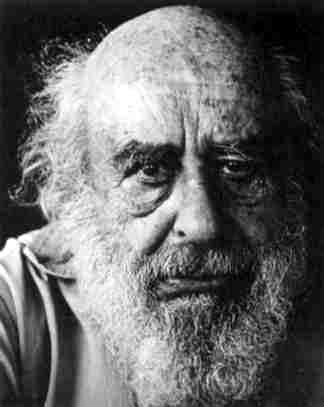
Frederick S. Perls
Personal Information
Description
There is no description yet, we will add it soon.
Books
Three approaches to psychotherapy
With a goal similar to Roger's, to help Gloria find her own way, Frederick Perls uses and entirely different approach he calls Gestalt Therapy. The Gestalt technique, he says, is to frustrate the client as a way to draw out the authentic person and to strip away the person's phony roles and games. In this film Perls describes his approach to psychotherapy, demonstrates it in the psychotherapy session with Gloria, and then he comments on his work.
Gestalt therapy verbatim
Talk -- Introduction -- Dreamwork seminar -- Intensive workshop.
Ego, hunger, and aggression
Essential reading for any serious student of Gestalt therapy, Frederick (Fritz) Perls's first book (originally published in South Africa in 1942) contains the seeds of Gestalt therapy's theoretical foundations and introduces such concepts as the "hunger instinct" and "oral aggression" and "oral resistance."
Gestalt Therapy
This edition contain an introductory note write by Frederick S. Perls
The gestalt approach & Eye witness to therapy
'The Gestalt Approach' and 'Eye Witness to Therapy' can be read together as one entity and also as two separate works. This book is an exploration of a somewhat new approach to the entire subject of human behavior- both in its actuality and its potentiality. It is written from the belief that man can live a fuller, richer life than most of us now do. It is written from the conviction that man has not yet even begun to discover the potential of energy and enthusiasm that lies in him. The book endeavors to bring together a theory and a practical application of that theory of the problems of daily life and to the techniques of psychotherapy. The theory itself is grounded in experience and observation; it has grown and changed with years of practice and application. -- from Introduction.
Yo, Hambre y Agresión
Yo, hambre y agresión de Frederick s. Perls (1893-1970), publicado en Durban, Sudáfrica, en 1942, es una obra a caballo y de transición entre el Psicoanálisis ortodoxo y el nacimiento de la Terapia Gestalt en 1951. Para ser precisos, es una obra cuya base está enraizada en la teoría básica psicoanalítica de esa época y en la que se apuntan algunas ideas disidentes que más tarde conformarán los cimientos de la teoría y de la práctica de la Terapia Gestalt. Las ideas que plantea Perls, como un revisionismo del psicoanálisis, son profundamente innovadoras y serán la base de la Terapia Gestalt: las resistencias orales, el valor positivo de las resistencias, el continuo de la consciencia, el holismo, y la regulación auto-organísmica. El principal aporte de Perls a la teoría psicoanalítica es su formulación de la biología del hambre y la alimentación como un modelo de la vida psíquica, enfatizando los mecanismos de agresión y asimilación; y un compendio de ejercicios para fomentar el darse cuenta del momento presente en la frontera entre el organismo y su entorno. En esta nueva edición se ha hecho una exhaustiva revisión de la traducción que, en 1975, publicó FCE, y se han subsanado numerosos errores que hacían difícil la comprensión de alguna de las ideas que, posteriormente se convirtieron en los fundamentos teóricos de la Terapia Gestalt.
El Enfoque Guestáltico y Testimonios de Terapia
Último libro de Fritz Perls, creador de la Gestalt, mientras residía en Esalen. Consta de dos partes: la versión más acabada de su teoría de la neurosis y el proceso terapéutico escrita por Perls, y transcripciones de sesiones reales con pacientes y parejas en terapia. Su título original en inglés: The Gestalt Approach & Eye Witness to Therapy.
