Discover
Jan 1, 1924 — Jan 1, 1974· 50 yrs

UNITED STATES AUTHOR · PHILOSOPHICAL ANTHROPOLOGY · PHILOSOPHY

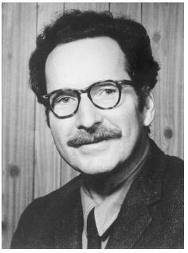
Ernest Becker

10
BOOKS
3.6
AVG RATING (9)
2
READERS
Springfield, United States
Wikipedia

The first thing we have to do with heroism is to lay bare its underside, show what gives human heroics its specific nature and impetus.

— from The Denial of Death, 1973

Most acclaimed

#2

The birth and death of meaning

1962

0.0 (0)

This book represents the first of Becker's final trilogy, what can be considered his mature theoretical work. In this book, Becker begins his presentation of what he confidently feels is a unified and well rounded general theory of human nature. He also has come to terms with Freud and Freudian theory, meaning that he is now able to deal appreciatively with what psychoanalysis has contributed with this general theory of human nature. It is also important to note that Becker also announces in his Preface that he now recognizes the fact that in his earlier work, he had slighted the underside of human nature. That is, as a social scientist in the tradition of Rousseau, he was dedicated to the view that human nature is essentially neutral or good and that it is corrupted by the social environment. The theory presented now in his mature work has come to a more clear understanding of the element of the darker side, the side of human nature which is evil and vicious. This considerably sobers his earlier optimism about human possibilities and potentials, guided by an actively engaged social science. As is clear, however, Becker’s recognition of the element of human viciousness and evil does not push him toward cynicism or despair. [Adapted from [The Ernest Becker Foundation book description]]
#1

The Denial of Death

1973

3.2 (6)
#3

The revolution in psychiatry

1964

0.0 (0)

Dr. Becker, theoretician and author of The Birth and Death of Meaning: A Perspective in Psychiatry and Anthropology, combines his philosophic behaviorism with a humanistic version of social psychiatry in an attempt to provide a base for a new science of man -- an interdisciplinary ""man-centered"" science. He draws substantiation for his orientation and theses mainly from Dewey and Allport and emphasizes the social nature of the influences that have molded the ""symbolic animal"" -- man. He offers a detailed non-medical analysis of the nature of schizorenia and depression to show that biologically oriented medical psychiatry must fail in its attempt to understand these so-called ""mental illnesses"" because of its narrowly posited and unhistorical perspective. He sees these ills as results of man's inability to get proper satisfaction from his capacities for symbolization, stemming from society's restrictive habits, culture patterns, inhibited and inhibiting human relations that in various ways undermine, overwhelm or destroy self-esteem. Thus, Becker strikes hard at conventional, even eclectic psychiatry, and with his arguments should stimulate much scholarly praise and rebuttal.

Books

Newest First
