Discover

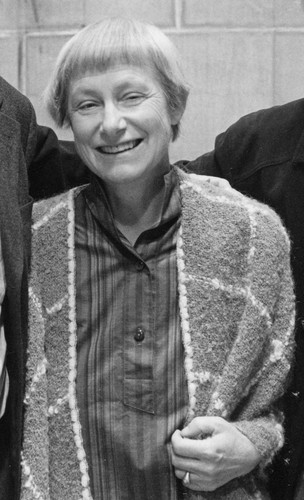
Dorothee Sölle

Personal Information

Born September 30, 1929
Died April 27, 2003 (73 years old)
Cologne, Germany
Also known as: Dorothee Sölle, Dorothee Soelle
37 books
4.0 (1)
44 readers

Description

German theologian

Books

Newest First

Mystik des Todes

0.0 (0)
1

"In this meditative "fragment" completed only days before her own death, internationally noted theologian Dorothee Soelle turns her attention to the personal, religious, and even cultural meaning of death. She faces the old and new anxieties we have of death in the midst of our own cultural danse macabre. In conversation with the writings of C.S. Lewis, Erich Fromm, the Apostle Paul, and others, she takes the theological measure of death and explores also how it has figured especially in the experience of women." "Intense, personal, yet also whimsical and clever, The Mystery of Death finds Soelle asking impertinent and deadly serious questions to the end."--Jacket.

Mystik und Widerstand

0.0 (0)
2

Die Religion des 3. Jahrtausends wird mystisch sein oder absterben. Eine „demokratisierte Mystik“ vor einem nichtreligiösen Hintergrund baut auf Erfahrungen auf, scheut aber vor Reflexion und klärender Aufarbeitung der Tradition nicht zurück. Natur, Erotik, Leiden, Gemeinschaft und Freude sind „Orte“ mystischer Erfahrung. So gesehen sind wir alle Mystiker! Mystik im Sinne von „Sehnsucht nach Gott“ hat es zu allen Zeiten und in allen Kulturen gegeben. Aber noch nie war der eigene Weg zu Spiritualität wichtiger als angesichts des um sich greifenden geistlosen Materialismus unserer Tage. Mystik ist als das antiautoritäre Element in jeder Religion zu verstehen. Sie führt zur Gemeinschaft von Freigeistern und damit in den Widerstand. Dorothee Sölle, die weltweit bekannte, umstrittene und unbequeme Theologin, stellt sich die Weltreligionen als Kreis vor, der sein Zentrum im Geheimnis der Welt hat. Die Anhänger der verschiedensten Religionen werden angezogen von diesem X im Herzen der Welt, dem sie Namen wie Allah, die Urmutter, der Ewige, Nirwana, das Unerforschliche gegeben haben. Aber nicht Begriffe erscheinen Dorothee Sölle wichtig, sondern wie und inwieweit es gelingt, zum Zentrum des Kreises vorzudringen, in dem die Unterschiede in religiösen Zugängen immer unwichtiger werden. Wie nah sind wir letztlich dem Unnennbaren? ist die Frage – sehr im Gegensatz zu konfessioneller Orthodoxie. „Fundamentalismus“ so argumentierte Dorothee Sölle, „hält nur davon ab, Wege ins Zentrum zu finden.“ Wie diese Wege in den drei Hochreligionen unseres Kulturkreises ausgesehen haben, welche Dimensionen mystischer Frömmigkeit erreicht worden sind und wo die Chancen für uns liegen, wird in diesem einzigartigen Werk deutlich. Es ist das Ergebnis jahrzehntelanger persönlicher Erfahrung, aber auch einer umfassenden Lehrtätigkeit in der Alten wie in der Neuen Welt. (Quelle: [Index Theologicus](

Grosse Frauen der Bibel in Bild und Text

0.0 (0)
0

Throughout history the women of the Bible have figured prominently in a great wealth of occidental art and have inspired important themes in world literature, fables, legends, songs, and folk stories. This beautiful volume shows how the women of Scripture have been variously portrayed in art and literature throughout the centuries - even as it reinterprets these portrayals for people today. Here are the great women of the Bible, from Eve to Mary, as portrayed by artists from the early Christian period to the present day. Each sequence of illustrations - including photographs of sculptures, frescoes, panels, miniatures, and modern graphics - is accompanied by a detailed caption that clarifies the particular vision of each artist represented. The women of the Bible also appear here as they are depicted in texts from the Bible, the Apocrypha, Coptic literature, the Talmud, the Koran, and the treasury of religious legends. Further references have been culled from the great works of literature, from writers such as Dante, Goethe, Thomas Mann, Gustave Flaubert, and Oscar Wilde - men who were fascinated by the power of the biblical texts and who interpreted the female characters in new, creative ways.