
HISTORY · MILITARY HISTORY
David Chandler
Also known as: David Geoffrey Chandler, David G. Chandler
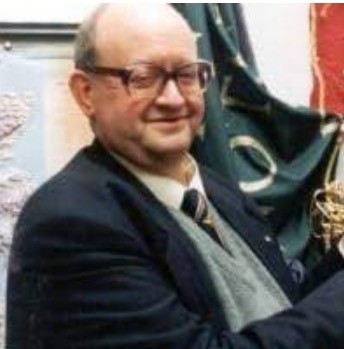
David Geoffrey Chandler (15 January 1934 – 10 October 2004) was a British historian whose study focused on the Napoleonic era. As a young man he served briefly in the army, reaching the rank of captain, and in later life he taught at the Royal Military Academy Sandhurst. Oxford University awarded him the D. Litt. in 1991. He held three visiting professorships: at Ohio State in 1970, at the Virginia Military Institute in 1988, and Marine Corps University in 1991. According to his obituary in The Daily Telegraph, his "comprehensive account of Napoleon's battles" (The Campaigns of Napoleon) is "unlikely to be improved upon, despite a legion of rivals. General de Gaulle wrote to Chandler in French declaring that he had surpassed every other writer about the Emperor's military career." He was also the author of a military biography of John Churchill, 1st Duke of Marlborough, and of The Art of Warfare in the Age of Marlborough, and contributed a number of articles on Napoleonic warfare to History Today magazine.
On 7 January 1979, a bright, breezy day in Cambodia's cool season.
— from Voices from S-21, 2000
Most acclaimed

Birds
The poems in Judith Wright's Birds volume have long been recognised as among the best-loved poems written in Australia. Many people have grown up with the beguiling rhythms of 'Black Cockatoos', or the jauntiness of 'The Wagtail'. Now, in this new edition, commemorating 25 years since the poems were last published as a single collection, these works appear with six additional poems and a personal introduction by the poet's daughter Meredith McKinney, for whom many of the poems were written. The poems are complemented by full-colour illustrations drawn from the National Library's Pictures Collection, featuring the work of artists such as John Lewin, Lionel Lindsay and Lilian Medland, and William T. Cooper and Betty Temple Watts. Birds is both a celebration of Judith Wright (1915-2000) as writer and passionate environmentalist, and of the centrality of birds in the poet's imagination.
Waterloo
1907
War has come back to europe yet again! Napoleon is back and is ready for another round with Britain. For the first time the british army and the Duke of Wellington himself will fight the french army with napoleon himself on the field. Wellington has beaten many of napoleons best generals in spain, but now the ultimate test and ultimate battle of the napoleonic wars will be fought. Sharpe is now at the highest rank he will ever attain and would never miss an ultimate battle that will not only end the war in which the best army britain ever had fought in, but also lead to britain becoming a world superpower. Sadly thanks to political interference sharpe will once again end up with an incompetent superior who is also a prince, which will not stop Sharpe from being impudent or attempting something worse when his mistakes lead to needless deaths. Some things never change.