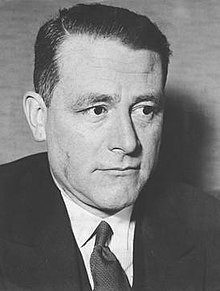
Carl Schmitt
Personal Information
Description
Carl Schmitt (11 July 1888 – 7 April 1985) was a German jurist, political theorist, and prominent member of the Nazi Party. Source: [Carl Schmitt]( on Wikipedia
Books
Völkerrechtliche Großraumordnung mit Interventionsverbot für raumfremde Mächte. Ein Beitrag zum Reichsbegriff für Völkerrecht
Begriff des Politischen
In this, his most influential work, legal theorist and political philosopher Carl Schmitt presents a scathing critique of modern liberalism - a critique as cogent today as when it first appeared. George Schwab's introduction to his translation of the 1932 German edition highlights Schmitt's intellectual journey through the turbulent period of German history leading to the Hitlerian one-party state. Also included here is Leo Strauss's analysis of Schmitt's thesis and a foreword by Tracy B. Strong placing Schmitt's work into contemporary context.
Writings on War
Writings on War collects three of Carl Schmitt's most important and controversial texts, here appearing in English for the first time: The Turn to the Discriminating Concept of War, The Großraum Order of International Law, and The International Crime of the War of Aggression and the Principle "Nullum crimen, nulla poena sine lege". Written between 1937 and 1945, these works articulate Schmitt's concerns throughout this period of war and crisis, addressing the major failings of the League of Nations, and presenting Schmitt's own conceptual history of these years of disaster for international jurisprudence. For Schmitt, the jurisprudence of Versailles and Nuremberg both fail to provide for a stable international system, insofar as they attempt to impose universal standards of "humanity" on a heterogeneous world, and treat efforts to revise the status quo as "criminal" acts of war. In place of these flawed systems, Schmitt argues for a new planetary order in which neither collective security organizations nor 19th century empires, but Schmittian "Reichs" will be the leading subject of international law. -- Publisher description.
Political Theology
Written in the intense political and intellectual tumult of the early years of the Weimar Republic, Political Theology develops the distinctive theory of sovereignty that made Carl Schmitt one of the most significant and controversial political theorists of the twentieth century. Focusing on the relationships among political leadership, the norms of the legal order, and the state of political emergency, Schmitt argues in Political Theology that legal order ultimately rests upon the decisions of the sovereign. According to Schmitt, only the sovereign can meet the needs of an "exceptional" time.